
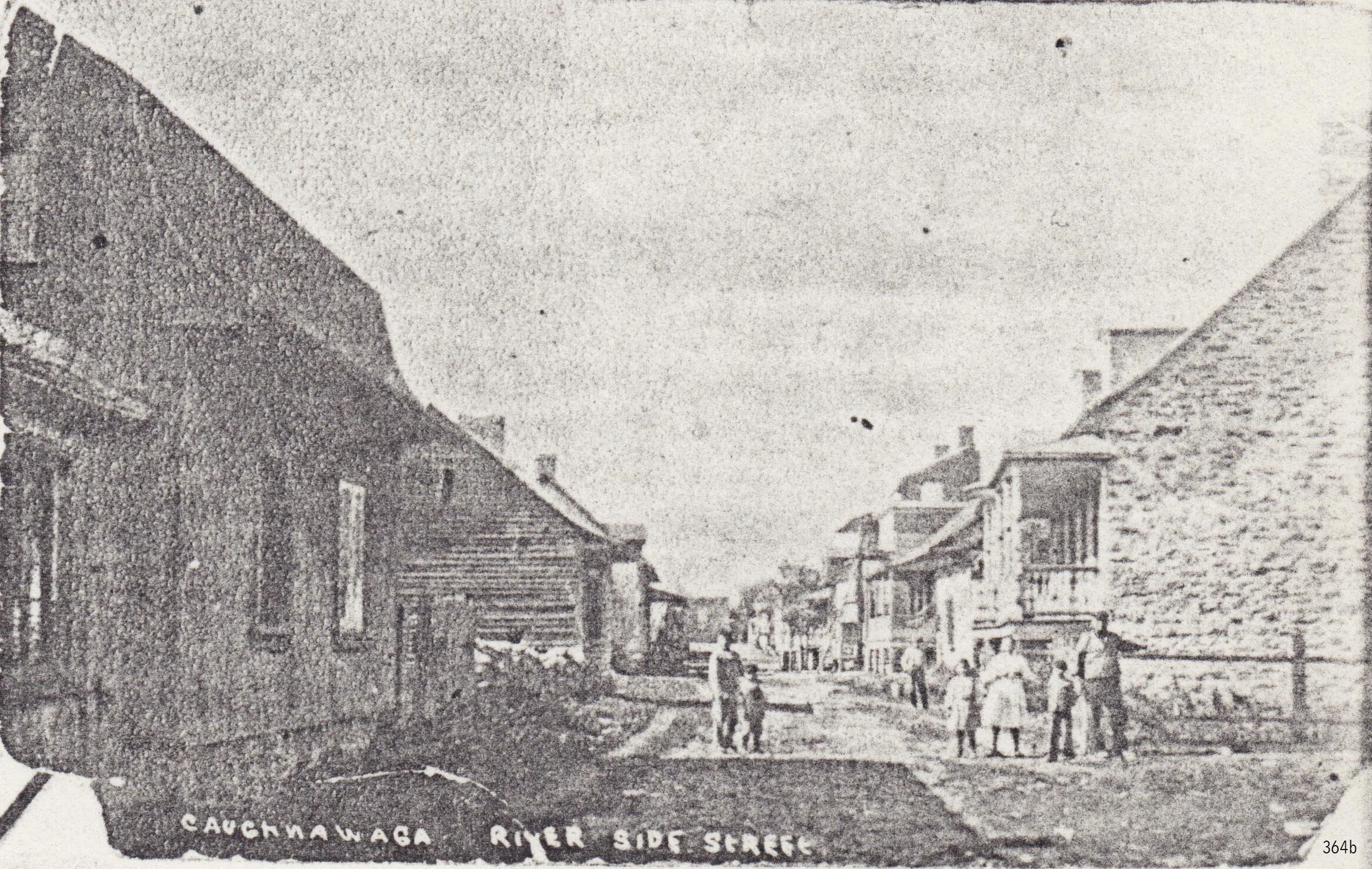
A walk to Kateri School may often take someone up River Side Street. (Courtesy: Kanien’kehá:ka Onkwawén:na Raotitióhkwa Language and Cultural Center)
Story told by Arthur Diabo
We walked to school. You walked everywhere you went or if you were fortunate enough, you had a bike and you biked everywhere you went.
We lived close to Kateri School because we were downtown. The Lafleur family had their first store on the front street. The MCK office is there now but that was where the Lafleur’s had their butcher shop and groceries, so we weren’t that far from school.
Walking to Kateri School took maybe 10 minutes, but some of my friends and family had to walk from far. The people living on the farm would come in with horses and sleighs in the winter and by buggy in the summer.
I remember the McGregors would tie their horse up to the fence. Then after school they would go back to the farm with the horse.
The 207 wasn’t paved. It was just an old dirt road with all the farms.
Only later in the 60s people started getting cars and we became more mobile and started to go all over.
KANIEN’KÉHA VERSION
↓
KANIEN’KÉHA VERSION ↓
Ehta'kéhshon nieiakwéhtha' aiakwaterihwaienstà:na'
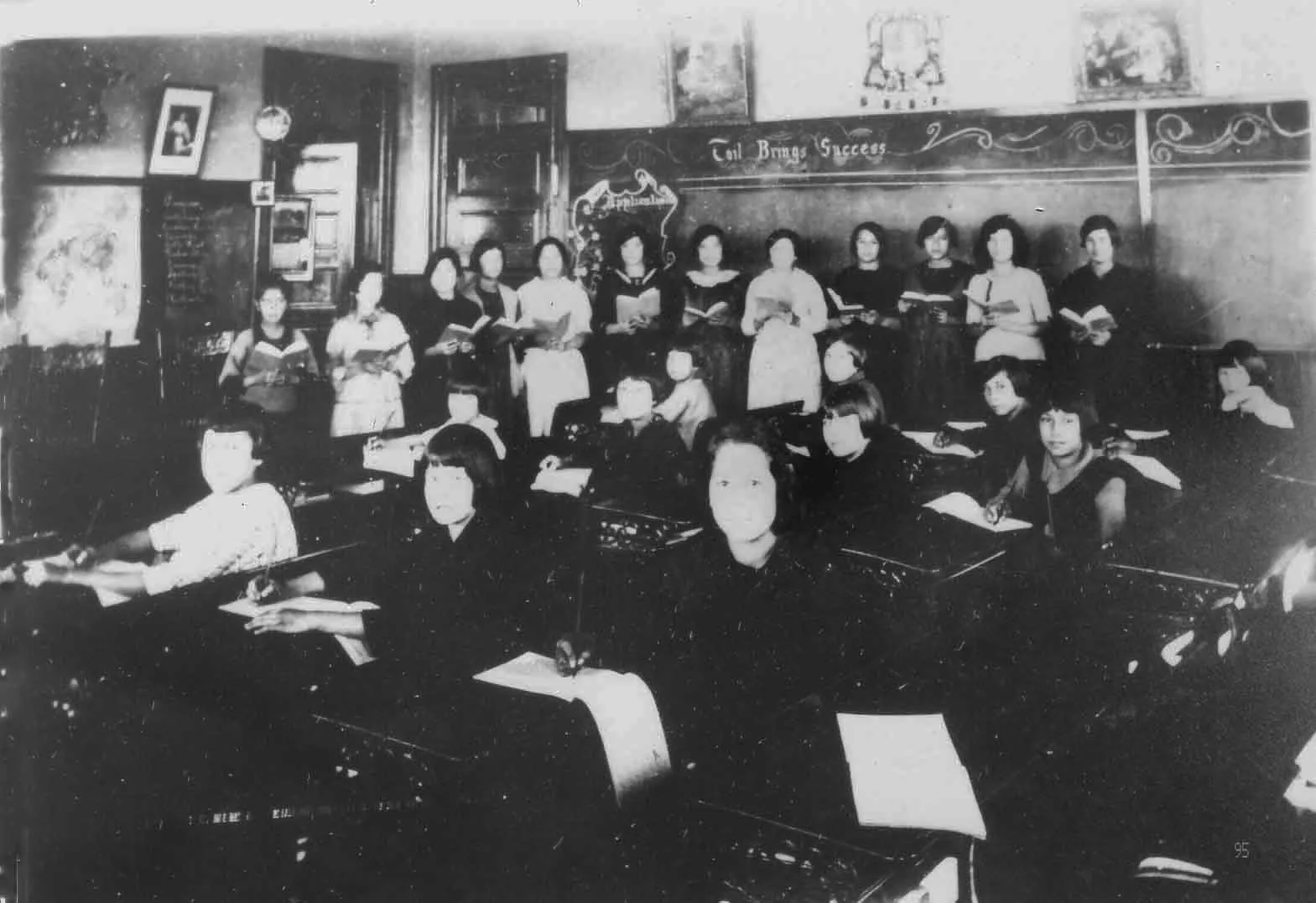
Photo #2: In this classroom, the students would go through choir practice. From left to right, the students who sat in the row closest to the camera were Margaret Deer, Louise Latour, and Josie Laclaire Cavanaugh. The next row above sat Lena Saylor, Louise Lahache, Alice Norton Jocks, and Lucy Diabo Jacobs Delisle. The furthest row lined the seats of Florence Montour Alfred, Isabelle French, Mary ???, Ida Jacobs Goodleaf Dear. Amongst the girls standing were Annie Williams Walker, Non-Non Jacobs, Viola Jocks Jaccarino, Margaret Homing, Marianne Phillips, Josie Jocks Cowan, Annie Rice Goodleaf, Sister Two-Axe, Margaret Hill-Diabo, Florence Lefebvre, Mae Norton, and Annie Horn. (Courtesy: Kanien’kehá:ka Onkwawén:na Raotitióhkwa Language and Cultural Center)
Arthur Diabo ROKÁ:RATON
Ehta'kéhshon nia'ákwe' ionkwaterihwaiensta'nónhne'. Tsik nón:we iénhse' ehta'kéhshon nienhénhse'. Tóka' ni' tóka' satáhska, bishíker saién:tahkwe' tánon' bishíker niaháhse' tsik nón:we.
Ákta Katerí: tsi ionterihwaienstáhkhwa' tiakwen'terón:tahkwe' né: tsi kanáthen tiákwe'skwe'. Tsi nón:we ohén:ton iohá:te', tho tiotierénhton thonatenhninonhseró:tahkwe' ne Lafleur kahwá:tsire'. MCK tsi thatihiatónhkwa' tho tetkanónhsote' nòn:wa nek tsi tho ki' nón:we ronatenhninonhseró:tahkwe' Lafleur ne tsi rati'wahrahseronnià:tha' tánon' tsi iontenna'tsherahninòn:tha'. Iah ki' í:non teió:re' tetiakwen'terón:tahkwe' ne tsi ionterihwaienstáhkhwa'.
Oié:ri nikahseriiè:take tóka' ehta'kéhshon nieniákwe' aiakwaterihwaienstà:na' nek tsi ótia'ke' onkwatenro'shòn:'a ó:nen'k tsi í:non nenthón:ne'. Tsi niiá:kon kahrhá:kon thatì:teron akohsá:tens tánon' kanonhsì:sere' énhontste' ne akohserà:ke. Nok akenhnhà:ke akohsá:tens tánon' tewate'serehtahnhontéhrha' énshontste' enthón:ne'.
Kè:iahre' McGregor kahwá:tsire' aten'enhrà:ke tenkonwatì:nerenke' ne raotitshé:nen akohsá:tens. Sok nó:nen enhonterihwaienstá:ko' kahrhá:kon ienshón:ne' ne akohsá:tens.
Iah tekahnenhtóntion ne 207 iohá:te'. Kwah nek ne o'kèn:ra' iohaténionhkwe' ne kahrhá:kon nonkwá:ti.
Kwah nek ne ohna'kénhkha' 60 shiiohseratátie's taiontáhsawen' ón:kwe wa'ako'serehtaientà:seron' sok sénha wa'tiakwatstikahwháhseron' tánon' tsik nón: ieionkwenónhne'.
Edited by: Melissa Stacey, Local Journalism Initiative Reporter
Translation by: Sahawisó:ko' Arquette