
Passing it on

A group shot of Kanienʼkéha people. Recognized faces include (from right to left) Onwari Ioriwiioston Beauvais (a woman, 5th from the right), Sose Akwiranoron Beauvais (6th), Angus Beauvais (a baby in a woman’s arms), and Margaret Beauvais (Girl, third from the right, in front.) (Courtesy: Kanien’kehá:ka Onkwawén:na Raotitióhkwa Language and Cultural Center)
Story told by Michael Rice
For me, the sharing of stories is what’s most important because stories bind people together. People pay a lot more attention when they see or hear things told in a story. The stories helped keep people together. The stories taught people values, morals without being preachy, and it was done in an entertaining way. The idea that stories help shape our peoples’ and my generation’s morals and values is how our people have functioned all this time.
I think it’s important that people pass on the stories and the traditions, because I'm sure families have different stories and traditions that were passed down to them. They probably just thought it was old people telling them stories, but it’s important to hear those stories because there was always a moral behind it.
People in general don’t like being told what to do, but if they hear things in a story, they can reflect on it in their own way and come to their own conclusions. The lesson becomes something they can relate to and understand, rather than feeling like they’re being lectured. Stories allow us to see ourselves in different situations and learn from them
I remember stories like Ohniare’kó:wa, the great serpent, and O’tónhkwa, the bouncing flame that my uncle would tell me, and they always had deeper meaning behind them with a lesson to be learned.
I think that's what's important to remember is that there's going to come a time when this new generation of knowledge keepers are going to pass on their stories. When that time comes, it will be up to them to carry these stories forward, to preserve our traditions, and to share the wisdom and lessons they hold. Because if the stories continue, so do we.
KANIEN’KÉHA VERSION
↓
KANIEN’KÉHA VERSION ↓
Aiakóhetste'
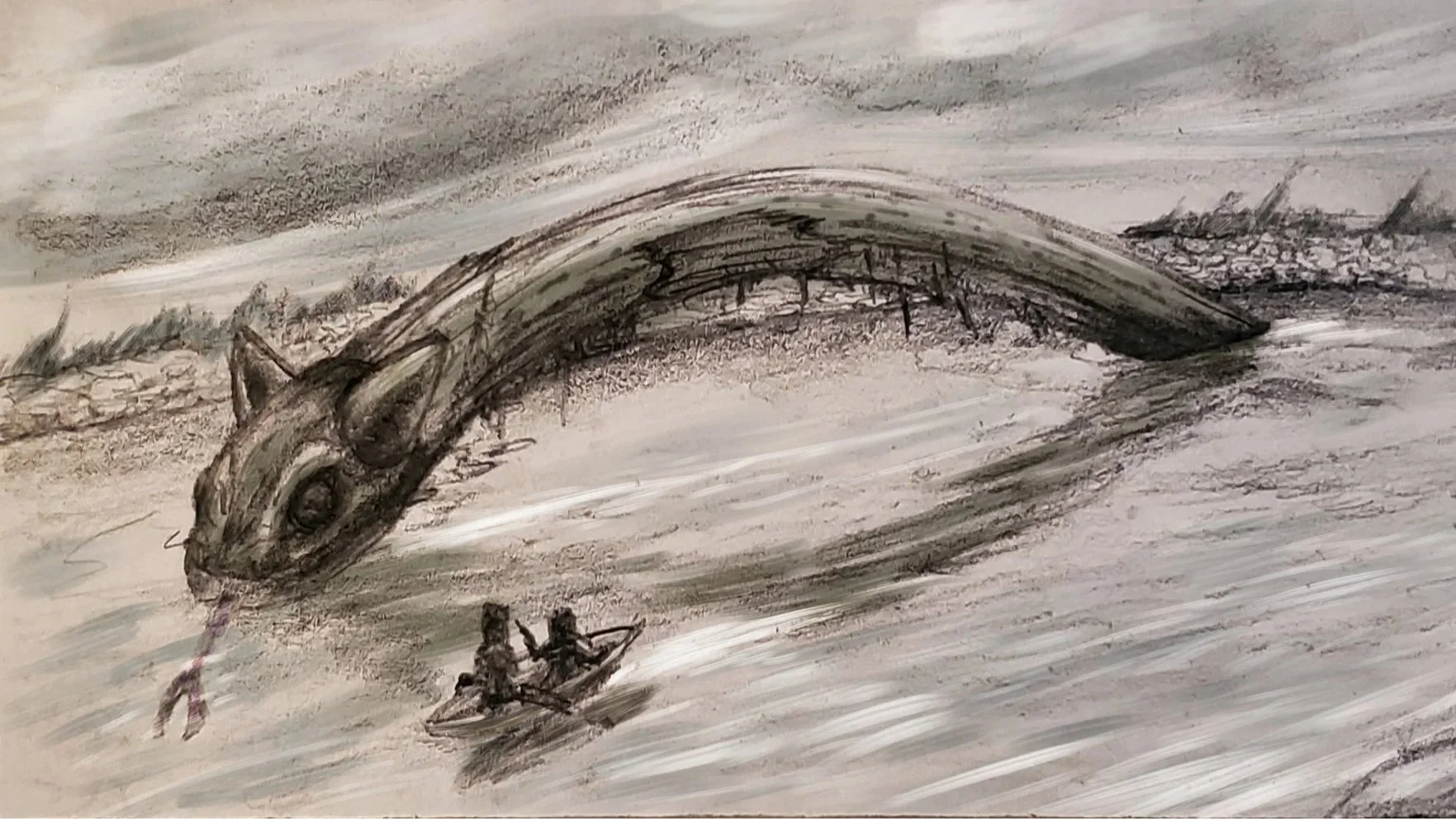
Ohniare'kó:wa, the great horned serpent, described as brown with black blotches, like an old log, and a purple forked tongue by Sahawisóko’s brother. Their young are also described as having a metallic blue color. (Credit: George Rahrhaiente:ri Ross)
Michael Rice ROKÁ:RATON
Né: akerihwà:ke, kwah nè:'e tkakowá:nen ne aieká:raton' ase'kén teiakò:nerenks nón:kwe. Sénha é:so ie'nikòn:raien' nón:kwe nó:nen eniontkáhtho' tóka' ni' eniakothón:te'ne' orihwa'shòn:'a kaká:rakon. Wa'akoié:nawa'se' wa'tiakò:nerenke' nón:kwe ne okara'shòn:'a. Wa'akorihónnien' nón:kwe tsi ní:tsi othé:nen aienorónhkhwake', aontaiakehtáhkhwake' iah tetiorihwahrátie', tánon' wa'tiako'nikonhrawén:rie' tsi na'ká:iere'. Tsi niwaterien'tò:ten tsi okara'shòn:'a iakorihonnién:nis tsi nahò:ten' thonnehtáhkhwa' tánon' ratinorónhkhwa' ontionkwè:ta' tánon' òn:wa khwatsiratátie', kwah tió:konte' tho ní:tsi shihonatonhnhahténtion nontionkwè:ta'.
Kwah í:kehre' tsi tkakowá:nen ne ón:kwe aiakóhetste' tsi niionkwakarò:ten's, tsi nitewaweiennò:ten, ase'kén wake'nikonhrahní:ron tsi ó:ia' na'tehotikarò:ten's tánon' ó:ia' na'tehatiweiennò:ten's ne ratihwatsiraién:ton néne shonwatihé:wi. Ta' nek wahón:nehre' tsi thononkwe'tá:ion's ronwatikaronnión:ni, nek tsi tkakowá:nen' se' naiakothón:te'ne' tho nikakarò:ten's ase'kén tió:konte' ioterihwakwaríhsion ioteríhonte'.
Iotkà:te' nón:kwe iah teiakaon'wéskwani aiontathró:ri' tsi naióntiere', nek tsi tóka' kaká:rakon eniakothón:te'ne' thí:ken, enwá:ton' wáhi entionnonhtonnión:ko' tsi niiakoren'nhà:'on tánon' enionnónhton' tsi ní:tsi tenierihwaiestáhsi'. Thí:ken karihonnienníhtshera' othé:nen eniakó:ton'se' néne eniakona'tón:hahse' tánon' eniako'nikonhraientásten', ne niá:we á:ienhre' tsi ní:ioht tóka' aiakottehtaníhake'. Ionkhirihwá:wis wáhi okara'shòn:'a aietewatátken' eh nón:we ó:ia' na'teiawénhserons tánon' ne aionkhirihónnien'.
Kè:iahre' tsi nikakarò:ten's tsi ní:ioht ne Ohniare'kó:wa tánon' O'tónhkwa' néne rakenonhà:'a shos enhakkaratón:hahse', tánon tió:konte' ísi' nón:we kontí:ton kontihsòn:ne othé:nen aionkwarihónnien'.
Kwah í:kehre' nè:'e tkakowá:nen aiakehià:rake' tsi kátke'k ienkáhewe' nó:nen kí:ken á:se' kahwatitsiratátie' aterien'taráhtshera' ratinónhnha' tó:kenske' enhonnóhetste' tsi nihotikarò:ten's. Nó:nen eh ienkáhewe, ronónha wáhi enhonnónhton' ohén:ton wenhniseraténion iahatíhawe' ken' nikakarò:ten's, né: ki' akanonstá:ton tsi nitewaweiennò:ten, tánon' akaia'khón:ni' tsi niwattokhahtsherò:ten's tánon' tsi nikarihonniennihtsherò:ten's kontihá:wi. Ase'kén tóka' enkatátie' nokara'shòn:'a, tó:kenske' ì:'i ò:ni'.
Edited by: Jonathan Turenne - Local Journalism Initiative Reporter
Translated by: Karonhí:io Delaronde