
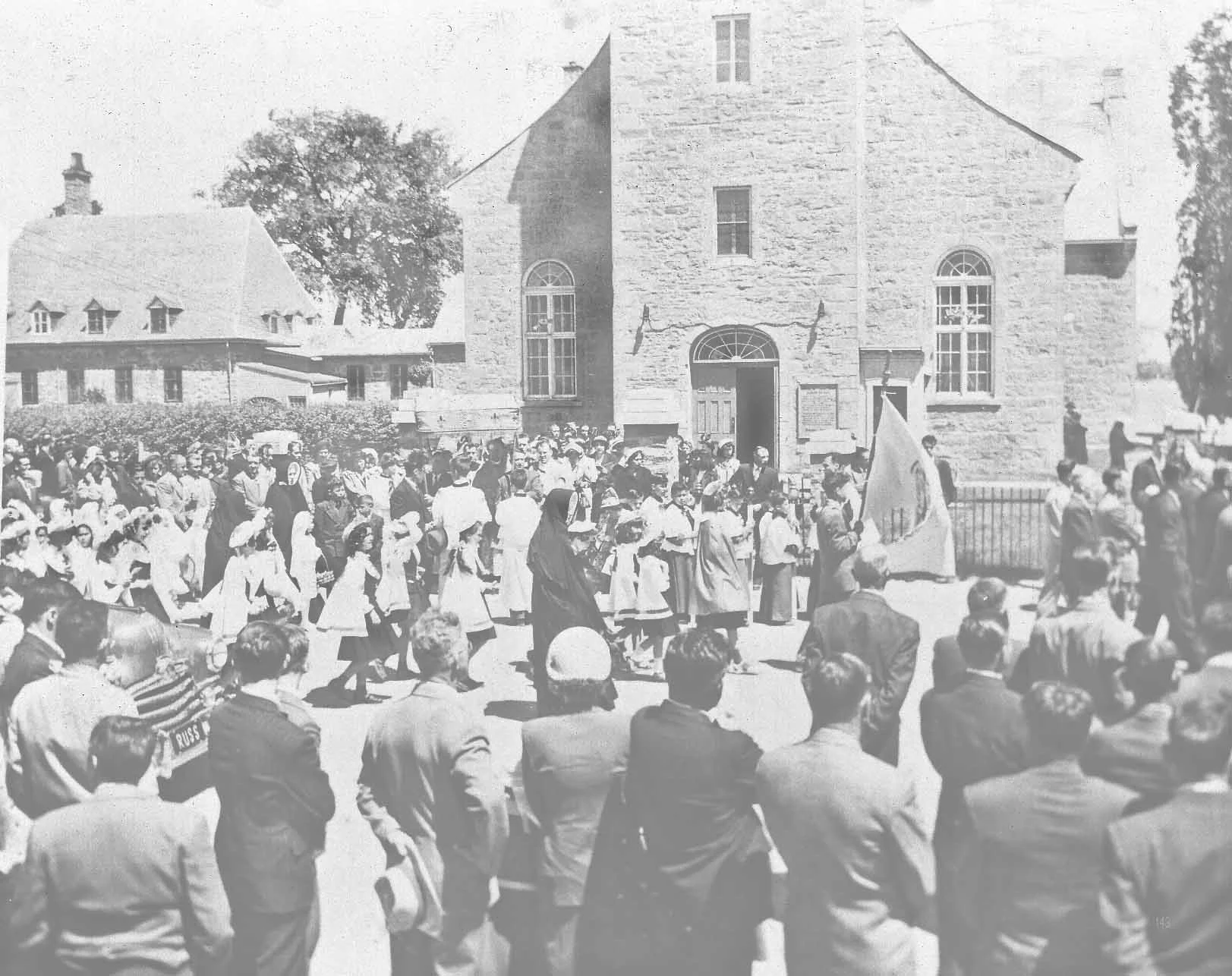
A Corpus Christi Procession, circa 1947. Joe Canadian was present for the gathering, at thirteen years old. (Courtesy: Kanien’kehá:ka Onkwawén:na Raotitióhkwa Language and Cultural Center)
Story told by Arthur Diabo
I went to Catholic school, Kateri School. I was always in church, praying all the time.
You had to say the rosary when you went to school in the morning, when you left at lunch, and when you came back after lunch. That’s 50 Hail Mary’s and a few other prayers. This was every day. On your knees on the hardwood floor. We thought that was normal. We didn’t know any better.
The nuns had these clappers. They look like false teeth without the teeth and they clap to signal you when to sit, when to kneel, when to get up, and when to march off to church. First Fridays were always a big occasion.
If you didn’t do what they said, you paid for it – slaps across the head, the clappers on the side of the head.
You were forbidden to speak Mohawk in school. You want to get a good whack? Say something in Mohawk. The nuns and the priests were in on it. “Break them. If you break their language, you got them,” was the line that they told.
The church was a big part of our life. They were here to turn us Mohawks into Christians. A lot of people, even though they stopped being Catholics and Christians, still go back to church.
I can still say a little bit of the Confiteor, it’s a prayer in Latin. I was so indoctrinated into the church, I still follow it.
KANIEN’KÉHA VERSION
↓
KANIEN’KÉHA VERSION ↓
Teieiahsóntha' ionterihwaienstáhkhwa'
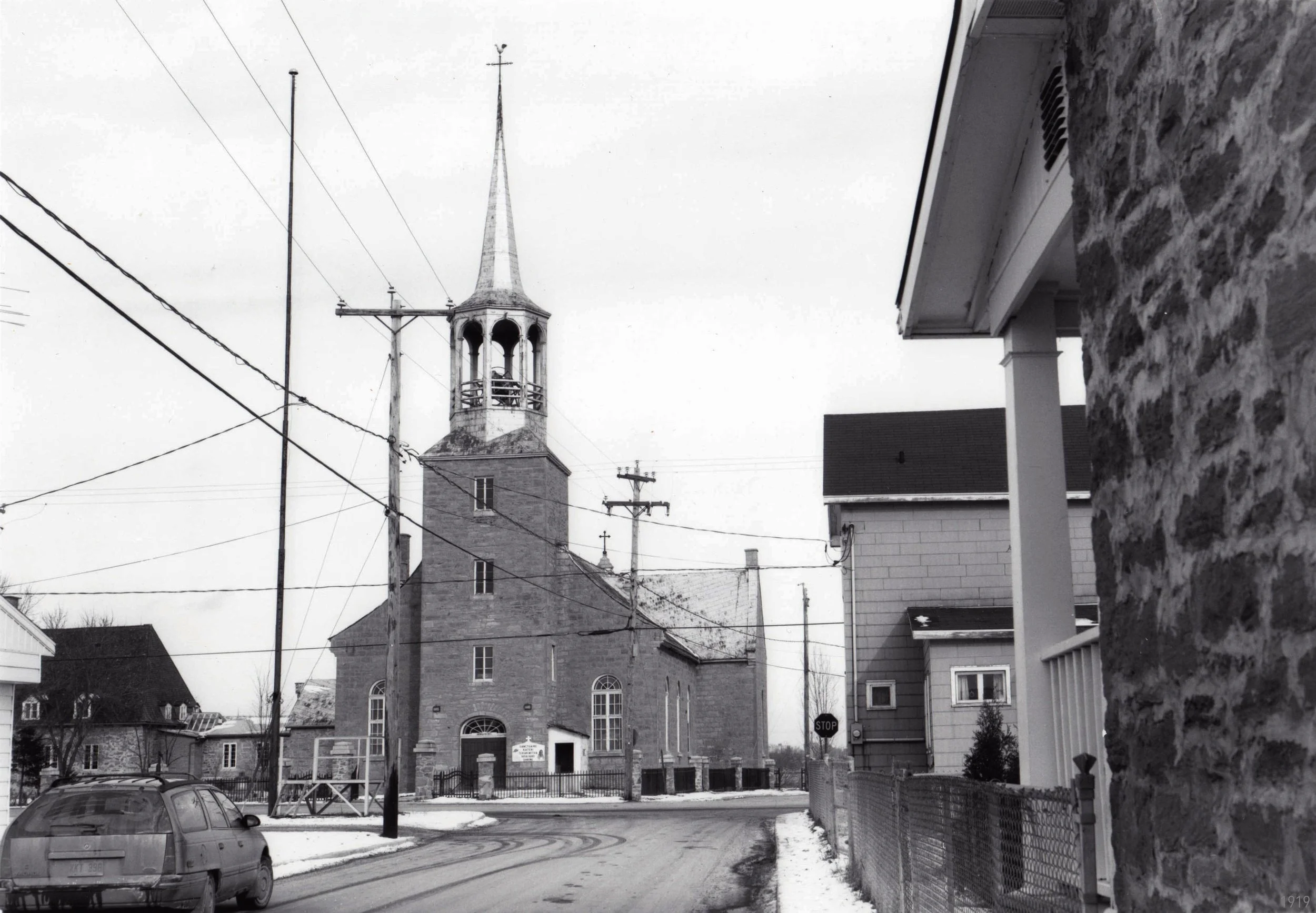
A winter view of St. Francis Xavier Catholic Church. (Courtesy: Kanien’kehá:ka Onkwawén:na Raotitióhkwa Language and Cultural Center)
Arthur Diabo ROKÁ:RATON
Teieiahsóntha' ionterihwaienstáhkhwa' wakaterihwaiensta'nónhne', Katerí: tsi ionterihwaienstáhkhwa'. Tiótkon ononhsatokenhtì:ke ié:ke'skwe', tiokontáhkwen wakaterén:naien.
Ó:nen'k tsi enhserenhsò:kten' nó:nen enhsaterihwaienstà:na' nohrhon'kè:ne, nó:nen ensehsahtén:ti' néntie' ní:kare', nok nó:nen tentéhse' iotohétston néntie'. 50 Wá:ri tekonwanoronhkwánions tánon' tohkára niwaterennaientahtsherà:ke shé:kon nen' nè:'e. Thia'tewenhniserá:ke ki' nen' nè:'e. Tehsentshó:ton ne ioientahní:ron ohson'karà:ke. Wa'ákwehre' tsi ioren'nhà:'on thí:ken. Iah ki' sénha teionkwaterièn:tarahkwe'.
Iotiia'tatokénhti iotiién:tahkwe' kí:ken tewahsáro'ks. Tho niwatkahthohtsherò:ten tsi ní:ioht ne iontenawirahnhónta's iah thé:nen tekanò:tsote' tánon' tekonhsáro'kte' ne aiesahronkà:ten' ahsanitskó:ten', kátke tahsatentshó:ten', kátke táhsta'ne', tánon' kátke aiesewaterennaiénhna'. Tiótkon ísi' nón: niwenhnisero'ténhne' ne Shontontié:renhte' Ronwaia'tanentaktónhne.
Tóka' iah tho tesaié:ren nahò:ten' wa'konnì:ron', ensehskária'ke' – enionkhihso'kwaia'ákhon', enionkhihso'kwaia'aktánion' tsakwanontsistkará:ti néne thí:ken tewahsáro'ks.
Iesahnhè:se' ne Kanien'kéha ahsatá:ti' ne tsi ionterihwaienstáhkhwa' nonkwá:ti. Íhsehre' ken io'shátste' aiesahwà:'eke'? Thé:nen'k tsì:ron Kanien'kéha satewennón:tahkw. Thatihsnonhsò:ron ne iotiia'tatokénhti tánon' ratitsihénhstatsi's. "Tesheionhnhà:riht. Tóka' tenhshewennà:rihte', wahshe'shén:ni'," né: shes enhonnì:ron'.
Kwah í:ken tsi iorihowanèn:nehkwe' naiakwaterennaiénhna' ne tsi iatiónhnhe' onkwarihwà:ke. Né: ratinièn:tehkwe' ne aiakwarihwí:iohste' ne Kanien'kehá:ka. É:so iá:kon, arenhátien tsi iah tha'teshatiiahsóntha' tánon' iah teshotirihwiióhston, shé:kon ki' nen' nè:'e ronterennaiénhne's.
Shé:kon enkkwé:ni' ostónha akaterén:naien' ne Tsontateronkwennì:tha', Ráten nen' nè:'e kawennontáhkwen aterén:naien. Kwah teiotonkóhton ne tsi ionke'nikonhráten' ne tsi ionterennaientáhkhwa' tsi niiorihò:ten, shé:kon nòn:wa nè:'e kerihwáhsere'.
Written by: Melissa Stacey, Local Journalism Initiative Reporter
Translation by: Sahawisó:ko' Arquette