
All the way up
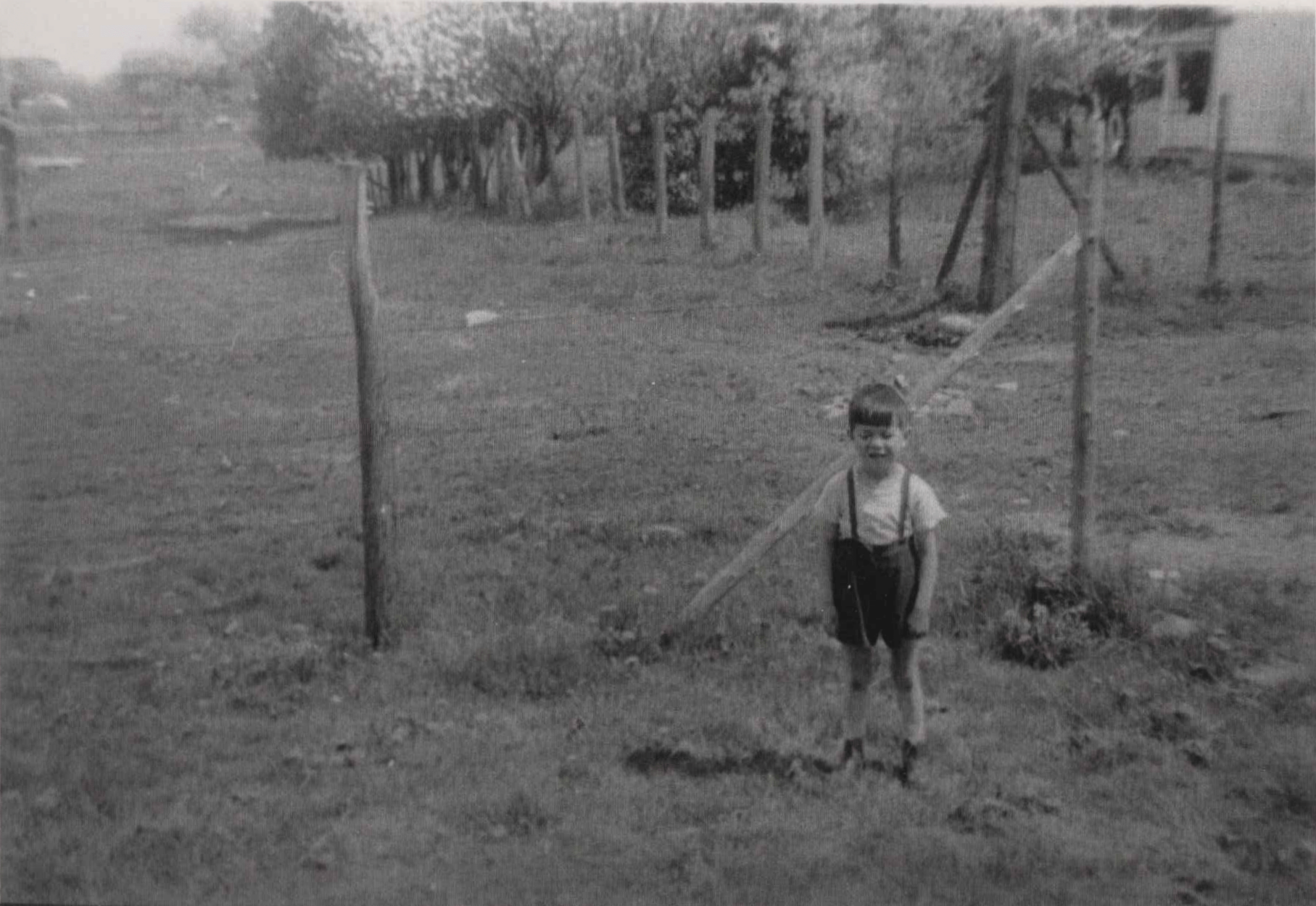
Lionel, at a young age, wandered nearby the house of Glen Delaronde. Circa 1950. (Courtesy. Lionel Deer)
Story told by Lionel Deer
What our house is sitting on right now, there used to be a little swamp here. The ground is like clay, and the land was flat, so the water had no place to go. The water used to stay up to, I’d say, about a foot deep or so.
I used to hunt frogs all along here, when I was about eight to 10 years old. I would cut the legs off of the frogs I hunted and bring them to my mother. She used to fry them for me, you don’t forget that.
The swamp was surrounded by fields, no houses at all. No trees either, you’d only see one apple tree and some thorn bushes. Besides that, it was all cut. Cows and horses used to go free around here, and they used to clean the fields up, eat all the grass.
My great grandaunt used to have a cow, herself. One cow. She was yelling for it all the time. “Tiáh! Tiáh! Tiáh! Tiáh,” she used to call her.
Then when she couldn’t get it to come back, she used to give me five cents to go and get her cow, out in the field. The cow used to mingle with the horses; they were sweet with her too. When I brought her back, she knew her way.
Yep, it was all field here, all the way up.
KANIEN’KÉHA VERSION
↓
KANIEN’KÉHA VERSION ↓
Tsi Niwatonhóntses
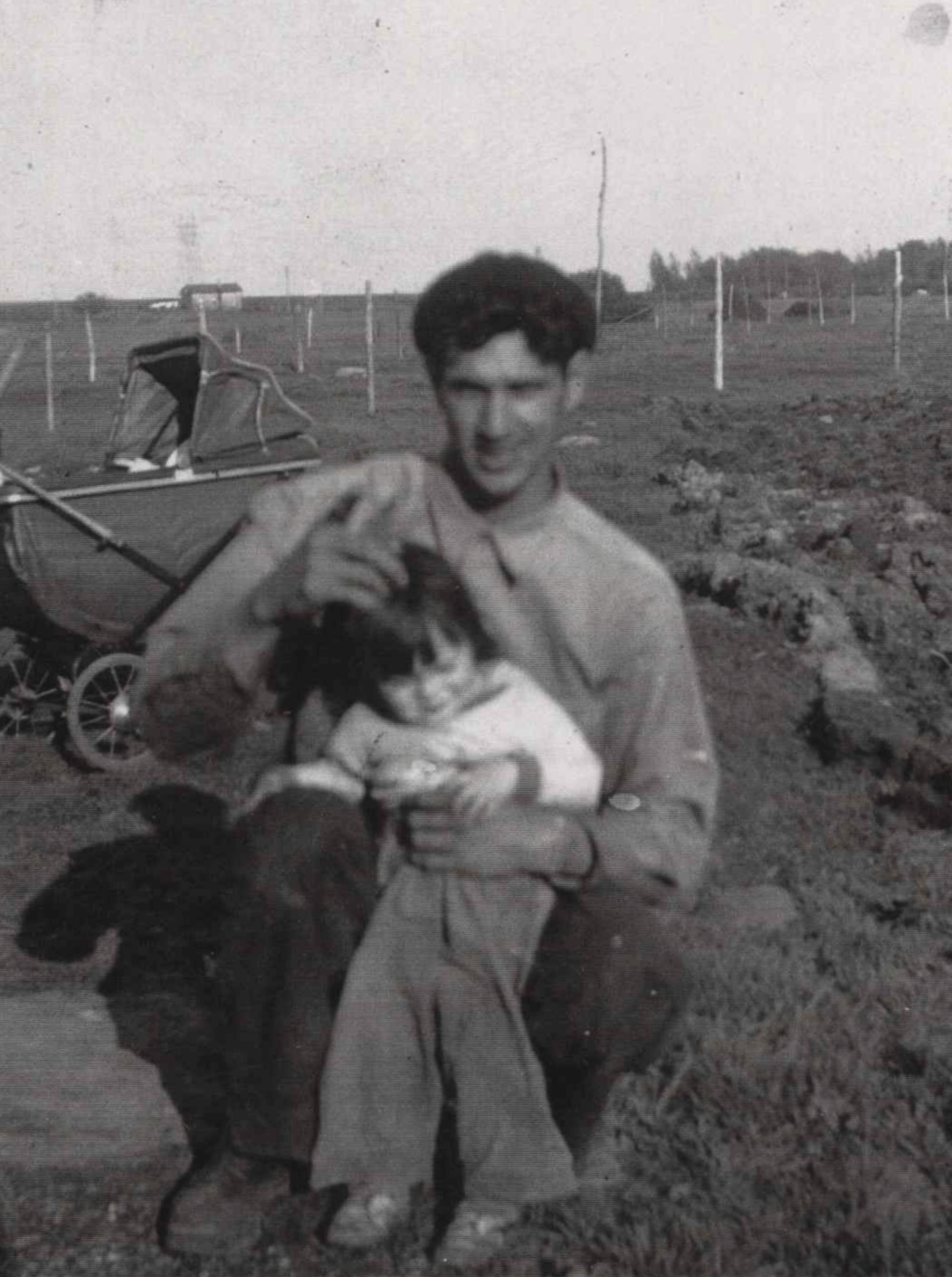
Lionel’s dad is holding a young Lionel with him, both sitting for a photo near Angus Schiek Deer’s field, with Angus’ house seen in the back. (Courtesy. Lionel Deer)
Lionel Deer ROKÁ:RATON
Tsi nón:we òn:wa' kentskotáhkwen' tsi ionkwanónhsote', kanawáhere kèn:ne' kén:tho. Kwah tsi ní:ioht ne onawa'tstahkarí:io tsi niionhontsò:ten, tánon teionhontsakwénhte', iah ki' káneka teió:ien á:wehte nohné:ka. Ákta sewahsì:ta shos, akì:ron, enwathará:tate' nohné:ka.
Tho shos nón:we aktóntie' enkheiató:rate otskwà:rhe, tóka' sha'té:kon tsi niió:re oié:ri sha'tewakohseriià:kon'. Tenkhehsínia'ke tsi nikón:ti otskwà:rhe kheiatorá:ton' tánon ake'nisténha ienkhehawíhten'. Enionktakeri'tahwhón:ha'se, iah thaonsesa'nikónhrhen thí:ken.
Kahén:ta shos teiohhkwatasè:ton', iah káneka tekanonhsó:tonhkwe'. Iah káneka teiokwí:rotonhkwe' ó:ni, nek skakwí:ra sewahió:wane' tánon tohkára nika'rhenióhkwake' ohì:kta enhsatkáhtho'. Ne ó:ni, akwé:kon kaià:khon'. Kén:tho tekontawén:rieskwe' ne tiohnhónskwaron' tánon akohsá:tens, tánon tekontohtáhrho' shos ne kahentaién:ton, enkonthontatekhwísa'.
Teio'nistenhserá:ne ake'nisténha skaià:ta tionhnhónskwaron iakonaskwaién:tahkwe', akaonhà:'ak. Skaià:ta tiohnhónskwaron. Kwah tiokontáhkwen' iekonwèn:nonks. "Tio! Tio! Tio! Tio!," shos ión:ton tsi iekonwèn:nonks.
Sok nó:nen iah teiakokwénion' iakonwèn:nonke' taontá:we' ne Tio, wísk kwénis enión:kon' nakihnónksa akotshé:nen tiohnhónskwaron, tsi kahén:taien nonkwá:ti'. Akohsá:tens shos tenkontawén:rie' ne Tio; ioiánere ó:ni' tsi nia'akotí:iere'. Nó:nen tentkia'ténhawe', ioterien'tarahstsíhon' ka' wáhe.
Orihwí:io, ohentóskonk thí:ken eh nón:we, tsi niwatonhóntses.
Edited by: George Rahrhaienté:ri Fountotos, Local Journalism Initiative Reporter
Translated by: Karonhí:io Delaronde