
No electricity
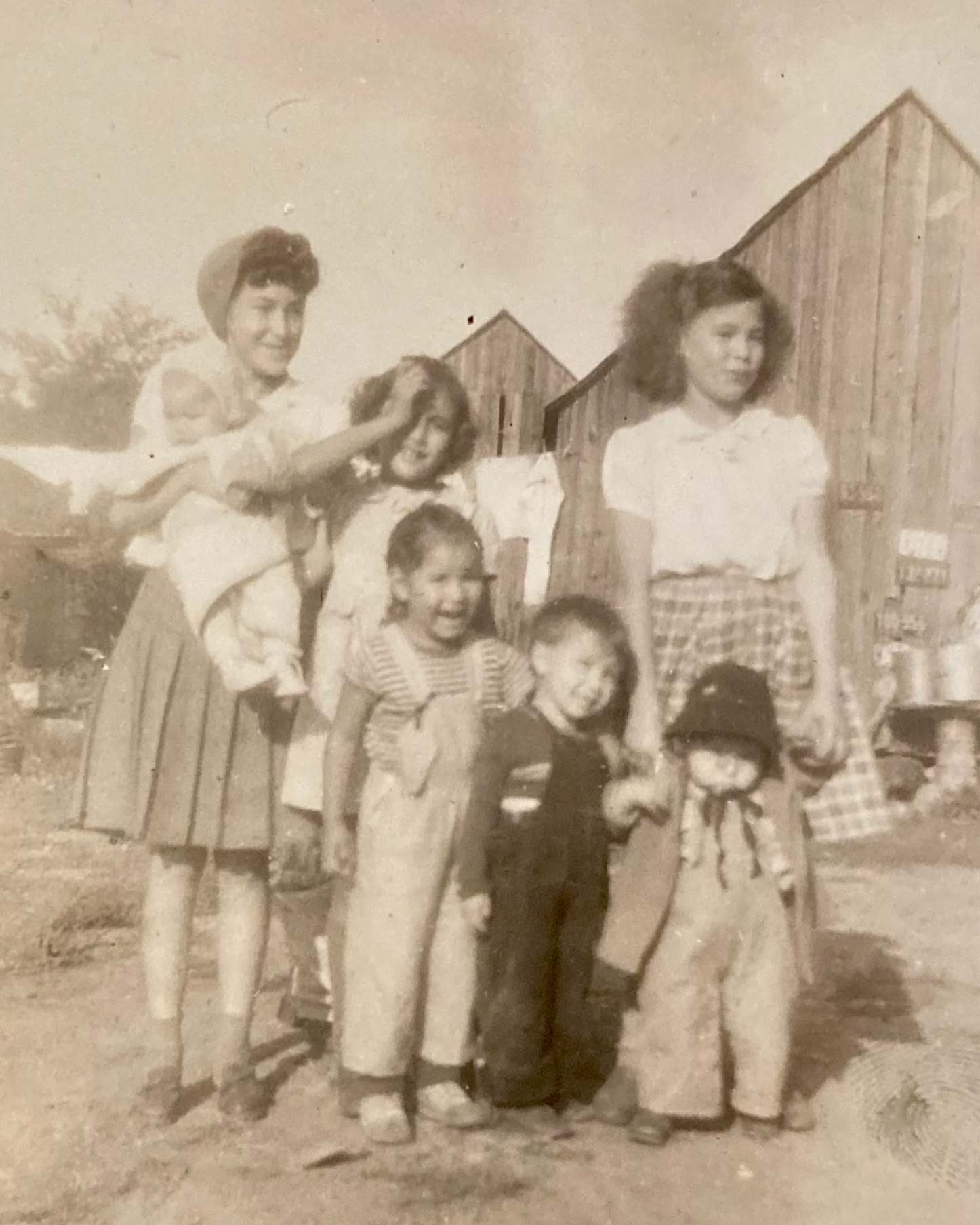
Leonard’s cousins all stand together for a family photo in front of the Bordeau farm. (Courtesy: Leonard Atonnion Bordeau)
Story told by Leonard Bordeau
“Life was hard,” I remember my father telling me. They had a barn with two horses and three cows and every spring we’d get a calf. We always had pigs. In the fall, my grandfather and a couple of my uncles would come to help slaughter a pig.
I don’t know how long we would have meat for because we didn’t even have a fridge. No fridge, no freezer, no electricity.
What they used to do was put their meat inside the pail and lower it down into the well. It wouldn’t actually be in the water but it was always cold down in the well. It kept our meat fresh. Even then, we could only keep our meat for maybe a week tops, because they had to cook it before it went bad.
There was a kerosene lamp hanging from the ceiling and it wasn’t very bright. After school, my mother used to say, “Do your homework right away while it’s still bright out.”
I would have to bring pails of water into the house so that we could drink and wash up. There was always a pile of wood outside and it was all covered in snow. My brother and I would have to bring in enough wood in the house for the night and the next day.
It’s incredible how much technology has changed.
KANIEN’KÉHA VERSION
↓
KANIEN’KÉHA VERSION ↓
Iah tekaronwaráhere
(Courtesy: Leonard Atonnion Bordeau)
Leonard Bordeau ROKÁ:RATON
"Seronhkè:ne tsi iakónhnhehkwe," kè:iahre rakhsótha rakhró:riskwe. Énska rotiién:tahkwe rakerénsne eh kontientáhkhwa tekeniiáhse akohsá:tens tánon áhsen nikón:ti tiohnhónskwaron tánon thia'tekakwitehtsherá:ke tiohnhónskwaron owí:ra enionkwatenaskwaién:ha'se. Tió:konte ionkwanaskwaién:tahkwe kwéskwes. Tsi nikanenna'kéhtshers, rakhsótha tánon tehniiáhse ne khenonha'okòn:'a enthón:ne' enionkhiié:nawa'se' taiakwaia'tà:rihte' ne kwéskwes.
Iah tewakaterièn:tare to nikarì:wes enionkwa'wahraién:take' áse' kenh iah othé:nen teionkwaién:tahkwe ne kawistóhtha. Iah othé:nen kawistóhtha, kawisón:ni, karonwaráhere.
Tho shos nihatiiéhrha kanà:tsakon enhati'wahráta' tánon ohnawerá:kon ienhòn:senhte'. Iah kwah ohnekanósne thaón:take' nek tsi tió:konte tiowistò:ne nohnawerá:kon. Takakón:tahkwe' á:se wa'ón:ni' no'wà:ron. Khó:ni thò:ne, tóka' nòn:wa tsahià:ksera nikarì:wes enionkwaién:take' nonkwa'wà:ron, áse' kenh entà:'on enhatí:rihte' no'wà:ron ohén:ton eniótken'ne.
Énska ionthahseróhkhwa oháhsera tsi kentskaráhere eh iohrèn:tonhkwe' tánon iah kwah tha'teioswáthehkwe. Ohnà:ken shiwakaterihwaienstákwen, ake'nisténha shos ión:ton, "Saió'ten sá:wen ionterihwaienstáhkhwa kaio'ténhsera kwah óksak tsi nikarì:wes shé:kon teioswáthe nátste."
Iotkà:te entà:'on é:so kanà:tsake entekhnekínion'te' kanónhskon ne ki' naón:ton' othé:nen aiakwahnekì:ra' tánon aiakwatá:wen'. Kwah tió:konte átste tekaientó:tahkwe tánon óniehte tio'rhoròn:ne. Iakwatate'ken'okòn:'a tánon nì:'i entiakwaientínion'te' kanónhskon ne tsi niwahsón:tes tánon enióhrhen'ne aorihwà:ke.
Niionehrákwaht tsi niió:re tsi wa'tewatté:ni' ne aterien'tatshenriéhtshera.
Edited by: Melissa Stacey, Local Journalism Initiative Reporter
Translation by: Karonhí:io Delaronde