
Mohawk language curriculum
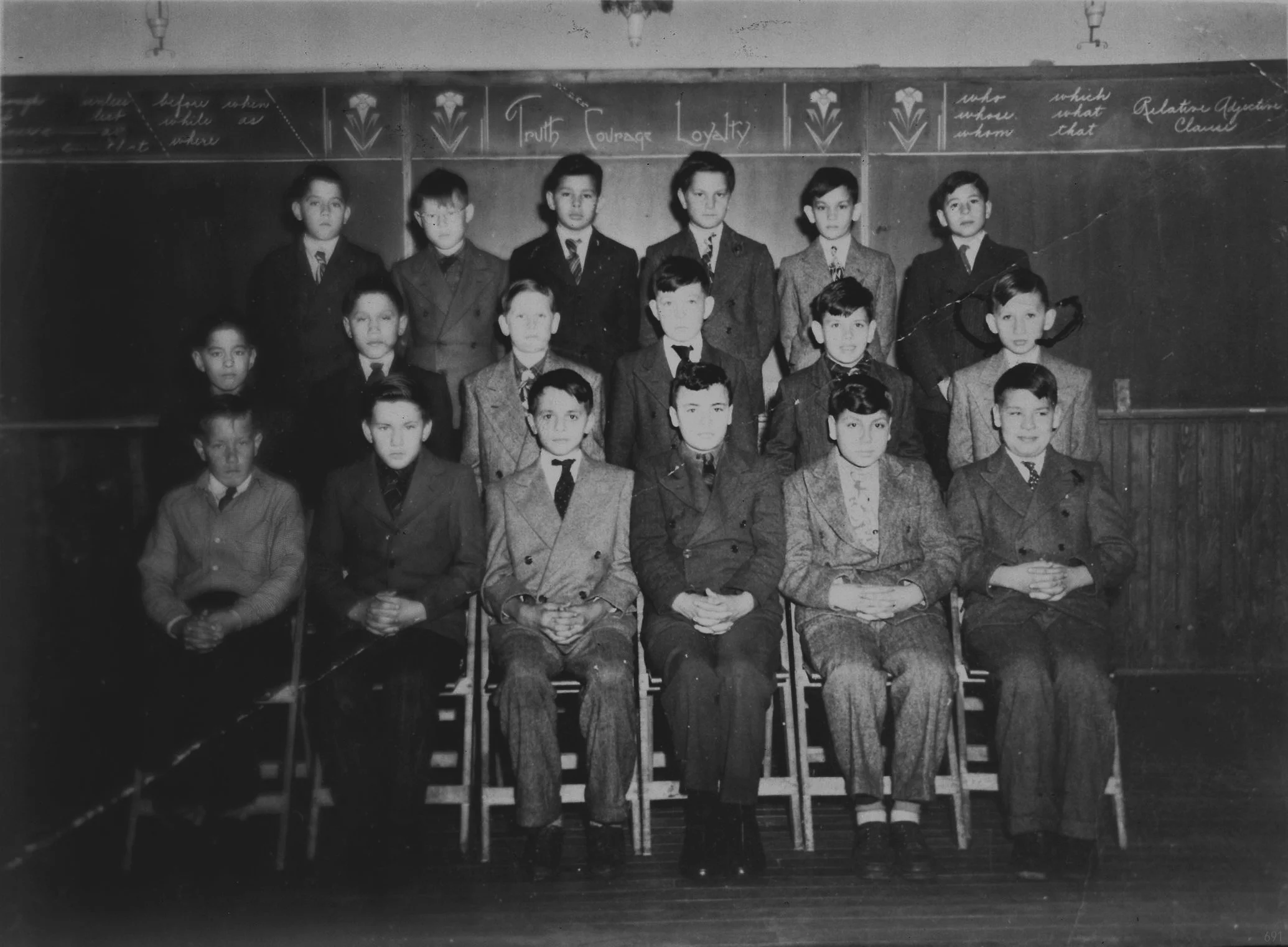
A class portrait, including (left to right, top to bottom row) Ronald Cross, Merrick Goodleaf, Robert Snow, John. B Cross, Sidney Snow, Freddy Stalk, Charles Beauvais, Alan Jacobs, Russell McComber, Louie Jacobs, Jean Paul Foivreau, Walter Jacobs, and Alan Diabo. (Courtesy: Kanien’kehá:ka Onkwawén:na Raotitióhkwa Language and Cultural Center)
Story told by Geraldine Standup
I used to teach Mohawk at Howard S. Billings from 1972 to 1979. Once I walked out of the school I never went back. That was in ‘79 with Bill 101 but, I had to stay and finish that year even though I had no more students because all the students came back to Kahnawà:ke.
I had signed a contract the day before and I got stuck there. So, I picked up all the leftovers that nobody wanted, which were language arts and moral and religious instruction. I was very active in school committee meetings. I was the only bonafide teacher on the committee. I was the only one that knew how schools were run and what curriculum was about. I wrote the curriculum for Survival School.
In the end, I was asked to become the assistant director of Kahnawà:ke Survival School, so that’s what I did. The director at the time was Janine Beauvais. Unfortunately, she got sick and passed so, I was left there running the school for almost a year by myself.
I had three boys at the time, so I was very busy. I was also involved in developing the Mohawk language curriculum, which now exists at Karonhianónhnha’. When we were first building it and hiring people to work there, I had all my aunties working. We’re all mohawk speakers.
I was only about 32 at the time, I loved it because it was a challenge. By the time I was about 36, I became pregnant with my last child, so I said no, this is it. It’s too high stress. I need to stay home and take care of myself and my baby. So that’s what I did.
KANIEN’KÉHA VERSION
↓
KANIEN’KÉHA VERSION ↓
Kanien'kéha Owén:na' Otióhkwa'
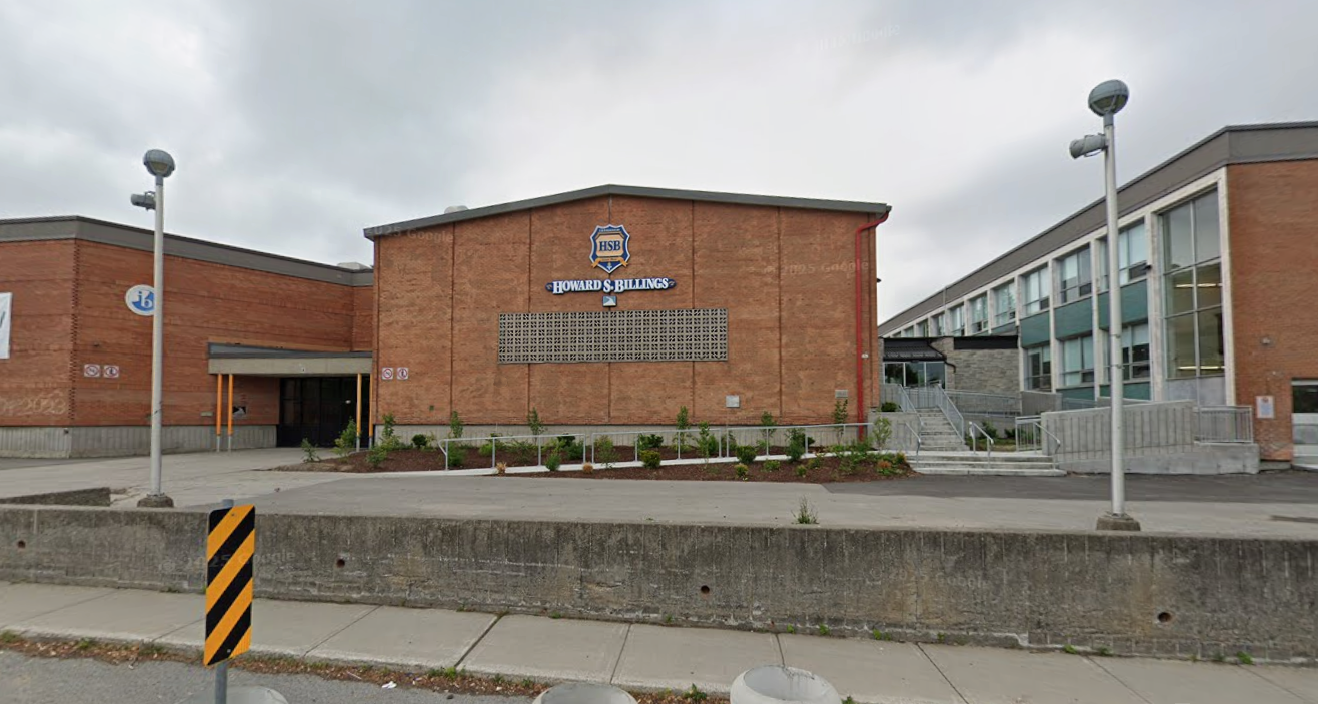
Howard S. Billings, as seen in 2025. (Courtesy: Google Maps)
Geraldine Standup IAKOKÁ:RATON
Kanien'kéha kherihonnienníhahkwe' ne Howard S. Billings nonkwá:ti 1972 shiiohserò:ten tsi niió:re' ne 1979 shiiohserò:ten. Tsi ó:nen tontatiá:ken'ne' tsi ionterihwaienstáhkhwa', ia'katkón:tahkwe'. 1979 shiiohserá:te' nen' nè:'e ne Bill 101 shikarihwatátie' nek tsi, wa'tewatonhontsóhwe' ne tho aontakè:sheke' ne tho shiiohserá:te' arenhátien tsi iah thé:nen tesewakonkwe'taién:tahkwe' ne ionterihwaiénstha' ase'kén akwé:kon tsi niiá:kon ionterihwaiénstha' Kahnwà:ke tetiakawenónhne'.
Aterihwahseronniáhtshera' wakatatshén:nare' ne thetenrè:ke sok wakewehnotà:'on ne tho. Tonsá:kehkwe' ká:ti' akwé:kon ne ioterihwatenránion ne iah ónhka tha'teiakotonhontsó:ni aiontaterihónnien'. Owén:na' nen' nè:'e tánon' tkarihwaié:ri tánon' karihwiiohstónhtshera' karihonnienníhtshera'. Kwah tokèn:'en tia'tarátiehkwe' ne tsi ionterihwaiénstahkhwa' kentióhkwaien' watkennisa'ánion. Ia'tetià:ti tó:kenske' kherihonnién:ni tia'tá:rahkwe' ne kentióhkwa'. Ia'tetià:ti kerihwaienteríhne' oh ní:tsi aionhténtia'te' ne tsi ionterihwaienstáhkhwa' nok nahò:ten' aorihwà:ke ne wateweienstáhkwen. Í: wa'khiá:ton' ne Survival School wateweienstáhkwen.
Kháre' ó:nen, wa'onkeri'wanón:tonhse' ne iontahsnié:nens tiakoniarotáhrhon aká:ton' ne Kahnawà:ke Survival School nonkwá:ti, tho káti' nà:tiere'. Janine Beauvais tiakoniarotáhrhon ne tho shikahá:wi'. Iohnhá:ten ki', wa'akononhwákten' tánon' wa'ontóhetste', ó:nen káti' ia'tonsontià:tihste' thóha tsóhsera akonhà:'ak wa'kahténtia'te' ne tsi ionterihwaienstáhkhwa'.
Áhsen nihá:ti rotihsken'rakéhte' wakeksa'taién:tahkwe' ne tho shikahá:wi', é:so káti' tsi tewakeweienhnharà:'on. Tia'tarátiehkwe' ò:ni' tsi wa'atión:ni' ne Kanien'kéha wateweienstáhkwen né: nòn:wa Karonhianónhnha' tká:ien'. Shontaiakwatáhsawen' né: aiatión:ni' tánon' aiakhíhnha'ne' nón:kwe ne tho aiakoió'ten', akwé:kon tsi nikón:ti aktenthokòn:'a ionkhiio'ténhsehkwe'. Akwé:kon se' Kanien'kéha iakwahrónkha'.
32 khok tóka' nitewatién:tahkwe' ne tho shikahá:wi', onkon'wéskwen' ase'kén ostón:ha waterihwató:re'. Tóka' 36 sha'tkohserí:ia'ke', ohna'kénhkha' wa'katháwa' nake'nisóhkwa', né: káti' wa'kì:ron' iáhten, thok ki' ní:kon. Só:tsi é:so teio'nikonhrhá:ra't kí:ken. Tewakatonhontsó:ni aki'terón:take' akataten'nikòn:raren' tánon' ahiiaten'nikòn:raren' nowirà:'a. Tho káti' nà:tiere'.
Edited by: Melissa Stacey, Local Journalism Initiative Reporter
Translation by: Sahawisó:ko' Arquette