
Mohawk name
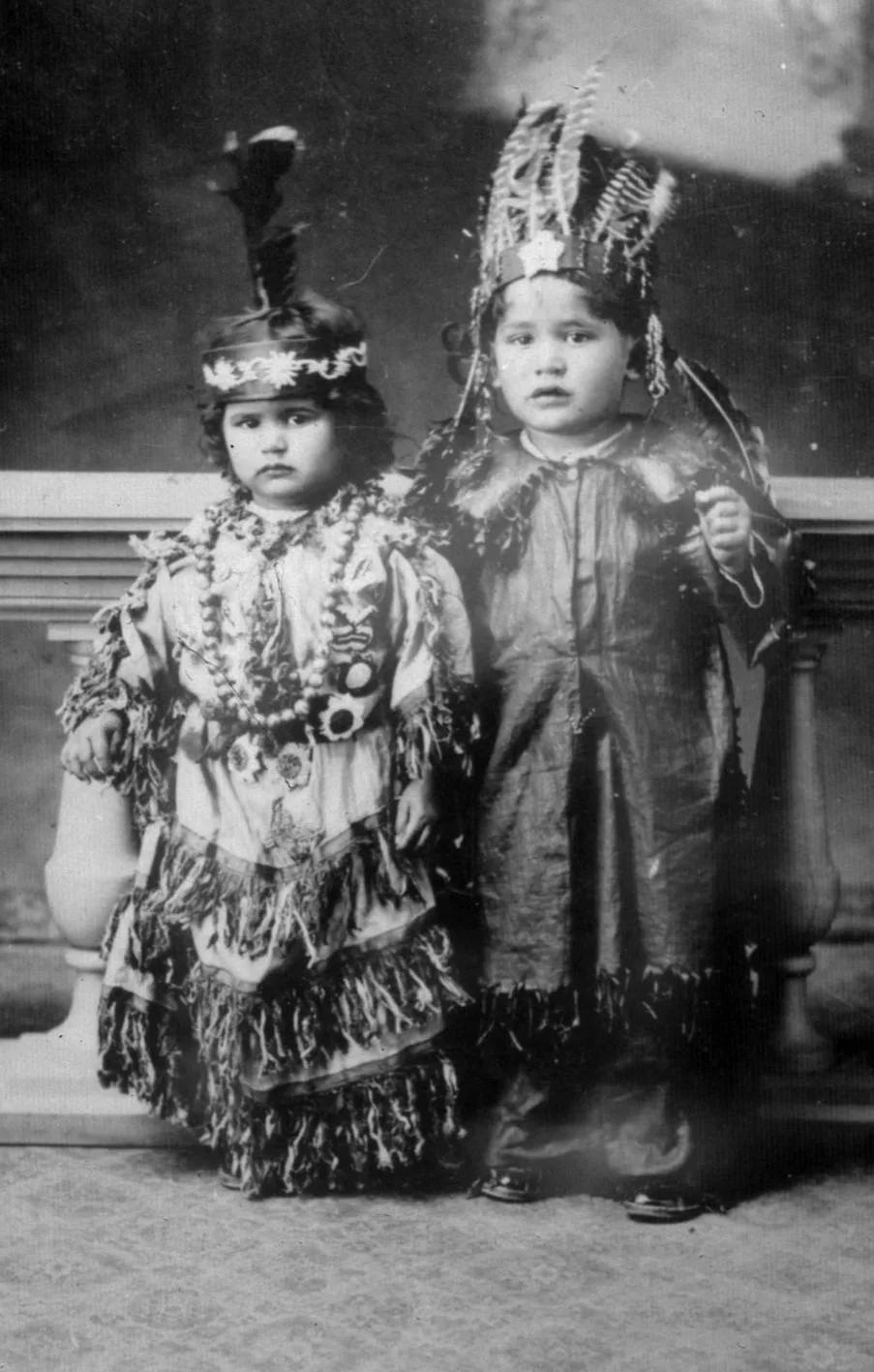
Rose and Wallace Montour, at the young ages of 3 and 5 respectively, are adorned in traditional outfits that are handcrafted by their grandmother, Kawennawi Montour. Circa 1924.(Courtesy: Kanien’kehá:ka Onkwawén:na Raotitióhkwa Language and Cultural Center)
Story told by Darrell Thompson
My daughter just had her first daughter, and I finally became a Baba. Family is the best medicine, and I couldn’t be more proud of my daughter for expanding the family.
My daughter asked me for Mohawk names before my granddaughter was born, and I came up with five different names that I thought would fit our new addition to the family.
When my daughter was in labour, my granddaughter was experiencing complications. I was very nervous but knew deep down in my heart that she was a fighter.
That little girl entered this world, waving her little hands and arms. I thought to myself, “Look at her! She is already showing off her wings, our beautiful little snipe.”
We named her Ieweiatakwaríhtha’, which means to straighten out your wings, like a snipe, which is her clan. She showed us what her name was supposed to be when she arrived. It is beautiful how powerful creation is and what the meaning of our names carries.
KANIEN’KÉHA VERSION
↓
KANIEN’KÉHA VERSION ↓
Kanien'kéha kahsén:na'
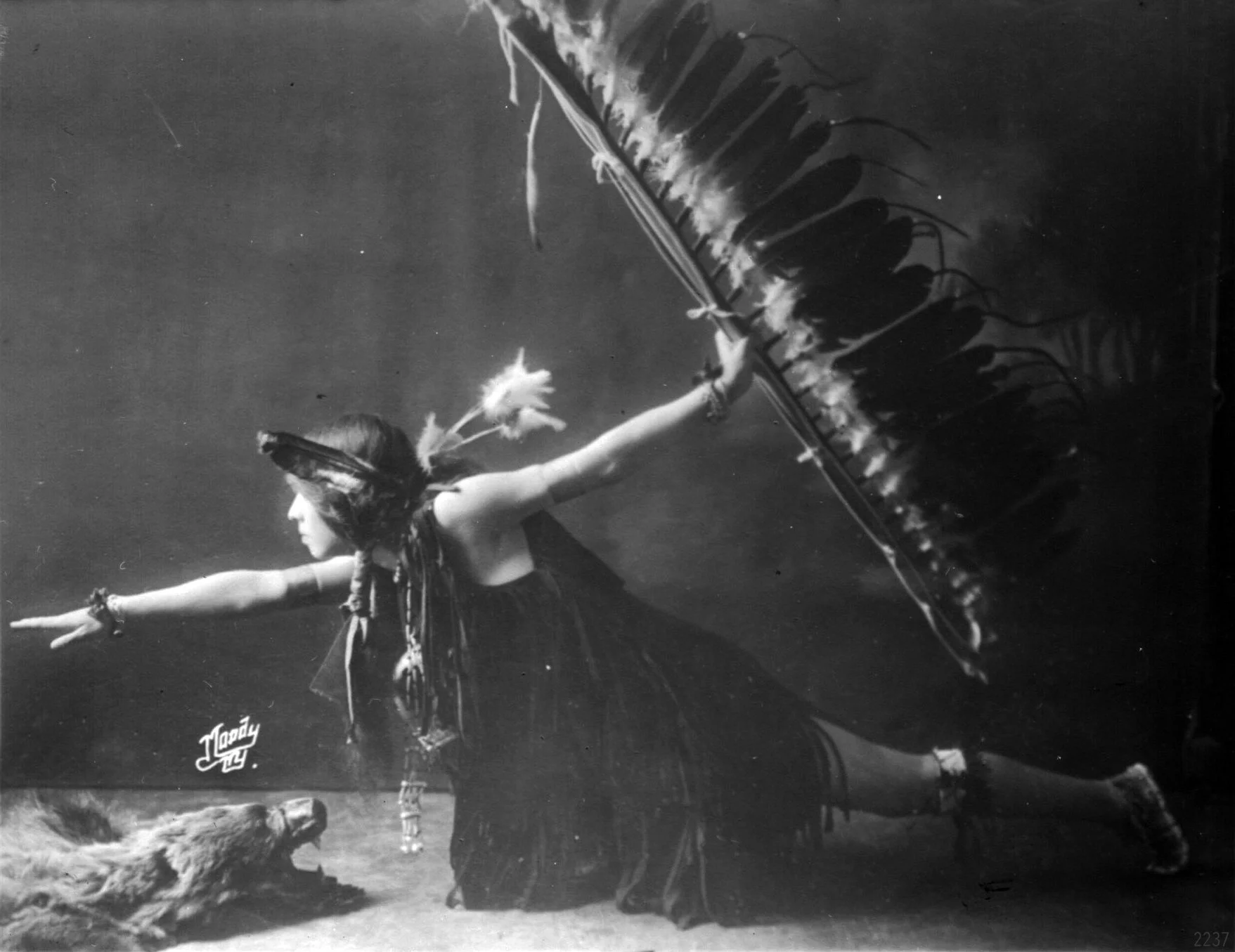
In a very theatrical shot for the time, a young woman soars like the Eagle staff she wields, in a very dynamic pose. (Courtesy: Kanien’kehá:ka Onkwawén:na Raotitióhkwa Language and Cultural Center)
*The woman in the photo is recognized to possibly be Esther Deer.
Darrell Thompson ROKÁ:RATON
Kheièn:'a òn:wa'k wa'akowiraién:ta'ne' ne tiotierénhton ontatièn:'a, tánon' ó:nen kahsóhtshera' wa'ká:ton'. Kahwá:tsire' né: kwah tkanonhkwa'tsherí:io, tánon' iah thaón:ton' ne ísi' nón: akhenaie'séhake' ne kheièn:'a tsi iehwatsirowanáhtha'.
Wa'onkeri'wanón:tonhse' ne Kanien'kéha kahsenna'shòn:'a kheièn:'a ohén:ton tsi niió:re' kheiaterè:'a wa'akennákerate', sok wísk nikahsén:nake wa'khsennón:ni' ne wà:kehre' tóka' eniakoia'taweiénston né:ne owí:rase'.
Né:ne ó:nen shiiakowiraientà:sere' kheièn:'a, kheiaterè:'a kwah í:ken tsi wa'tiontátienhte'. É:so tsi tewaka'nikonhrhá:rahkwe' nek tsi wakaterièn:tarahkwe' né: nakwerià:ne tsi ionterí:ios.
Thí:ken eksà:'a taiontáweia'te' kí:ken ionhontsá:te', teionnentshateníhonskwe' tánon' teionnihsnonhsateníhonskwe'. Wa'kanonhtónnionhwe', "Hé: thí:ken! Ok nà:'a ionkhina'tón:ni ne teienerahóntshonte', onkwá:wen ken'k niiá:ka' iakoia'táhskats tawístawis."
Ieweiatakwaríhtha' wa'akhihsén:non', né: kén:ton tahstá:kwarihte' ne tehsenerahóntshonte', tsi ní:ioht ne tawístawis, tánon' eh tho niiako'tarò:ten. Wa'onkhina'tón:hahse' oh naiehsenno'ténhake' shà:'onwe'. Ióhskats tsi nika'shástste' ne sha'oié:ra iohsa'ánion nok tsi nahò:ten' kén:ton's onkwahsenna'shòn:'a.
Edited by: Sanatana Deer, Local Journalism Initiative Reporter
Translated by: Sahawisó:ko' Arquette