
Marriage in Eagle Bay
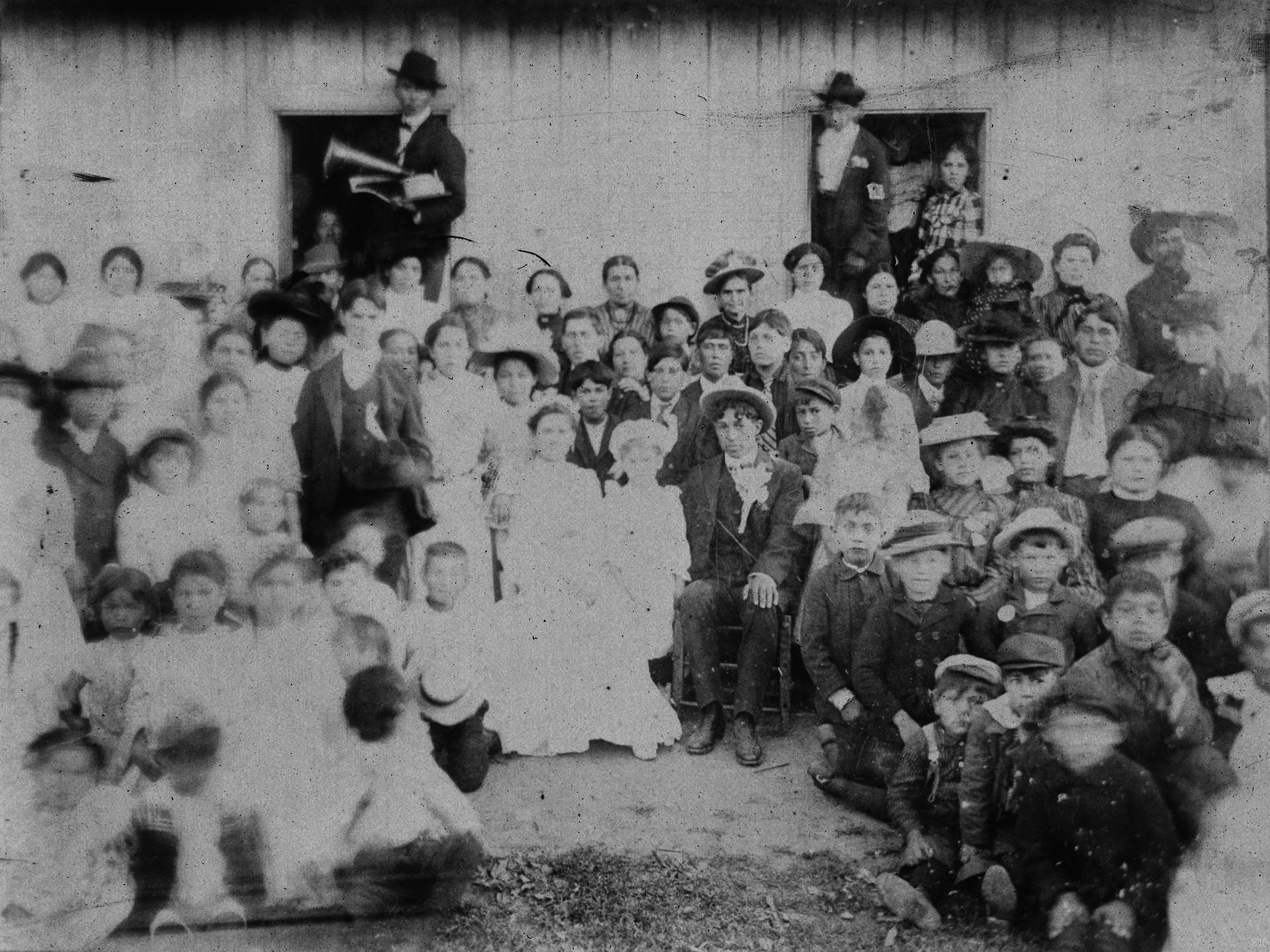
The wedding of Louis Norton & Laura Perra Norton. (Courtesy: Kanien’kehá:ka Onkwawén:na Raotitióhkwa Language and Cultural Center)
Story told by Mike Loft
During my youth, some of my most cherished memories were made in the Longhouse, sitting beside my cousins, listening intently as we learned the stories, songs, and teachings of our people. Those moments rooted me in who I was, and who I would become.
Years later, while attending Manitou College, my path crossed with Ruth Maloney – a strong, graceful Mi’kmaq woman from Nova Scotia. Meeting Ruth felt like the beginning of something very special. At college, I had the honour of studying under elders Ernie Benedict and Joe White from Akwesasne. Their wisdom didn’t just educate me – it awakened something deeper. Their teachings built upon the foundation laid in my boyhood and helped me embrace a fuller, more balanced understanding of my cultural identity.
Not long after, an opportunity arose to move to Ganienkeh – Eagle Bay. I turned to Ruth and said, “Let’s go together.” And we did. In 1974, we made our first home by the shores of Moss Lake, a place so serene and beautiful it felt like a hidden resort gifted to us by the Creator.
Ruth quickly found her place in the community, joining the women in the cookhouse where they took turns preparing meals. She loved that spirit of togetherness. Before long, we stood before the Elders and shared our intention to marry. What followed was nothing short of extraordinary.
The entire community came together to make our wedding happen – there was no cost, only love. Everyone had a role, and each person fulfilled it with care and pride. Elders gathered, food was prepared, and the ceremony unfolded with a quiet grace that still moves me to this day.
Louis Hall was there, and he gifted us a handwritten wedding document – his words etched in ink, now a treasured piece of history.
Though our traditional wedding held deep meaning, it wasn’t recognized by the church or the government. So, we married again, this time for the paperwork. But it was that first ceremony, surrounded by our people, that truly bound us.
I remember the crowd – so many came to celebrate with us. Ruth and the women lovingly sewed our wedding clothes by hand, each stitch a testament to care and tradition. Friends and family traveled from Kahnawake to Eagle Bay, bringing joy and laughter. Moss Lake shimmered in the sunlight, and I remember thinking how lucky we were to be married in such a place.
During the ceremony, Ruth and I exchanged symbolic gifts: I gave her a basket of food, and she gave me a ribbon shirt. That moment, simple and profound, captured the essence of our union – nourishment, respect, and reciprocity.
Today, Ruth and I have been together for 51 years. Our journey hasn’t always been easy, but it’s one I wouldn’t trade for anything. Ruth often says, “Nothing in life comes without effort. If you want something, you must fight for it.” And she’s right. We’ve fought for our love, our family, and our place in the world.
As I look back, I think of that perfect day – the sun shining, the lake calm, the feeling of being held by our homelands and our people. It wasn’t just a wedding. It was the beginning of a life filled with meaning, memory, and love. And for me, it’s been an unforgettable day… and an unforgettable life.
KANIEN’KÉHA VERSION
↓
KANIEN’KÉHA VERSION ↓
Eagle Bay Tionkeniniá:kon
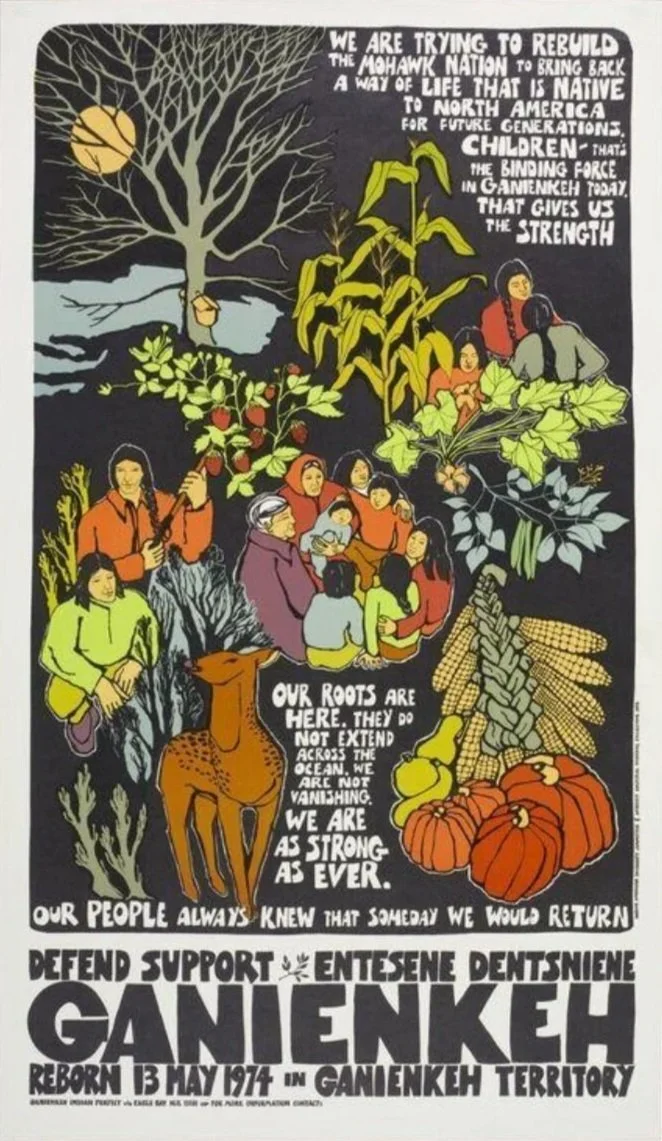
Mike owns a poster of the “Ganienkeh Indian Project: Mohawk Nation,” issued by Native American Solidarity Committee. USA, 1976. (Courtesy: © Victoria and Albert Museum, London)
Mike Loft ROKÁ:RATON
Tsi nikarì:wes ken' shitewatién:ha, ótia'ke' né: naonhà:'a tkenòn:we's nothé:nen kè:iahre' eh wáhi Kanonhsésne tiawé:non, onkwara'se'okòn:'a iakwéntskote', kwah tokèn:'en ionkwatahónhsate' tsi oká:ra', karén:na', tánon' ne ontionkwè:ta' raotirihonnnienníhtshera' iakwateweiénstha'. Kwah nè:'e tewákhnerenks thí:ken kè:iahre' nónhka nì:'i, tánon' ónhka katónhsere'.
Iohserá:ke ohnà:ken, tsi Manitou College shitkaterihwaiénstha', Ruth Maloney wa'tiatiathahátera'ne'—iako'nikonhrahní:ron, teiakohrhò:ton Atsa'ktahró:non iakón:kwe ne Nova Scotia nitiakawé:non. Kwah tsi ní:ioht ne nahò:ten'k kanó:ron atahsawénhtshera' onkwá:ton'se' tsi wa'kheientéhrha'ne' Ruth. Né: ionterihwaienstahkhwa'kó:wa nonkwá:ti, kwah tokèn:'en onkerà:se'se' tsi kahsotshera'shòn:'a Ernie Benedict tánon' Joe White néne Ahkwesásne nithoné:non wa'onkerihónnien'. Iah nek tewakerihonnién:ni ne tsi nihiate'nikonhrattókha'—wa'ó:iehte' nahò:ten'k sénha nà:kon iò:ron. Raotiriihonnienníhtshera' è:neken tsi nikentskò:ten ne tsi nikarì:wake tewakatohétston ken' shikà:'a wa'kanonhsón:ni' tánon' nè:'e ontié:nawa'se' atié:na' ne sénha kanà:non tánon' sénha kakon'tsheríhare' tsi ní:tsi wake'nikonhraién:ta's tsi niwakerihò:ten.
Iah karì:wes ohnà:ken, ok niwate'shennò:ten wa'okè:tohte' ne Kanièn:ke—Eagle Bay iakátien'. Wa'kheiatkáhtho' Ruth tánon' wa'kì:ron', "Hao' ítene." Tó:kenske ia'ákene'. 1974 shiiohserahsé:tas, atsà:kta ne Moss Lake wa'atiatenonhsón:ni' ne ontiá:wen tiotenonhsatierénhton, kwah tho niwatonhontsò:ten kwah shah thí:ken tánon' ióskats kwah tsi ní:ioht ne Shakoia'tíson' shonkwá:wi ne ioterihwahséhton tsi iontia'tawatstáhkhwa'.
Óksa'k wa'etshén:ri' Ruth tsi nón:we niiakó:wen na kanakerahserá:kon, wa'tkóntieste' konnón:kwe ne tsi iekhonnià:tha' nonkwá:ti tsi wa'tkonttenión:ko' tsi wa'kontikhón:ni'. Kwah wa'enó:ronhkwe' ne wanitiohkwakwe'nón:ni aotónhnhets. Iah karì:wes ohnà:ken, thotí:ien's raotihén:ton wa'tiakení:ta'ne' tánon' wa'atiathró:ri' tsi iatiaská:neks aionkeníniake'. Iah othé:nen tetió:to'kte' tsi niiorihwanehrákwaht néne tsi nahò:ten' saiohnhonterátiehte'.
Kwah kanakerahserakwé:kon wahonnitiohkwakwe'nón:ni' nahatirihón:ni' tó:kenske' aonterihwahtén:ti' tsi ionkeniniákhe'—iah othé:nen teiokaraién:tahkwe', nek kanoronhkwahtsheraién:tahkwe'. Akwé:kon ronaterihón:tonhkwe', tánon' akwé:kon tahonteweièn:ton' tánon' wa'thonattsina'tóntha'se' tsi wahatirihwaieríthon'. Wahontia'tarò:roke' ne thotí:ien's, akwé:kon kakhwakwatákwen, tánon' kwah ioianerehón:we skenèn:'a onterihwahtén:ti' ne kaniá:kon tánon' shé:kon nòn:wa wenhniseraténion wakeriahsakará:tats. Louis Hall eh iè:re'skwe', tánon' iakoniákstha' kahiatónhsera' shontiá:wi né:ne raónha rohiá:ton—kahnekahòn:tsi rohiatónhkwen ne raowenna'shòn:'a, ó:nen nòn:wa kanó:ron iotòn:'on ne tsi wa'kenhátie' aorihwà:ke.
Sa' ne tsi sénha kowá:nen ne tsi nahò:ten' kén:ton tsi orihwakaionhnéha tsi ní:tsi ionkeniniá:kon, kwah iah tehotirihwakweniénston ne tsi ionterennaientáhkhwa' tóka' ni' ne kakoráhsera'. Né: ki', á:re' wa'onkeníniake', skahiatonhseraientátie' nòn:wa. Nek tsi ne thí:ken tioteniaktsheratierénhton, tsi ontionkwè:ta' teionkhiiatià:taton, kwah tó:kenske nè:'e teionkenì:neren.
Kè:iahre' ne kentióhkwa'—kwah é:so rá:ti' thonenónhne' nohserón:ni aiakwatonhnhà:ren'. Ruth tánon' ne konnón:kwe kanoronhkwahstsíhon wa'konti'níkhon' kontisnonhsa'kéhshon ionà:ton ne ontiatahkwénnia', tionateweièn:ton tánon' tsi niionkwarihò:ten karátie' nakwé:kon tsi ní:kon ka'nikhónnion. Onkwatenro'shòn:'a tánon' kahwá:tsire' néne Kahnawà:ke nithoné:non Eagle Bay thonenónhne', kwah é:so atonhnhà:ra tánon' kaiéshon rotiientátie'. Kwah wa'tioniatarastaráthe'ne' ne Moss Lake norahkontsherà:ke, tánon' kè:iahre' tsi kanonhtónnion tsi iontiatera'swí:io tsi ionkeniniákhe' neh niwatonhontsò:ten nonkwá:ti.
Tsi niwaten'niotáhtsheres, Ruth tánon' ì:'i wa'tiatiatá:ton' wate'nientenstáhkwen atatá:wi: kheia'therá:wi à:there' tetkakhwáhere', tánon' ionkwatia'tawi'tsherá:wi io'nheksen'tónnion atià:tawi. Eh sha'á:wen', tsi waterihwatié:sen tánon' karihowá:nen, kwah nè:'e wa'kaié:na' tsi nahò:ten' ioteríhonte' tsi ionkeniniá:kon—kanón:ten, karihwakweniénston, tánon' tewatatá:wi.
Òn:wa wenhniserá:te', ó:nen 51 niiohserá:ke nikarì:wes shiiákene's ne Ruth tánon' ì:'i. Iah tió:konte' tewatiesénhne' ne ontiathahinónhtshera', nek tsi iah tha'takatá:ton' nothé:nen ó:ia' taonsakté:ni'. Iotkà:te' ión:ton Ruth ne, "Ó:nen'k tsi enhsaskéhnha' nakwé:kon tsi nikarì:wes sónhnhe'. Tóka' othé:nen enhsaská:neke', ó:nen'k tsi enhsaskéhnha'." Tánon' taieié:rite'. Wa'atiaskéhnha' nonkeninoronhkwáhtshera', onkenihwá:tsire', tánon' tsi nón:we niiontiá:wen ne kèn:tho tsi ionhontsá:te'.
Tsi ohnà:ken skatkáhthos, kanonhtonniónkwas thí:ken tewenhniseraié:ri—tó:k niioráhkote', shah thikaniatarò:ten, kattó:kas tsi ontionhontsahón:we tánon' ontionkwè:ta' ionkhiienawà:kon. Iah nek kaniá:kon tekénhne'. Tontáhsawen' tsi ka'nikonhraientà:'on, wehiahrà:'on, tánon' kanorónhkwen tetkáhere' tsi kónhnhe'. Tánon' nakerihwà:ke, kwah iah teio'nikónhrhenht enhnísera' wakatòn:se'... tánon' iah teio'nikónhrhenht tsi ní:tsi wakatonhnhahténtion.
Story told & edited by: Mike Loft
Translation by: Karonhí:io Delaronde