
The wells
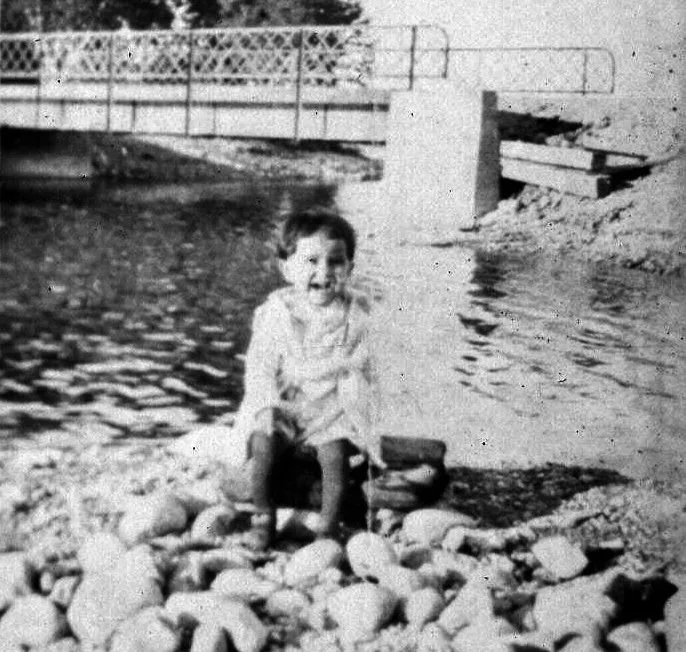
Kateri Island is lit up from the brightest smile this child can offer. (Courtesy: Kanien’kehá:ka Onkwawén:na Raotitióhkwa Language and Cultural Center)
Story told by Michael Rice
I remember there used to be wells all over the community. The wells were ruined from the blasting with dynamite going on at the stone quarry, which broke up a lot of the natural aquifers. You used to be able to pump and drink the water from the wells, and they were maintained by the Council.
The Council would come, from time to time, to do tests to see if there was bacteria. They said the well water itself was good, but that it wasn’t drinkable because of the mineral build-up and rust inside the well. The pumps at the surface were eventually disconnected from the cylinders, but not all of them were.
I always think about that, and then I look at people in Kahnawake. We are cut off from the river, and people are cut off from fresh drinking water in the wells. Look at how many people are sick here of things we didn't have before. We used to work for years, sometimes far away, like in United States, and we were healthy. But when we came back here, we started to get sick and age really fast.
KANIEN’KÉHA VERSION
↓
KANIEN’KÉHA VERSION ↓
Tsi Iohnaweró:ton
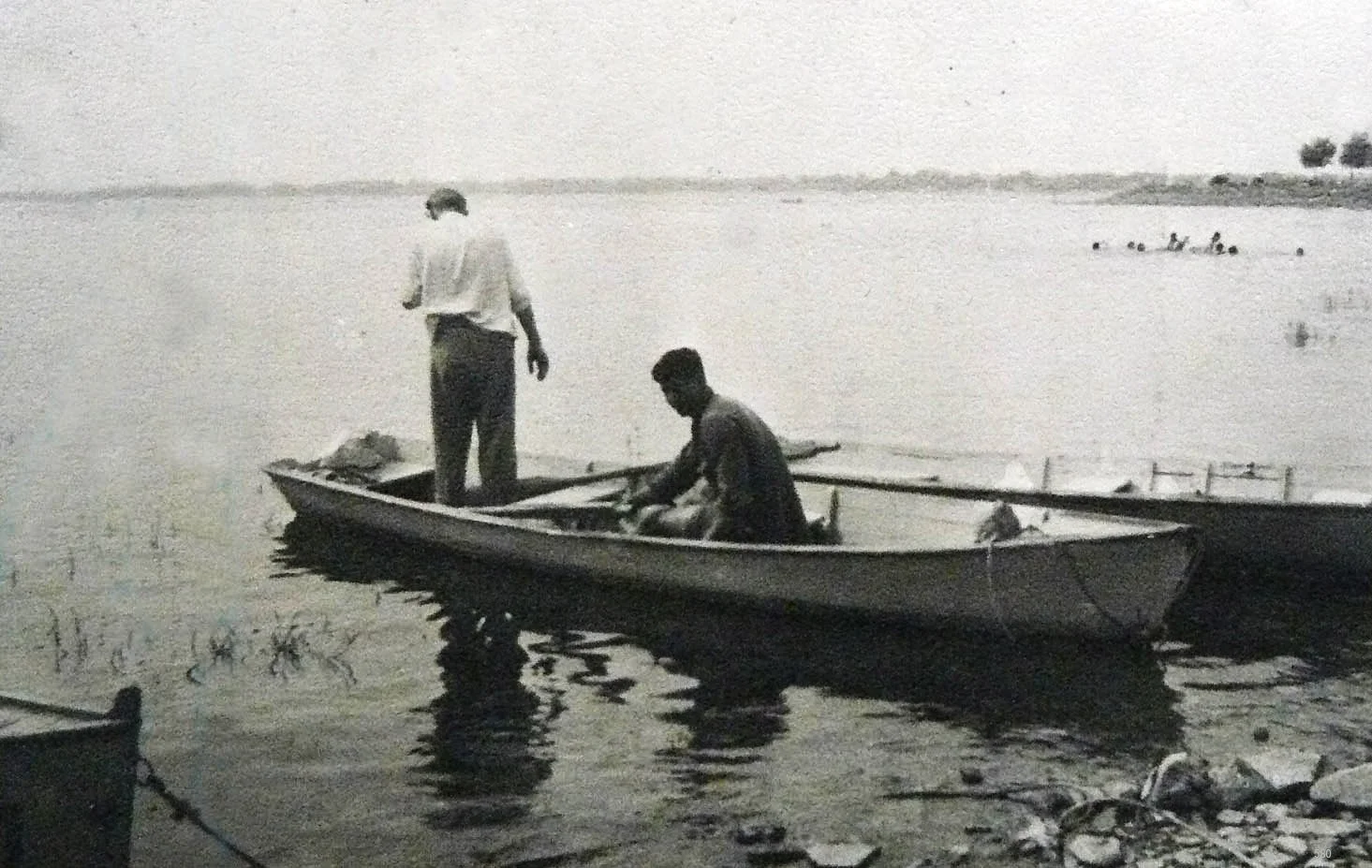
Around 1948, before the construction of the seaway, these men took their boat out to the waters from Johnson’s Beach. (Courtesy: Kanien’kehá:ka Onkwawén:na Raotitióhkwa Language and Cultural Center)
Michael Rice ROKÁ:RATON
Kè:iahre' tsi kanatakwé:kon shos ieiohnaweró:ton. Thí:ken wahonttatákwahte' tsi ienenio'kwátstha nonkwá:ti' wa'kahnaweráksa'te, ne ki' nè:'e wa'tkahrihtánion' tsi nón:we sha'oié:ra tewathnaweróhkhwa'. Wá:tons shos enhshnekatáhko' tánon enhshnekì:ra ne iohnáwerote aohné:ka, tánon ratitsénhaiens rati'nikòn:rare'.
Enthón:ne' thí:ken ratitsénhaiens, í:non teká:ron, ahóntken'se tóka' othé:nen' "bacteria" iaó:ron'. Wahonnì:ron' tsi ioiánere ne ohnáwera aohné:ka', nek tsi iah teiehnekíhrha áse' kenh tsi niió:re tsi ioterò:ron ne atonhnhéhtshera' tánon tsi iosken'rharà:'on ohnawerá:kon'. Katke'shòn:'a tonsahatikháhsi' ne iehnekatahkwáhtha' tánon ne kahnekatáhkwas, nek tsi iah akwé:kon tha'teshotikháhsion'.
Tió:konte' kanonhtonniónkwas thí:ken, sok Kahnawa'kehró:non enkheiatkáhtho. Teionkhikháhsion' ne kaniataratátie' tánon tehshakotikháhsion nón:kwe' ne ohné:kanos ne tsi iohnaweró:ton nitiawé:non'. He tsi nihá:ti' nón:kwe rotinonhwáktani eh nitiorihón:ni' néne nahò:ten iah tekaién:tahkwe' nohén:ton'. É:so iohserá:ke shos enionkwaió'ten', sewatieren'shòn:'a í:non niió:re', tsi ní:ioht ne Wastonhronòn:ke, tánon tó:kenske ronata'karí:tehkwe'. Nek tsi sha'tontaiákwe', tontáhsawen' wa'onkwanonhwákten' tánon iosnó:re' taionkwaién:ta'ne.
Edited by: Jonathan Turenne - Local Journalism Initiative Reporter
Translated by: Karonhí:io Delaronde