
Needing some excitement
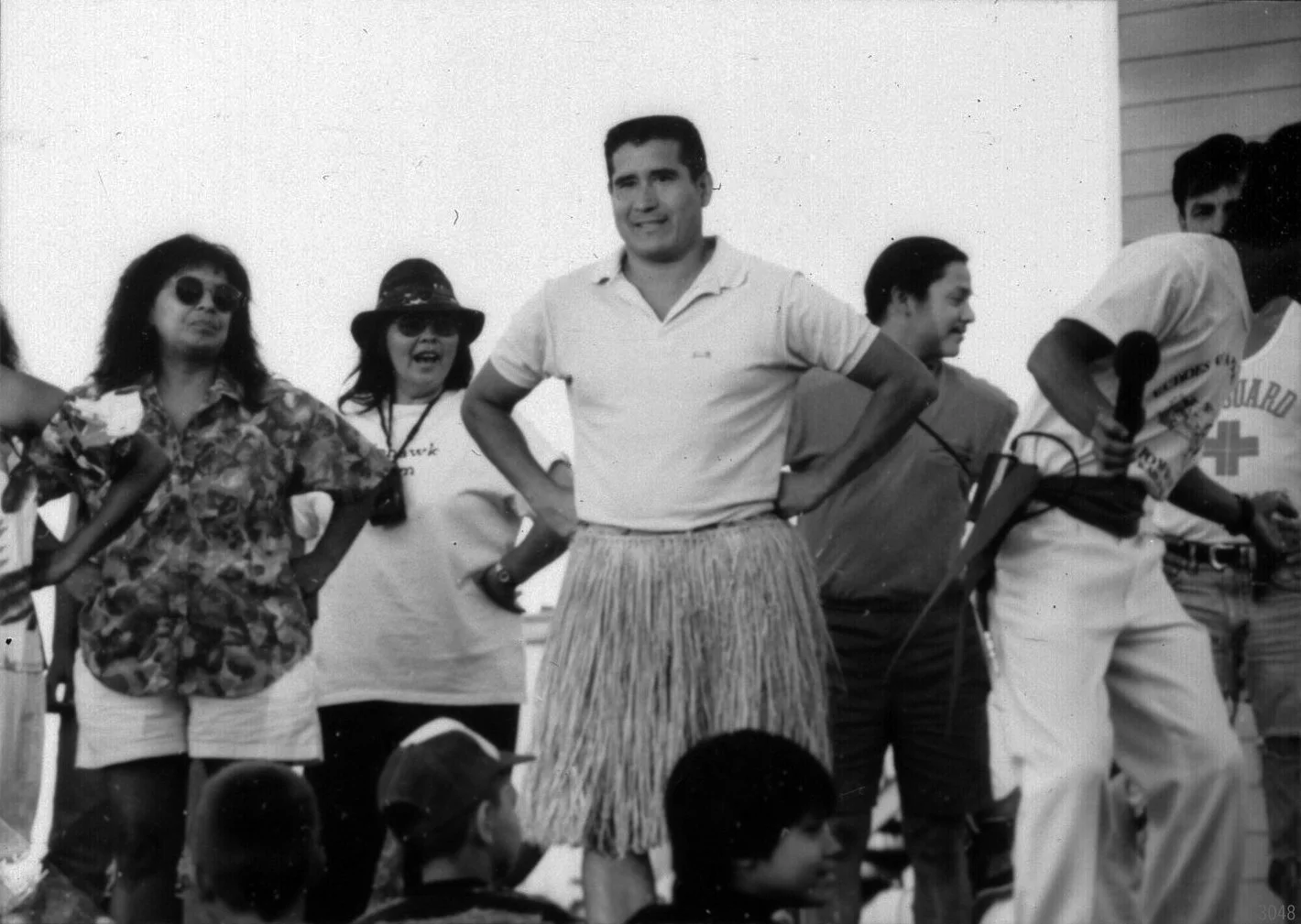
Excitement and reprieve, while not always attainable, can help one bear the more mundane moments. For example, it can't get more exciting for Joe Norton (centre) than to be wearing a grass skirt. Also in the photo, right of Joe, are Martin Loft and Joe Delaronde, who’s holding a microphone. (Courtesy: Kanien’kehá:ka Onkwawén:na Raotitióhkwa Language and Cultural Center)
Story told by Arthur Diabo
During the Oka Crisis, the combat experience of Kahnawake’s veterans was called into service. We manned the lines as leaders and advisors. For my part, I was telling a lot of the younger guys to get the hate out of them.
I said, “What I’m going to teach you is going to keep you alive for a little while because after that, our goose is cooked.”
The older veterans did what they could, and the younger veterans passed on what they knew about survival, fighting, and a little bit of medical stuff. I tried to instill discipline because most of the land defenders only had a handful of ammunition and hunting rifles.
The Canadian Army was here and ready to come in. They were well trained and well supplied with automatic weapons and lots of ammo. If they attack with full force, we’re done, but I knew they wouldn’t dare assault our positions because it would have created an international incident, especially if Mohawks were killed.
I remember one Friday I showed up and said, “Where the hell are all the guys?”
“They’re gone across the river to a Luba concert.”
I said, “Who’s Luba, and how the hell did they get out of here? They’re supposed to be on the line.”
Boredom is your worst enemy. The negotiations were taking too long. They were getting bored and needed some excitement.
KANIEN’KÉHA VERSION
↓
KANIEN’KÉHA VERSION ↓
Wahonská:neke' Nahò:ten'k Ahoti'nikonhró:ri'
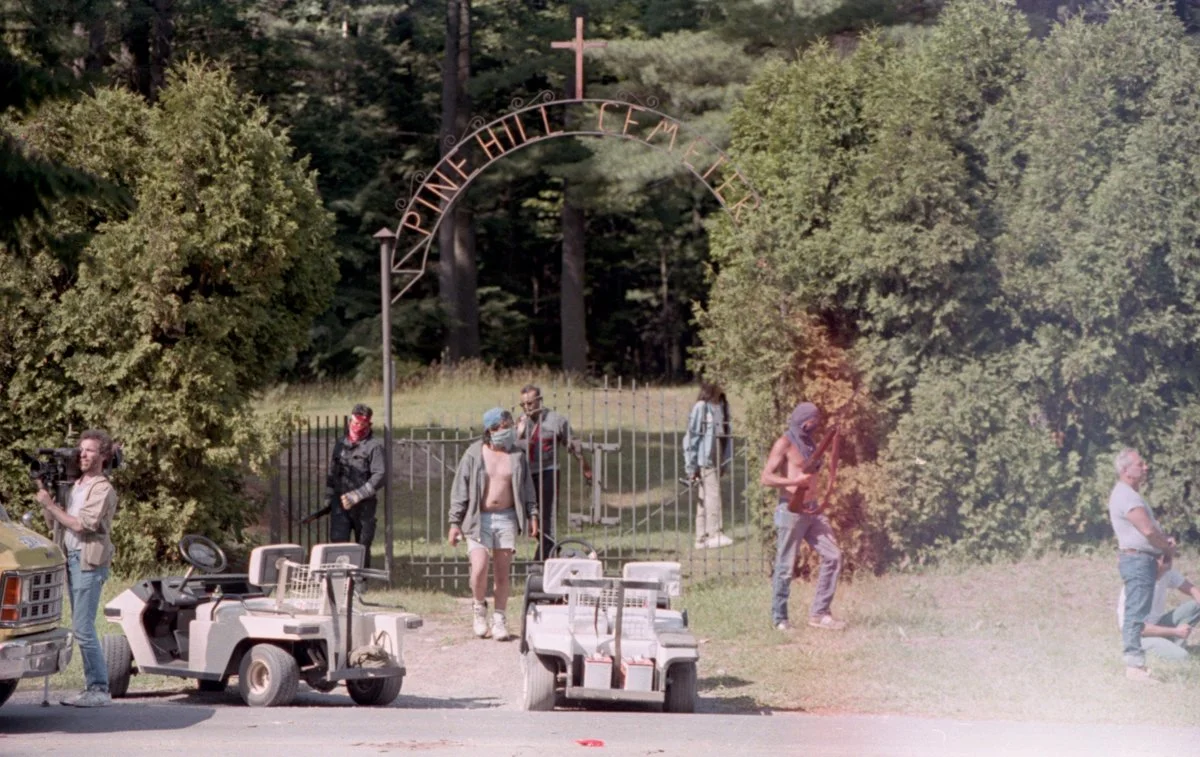
Mohawk Warriors stand on guard in front of the Pine Hill Cemetery gates, just one of the measures they took to protect Kanesatake during the 1990 crisis. (Courtesy: Kanien’kehá:ka Onkwawén:na Raotitióhkwa Language and Cultural Center)
Arthur Diabo ROKÁ:RATON
Tsi nikarì:wes onterihwahtén:ti' ne Oka Teka'nikonhrharà:'on, tsi nihonteriiohseraweién:te' ne Kahnawa'kehró:non ronateriiohsóhnhne' tahonwatì:nonke' ahotiió'ten'. Ohén:ton wa'tiakwá:ta'ne' ohén:ton iakwatátie' tánon' ionkhi'nikonhrisakonhátie'. Tsi nà:tiere', wa'khehró:ri' é:so rá:ti ne ken' nithotiién:sa' ne ahóntka'we' ne raonatahkwaswénhtshera'.
Wa'kì:ron', "Entsónhnhete' ken' nikarihwésha tsi nahò:ten' kwarihonniennì:re' ase'kén ohnà:ken thí:ken, tó:kenske' enionkwatientakahrhátho'se'."
Néne thotí:ien's ronateriiohsónhne' eh nahatí:iere' tsi nihotikweniòn:ne' tánon' sahonnóhetste' ne ken' nithotiién:sa' ronateriiohsónhne' tsi nihatiienté:riahonnónhnheke', ahonterí:io', tánon' ken' niiorihwà:'a ne teióntsnie' tsi niiakorihò:ten. Wa'kate'nién:ten' akhe'nikonhráta' ahontewén:narahkwe' ase'kénthóha akwé:kon ne rontonhontsanónhnha' nek ne sewahtsà:na tsi ní:kon onenió:wane' tánon' iontorátstha' káhonre' rotiién:tahkwe'.
Ok nà:'a ró:ti ne Korahró:non Ratihsó:tar ronatateweiennenta'onhátie' ahontáweia'te'. Akwé:kon ronwatirihonnién:ni tánon' ioiánere' tsi ní:konrotiién:tahkwe' skátne ia'teiotkontá:ni káhonre' tánon' é:so kaneniowanehtsherá:ke. Tóka' tsi nihatinenhra'shátste' entionkhiiatia'tón:ti', tó:kenske' eniakwénheie' nek tsi wakaterièn:tarahkwe' iah thahatirá:ko' aontaionkhiiatia'tón:ti' tsi nón:we niionkwatenenhrakwenhrá:ron ase'kén teiaonhontsiià:konioterihwatié:ren aióhson', sénha tóka' Kanien'kehá:ka ahonwatírioke'.
Kè:iahre' kí:ken énska Wískhaton onkkè:tohte' tánon' wa'kì:ron', "Ótkon ka' nihón:ne's ne ronnón:kwe?"
"Tehotiniatariià:kon Luba ronterennótha' ronaterohrókhon."
Wa'kì:ron', "Ónhka ne Luba tánon' oh nontkon'seratié:ren eh iehoné:non? Teiotonhontsóhon ohén:ton ahonné:take'."
Entónnia' nà:'a ne aonhà:'a tetitsatátswens. Sótsi karì:wes ón:ton' tsi ronterihwahserón:nis. Wahonnentón:ni' tánon' wahonská:neke' nahò:ten'kahoti'nikonhró:ri'.
Edited by: Melissa Stacey, Local Journalism Initiative Reporter
Translation by: Karonhí:io Delaronde