
A way of remembering
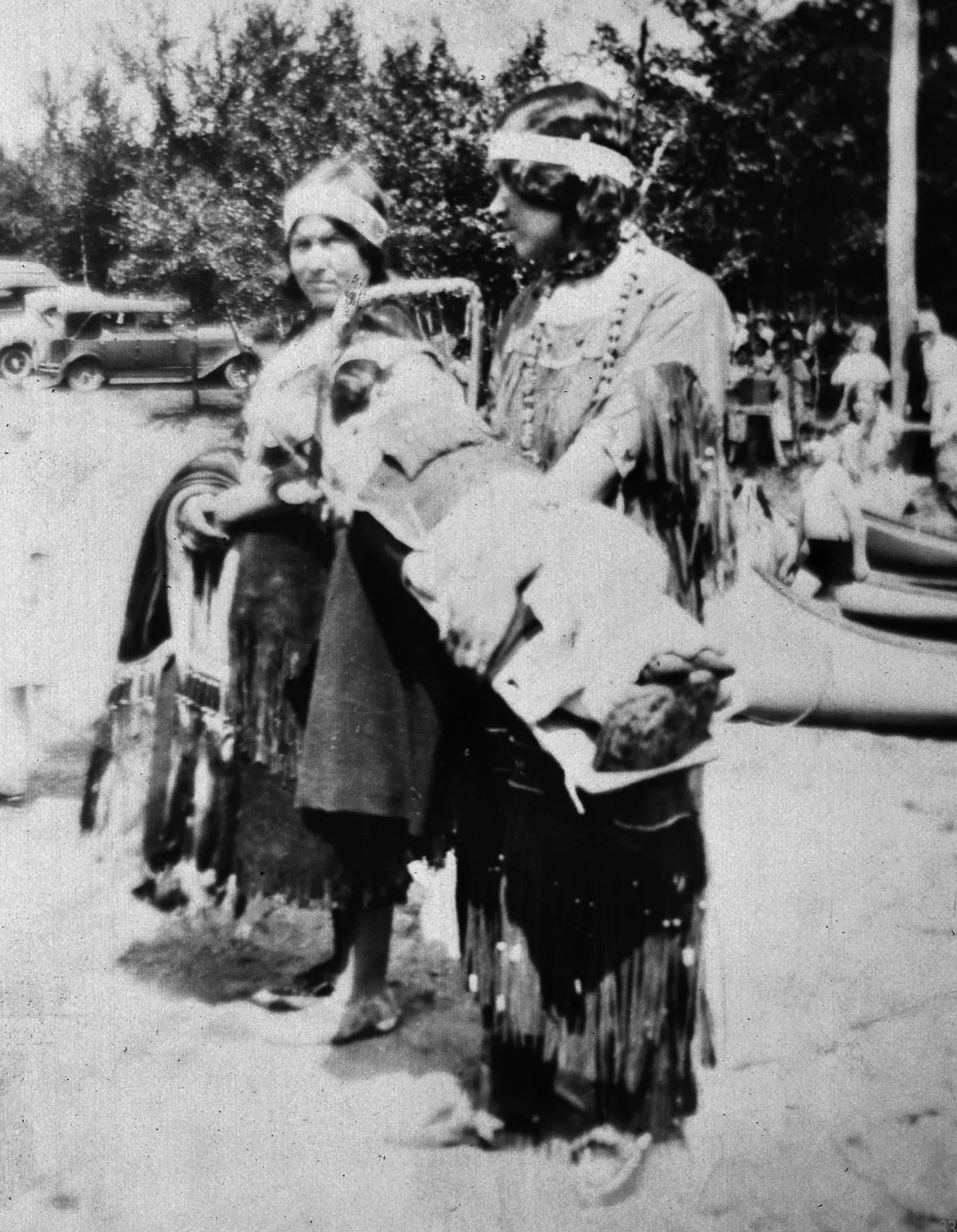
Josie Konwenni Skye Day and Elisabeth Mayo (Daughter of Joe Mayo), wearing traditional dress at Bangor, Maine Lake. Josie is holding her baby, Helen Ioroniahawi Skye. Circa 1929. (Courtesy: Kanien’kehá:ka Onkwawén:na Raotitióhkwa Language and Cultural Center)
Story told by Michael Rice
For me, powwows are meant to remember 1990. 1992 was the first powwow, and I remember it wasn't built up like how it is today with the dancing grounds.
I remember dancing on the rocks, grass, and at the end of the weekend, all our feet and our calves were so sore.
The people were just happy to get together, and it was a way of remembering what Kanehsatà:ke and Kahnawà:ke had sacrificed. They had stopped the expansion of the golf course onto the cemetery, which even to this day still boggles my mind how it never was resolved.
Now I look forward to the powwow to meet people, have a bite to eat, and to chat. Powwows remind us that while time moves forward and traditions grow, they are rooted in the sacrifices made by our people. We come together not just to dance and celebrate but to remember what was fought for and what we continue to honour.
KANIEN’KÉHA VERSION
↓
KANIEN’KÉHA VERSION ↓
Nè:'e aó:wen ne aiakehià:ra'ne'
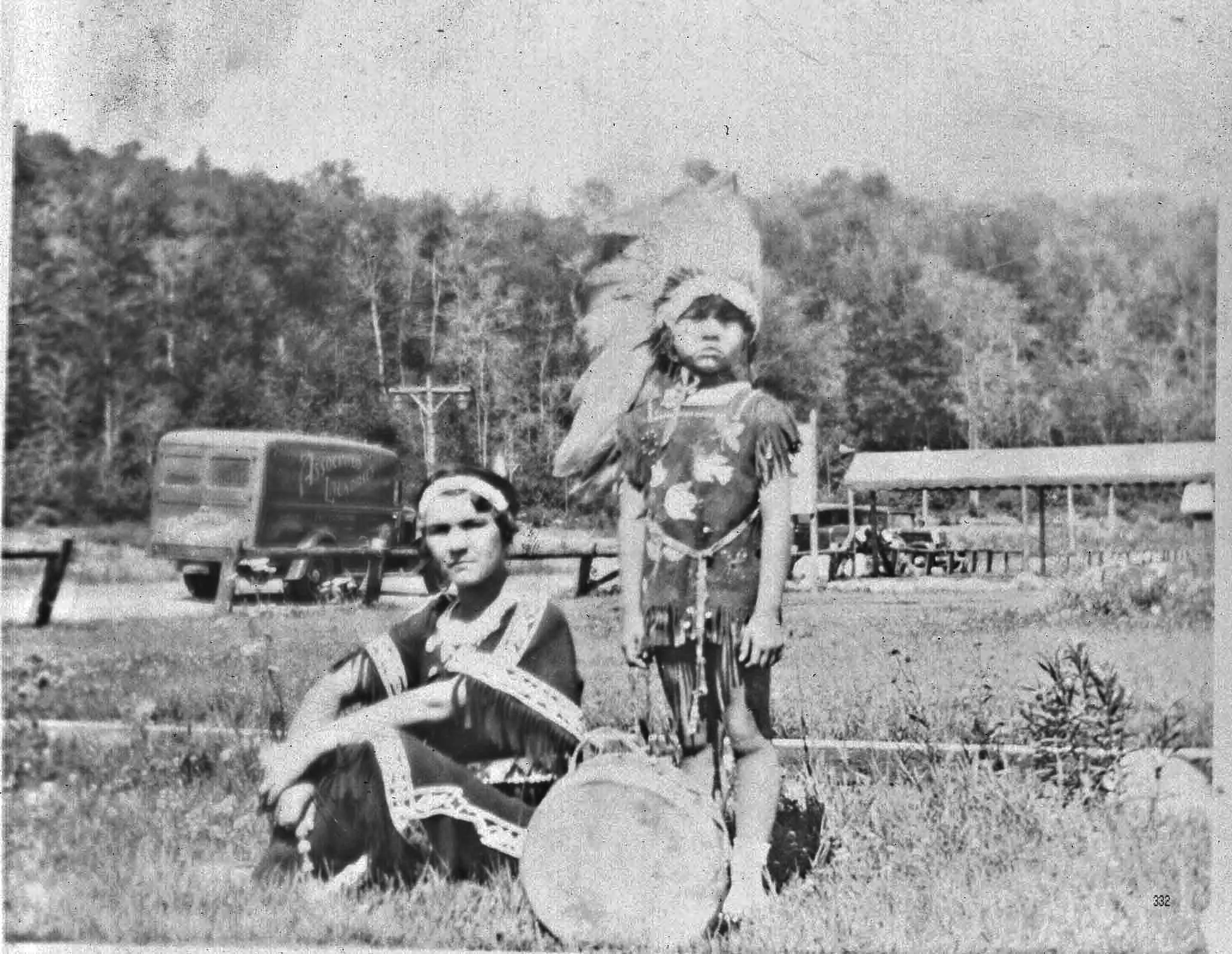
Courtesy: Kanien’kehá:ka Onkwawén:na Raotitióhkwa Language and Cultural Center
Michael Rice ROKÁ:RATON
Né: akerihwà:ke, nè:'e aó:wen ne Tsi Niiontha'towanáhtha' né: ki' ne aiakehià:ra'ne' ne 1990 niiohserahsé:tas. 1992 ne tiotohseratierénhton ne Tsi Iontha'towanáhtha' tánon' kè:iahre' iah tho ní:tsi tekakwatakwèn:ne' tsi ní:ioht tsi kakwatákwen nòn:wa wenhniserá:te' ne tsi teienonniahkwà:tha'.
Kè:iahre' tewakenonniáhkwen onenia'kéhshon, tsi iohontó:ton, tánon' iotiahia'ksero'ktahkwèn:ke, akwé:kon iononhwakténion iakwahsi'ta'kéhshon tánon' iakwasenonna'ta'kéhshon.
Nek wa'ontshennón:ni' nón:kwe ne aiontia'tarò:roke', tánon' nè:'e aó:wen aiakehià:ra'ne' tsi nahò:ten' Kanehsatà:ke tánon' Kahnawà:ke ronatewentéhton. Tehotitáston tsi ratikowanáhthahkwe' ne tsi teionhthenno'ókstha' eh tsi ieia'tatárion iehatihawíhtha', tánon' shé:kon òn:wa wenhniserá:te' wakenekhé:rens nake'nikòn:rakon tsi iah nonwén:ton tekarihwahserón:ni.
Kenòn:we's ne Tsi Niiontha'towanáhtha' né: ki' ne akheientéhrha'ne' nón:kwe, ná:keke' nahò:ten'k, tánon' takhthá:ren'. Ionkwehiahrahkwén:nis ne Tsi Niiontha'towanáhtha' ohén:ton iothawihtonhátie' ne tsi niwathá:wis tánon' iotehiahróntie' ne tsi niionkwarihò:ten, eh nitioné:non ne tsi nahò:ten' ronatewentéhton ne ontionkwe'ta'shòn:'a. Skátne tewatia'tarò:roks iah nek né:ne taietewanónniahkwe' tánon' aietewatonhnhà:ren', nek tsi aietewehià:rake' tsi nahò:ten' ionkwaskéhnhen tánon' tsi nahò:ten' shé:kon tewarihwakweniénstha'.
Edited by: Jonathan Turenne - Local Journalism Initiative Reporter
Translated by: Karonhí:io Delaronde