
Not washed up yet
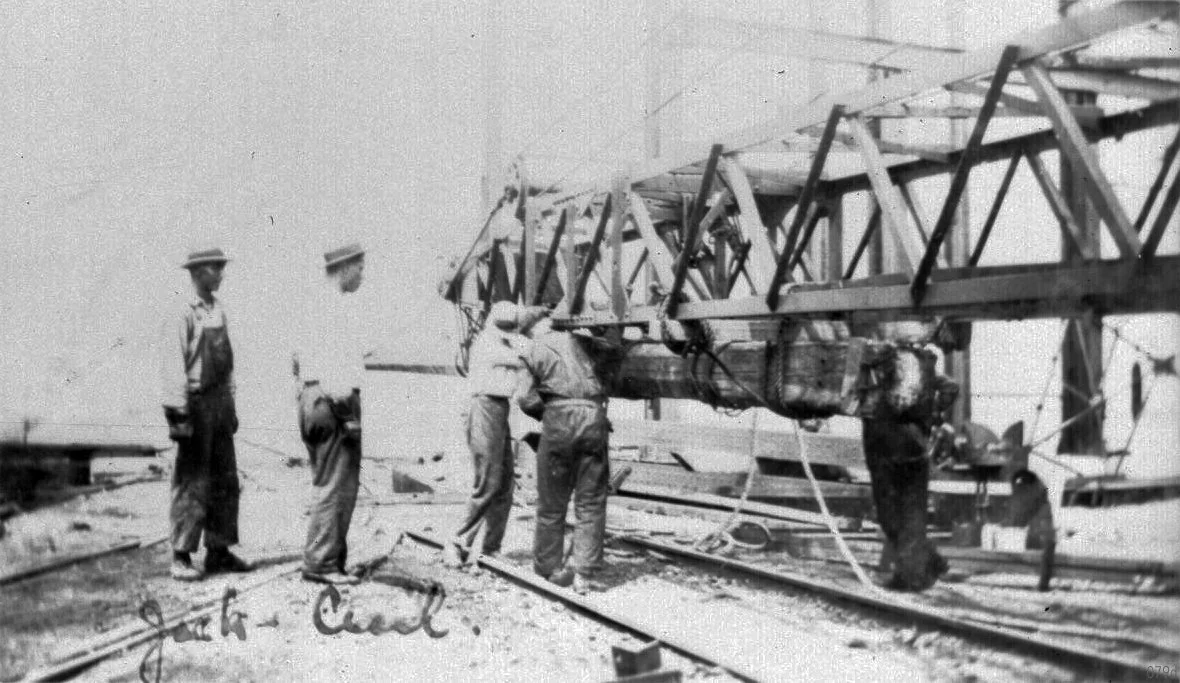
Jack Beauvais and Cecil Delormier (first and second to the left, respectively) overseeing the construction of a building. As Jack’s work was mostly in New Jersey, this may possibly be construction taking place in the same area. Accidents are unfortunately common in the field of ironwork, and much like Earl and his buddy, Jack and a co-worker, Jimmy Monic, would suffer a fatal impact from a falling derrick in 1927. (Courtesy: Kanien’kehá:ka Onkwawén:na Raotitióhkwa Language and Cultural Center)
Story told by Earl Gilbert
I fell on my last job in Ann Arbour, Michigan. We were working on the fourth floor; me and my buddy had a little dolly we were using to bring the iron in. The floors were just plywood, and my partner said, “Let's go through here.” We went through and the panel of plywood broke. I went 19 feet down, feet first. I shattered my whole leg.
I was knocked out for a while, but my boss had an old Polaroid camera, and he took a hell of a lot of pictures when I was in the hole. To my right there was rebar sticking out. If I hit that, I'd be a dead man.
I was off about two years after that. During that time, my buddy who I was working with had heart surgery. He was a little older than me. After everything, he said, "Let's go back and see if we can do it again." One’s got a reconstructed leg and one had surgery on his heart, but we went back there and we saw our old bosses.
"What the hell are you guys doing here," they said. "You guys want to work?"
We told them, "We’re not washed up yet. We're ready." We went another four or five years after that.
KANIEN’KÉHA VERSION
↓
KANIEN’KÉHA VERSION ↓
Iah áre'kho teiontiatia'tíson'
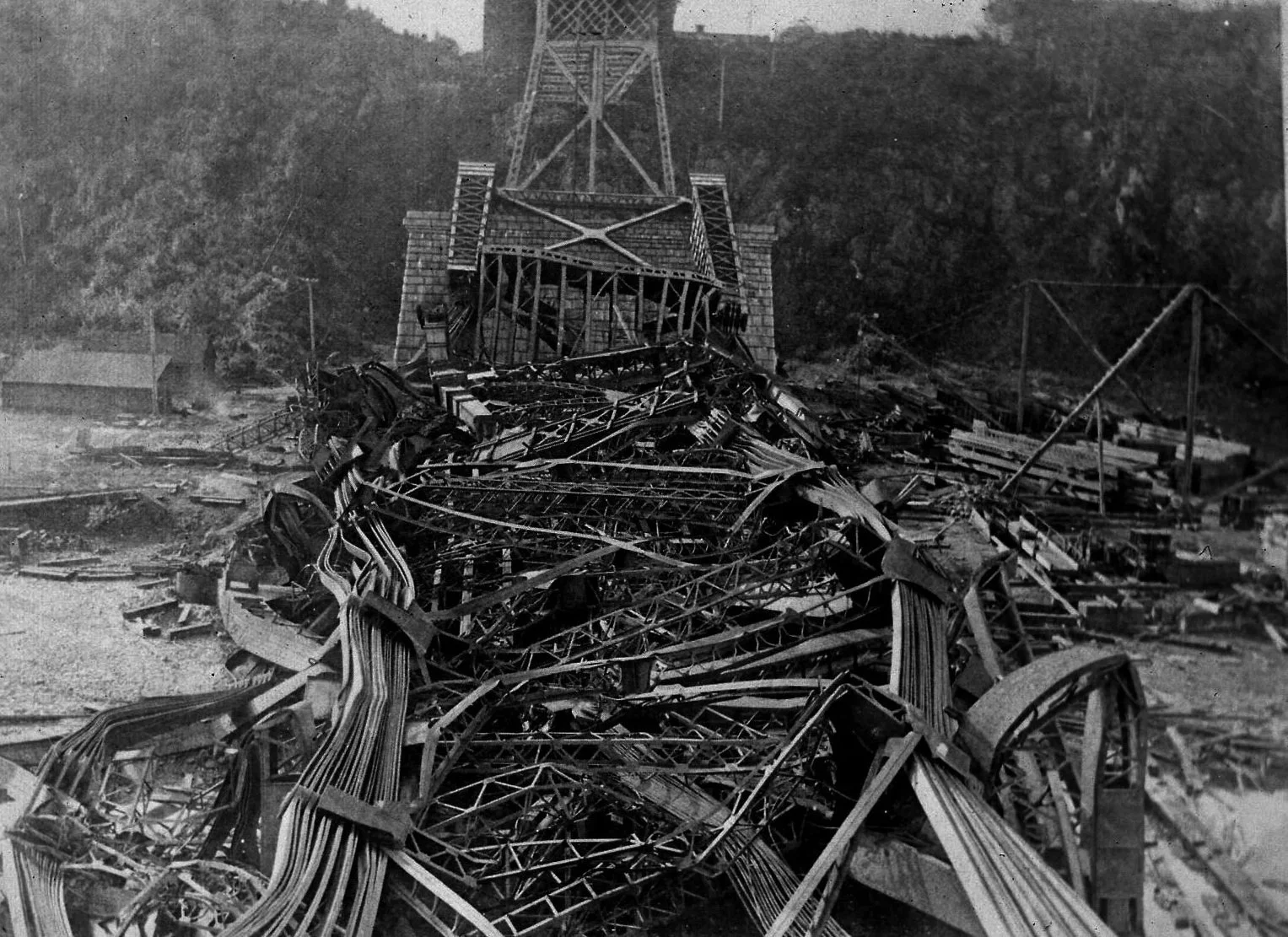
Another example of construction going disastrous comes in the form of the infamous collapse of the Quebec Bridge, as shown with this general view of the aftermath. Circa 1910-1918. (Courtesy: Kanien’kehá:ka Onkwawén:na Raotitióhkwa Language and Cultural Center)
Earl Gilbert ROKÁ:RATON
Tatià:ten'ne' ohna'kénhkha' shiwatió'te' ne Ann Arbour, Michigan nonkwá:ti. Kaieríhaton tetionáktane shiionkwaió'te'; ì:'i tánon' ontiatén:ro' ken' niwà:'a ie'seréhtha' iatiátsthahkwe' tsi taiakení:ion'te' karístatsi. Nek kaswen'karanéten tkentskarónnion, tánon' tiontiatenróhon wahèn:ron', "Ken' nón:we tiatóhetst." Wa'atiatóhetste' tánon' thí:ken kaswen'karanéten wa'tewakatswen'kária'kse'. Tióhton iawén:re niwahsì:take tatià:ten'ne', thia'tkahsi'tó:ta'ne'. Wa'tkenénstia'ke' khsinakwé:kon.
Ken' nikarì:wes onke'nikonhráhton' nek tsi aká:ion Polaroid karástha' rahá:wahkwe' ne akennékeri, tánon' é:so wahatkon'serarastánion' tsi wakatkarewahtánion. Skarón:wara ietstenhrahnirátstha' karón:ware' ieiokè:tote' skeweientehtáhkwen nonkwá:ti, tóka' nè:'e ia'taonkonkò:'on, orihwí:io aonkihéion.
Ákta teiohserá:ke iah tewatio'tèn:'en ohnà:ken thí:ken. Tsi nitkarì:wes, rawerià:ne wahatì:re'ne' ne nontiatén:ro' tsi niká:ien' skátne ionkeniió'tehkwe', ostón:ha sénha thó:ien' tsi ní:ioht nì:'i. Shahawennén:ta'ne' akwé:kon, "Háo' eh ietsítene tánon' ka' shí:ken tóka' entsitenikwé:ni' thí:ken." Kwah tsonkhsinón:ni nì:'i tánon' raónha rawerià:ne rotihrè:nen, nek tsi tó:kenske' eh ietsonkené:non tánon' tsakhí:ken onkenennekerihkénha.
"Oh ní:tsi tsatkon'seríhe' ne kèn:'en?," wahonnì:ron'. "Ísenehre' ken aonseseniió'ten'?"
Wa'akhihró:ri', "Iah áre'kho teiontiatia'tíson'. Iontiatateweiennentà:'on." Shé:kon kaié:ri tóka' ni' wísk niiohserá:ke saionkeniió'ten' ohnà:ken thí:ken.
Edited by: Aaron McComber, Local Journalism Initiative Reporter
Translated by: Karonhí:io Delaronde