
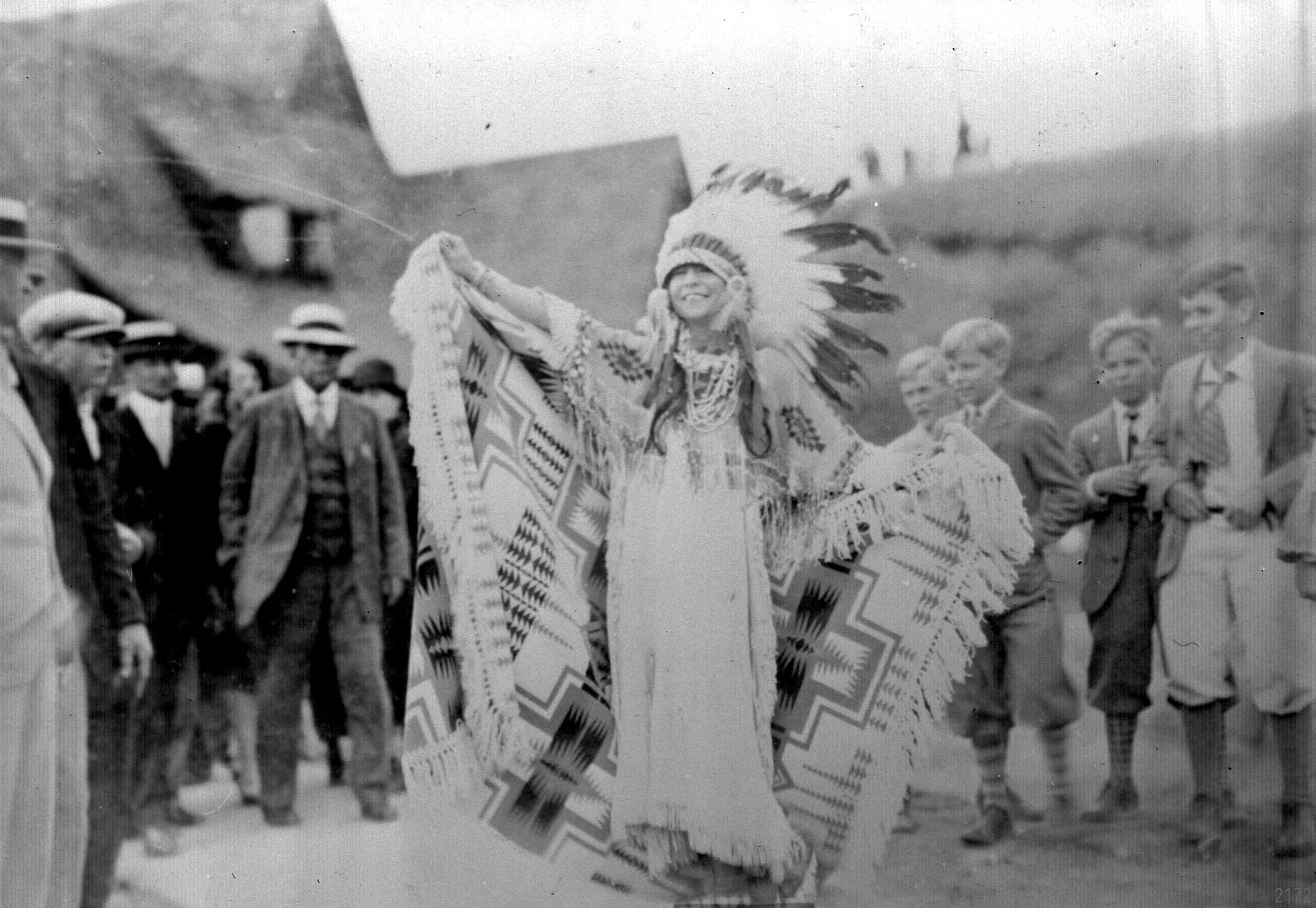
At the Lake Mohawk Resort Community, Esther Deer, otherwise known as Princess White Deer, gives an empowering performance with her shawl. (Courtesy: Kanien’kehá:ka Onkwawén:na Raotitióhkwa Language and Cultural Center)
Story told by Geraldine Standup
Healing in the Indigenous world is not the same as healing out there. Healing out there is curing the physical body, but that’s not where sickness comes from. Sickness isn’t about germs and viruses; it is really about the emotional state of an individual.
If you have long-term issues, over time, they have a tendency to create disease within the physical body. Then those long-term issues are now unconscious because they’ve been there for so long.
I worked for about 21 years at Anishinaabe House Toronto working with Native people from across this country, that was basically what my function was. When people come in and are displaying symptoms that Western medicine just cannot fathom through their diagnostic tools, that’s when I get them. When all the tests come back and everything is normal and the person is still sick, we go and do a whole other thing.
What we do is look at things from a spiritual perspective and find out where the core of your illness is and work with that, It’s very time consuming. You can’t just pop in like a doctor's office for 10 minutes, you know, you’re there for a while, and not only that, you may have to come back a few times so it’s a totally different ball game.
We don’t cure bodies; we heal the inner being. That’s about the best way I could put it. I’ve been doing it for almost 40 years, and I still can’t define it.
KANIEN’KÉHA VERSION
↓
KANIEN’KÉHA VERSION ↓
Atetsèn:ton Ne Onkwehonwè:ke Nonkwá:ti
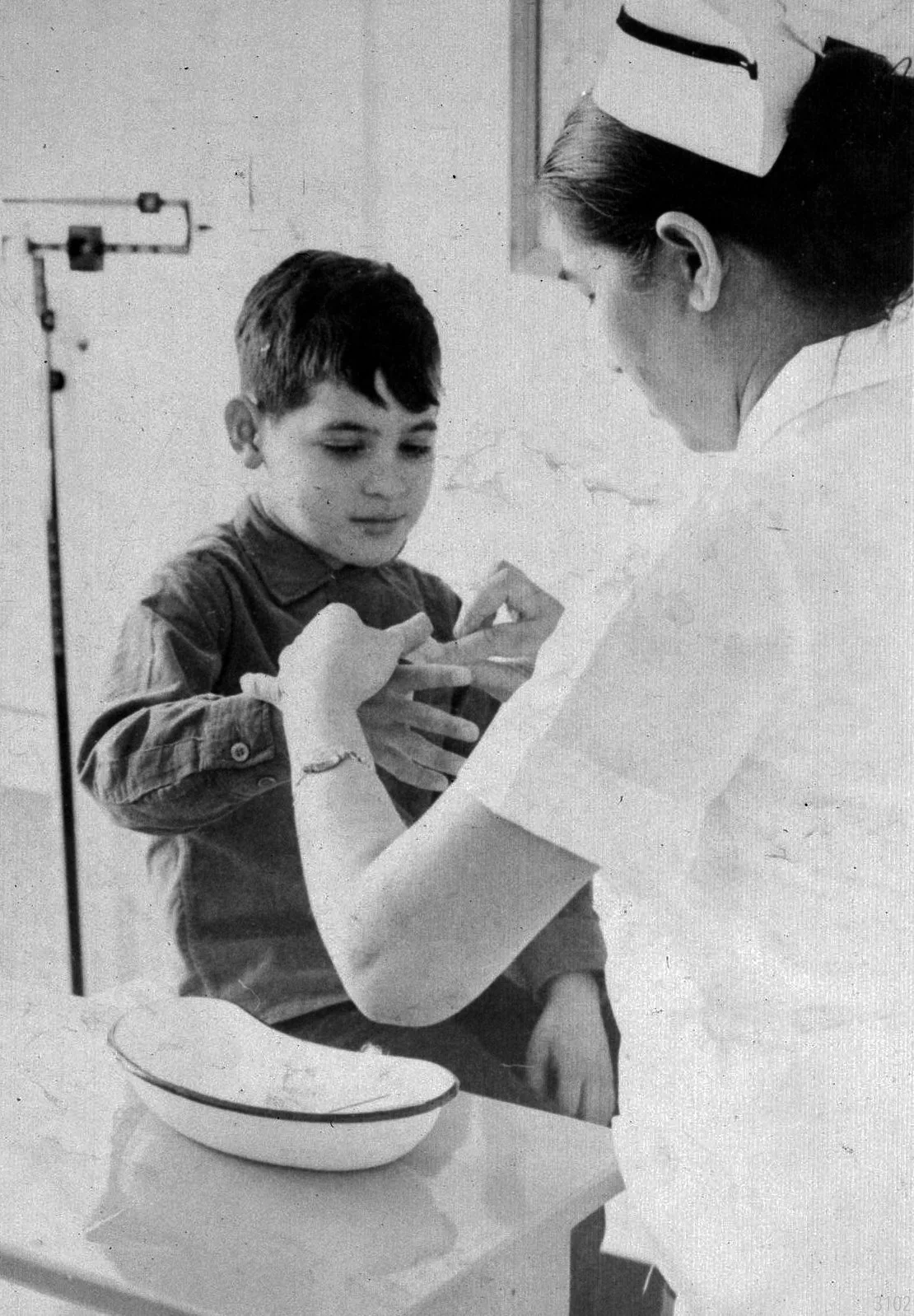
While it will not provide healing of mental state, medical aid has its time and place for more physical injury, like a nurse bandaging a scrape of a young child. (Courtesy: Kanien’kehá:ka Onkwawén:na Raotitióhkwa Language and Cultural Center)
Geraldine Standup IAKOKÁ:RATON
Ó:ia na'tewatetsen'tsherò:ten ne Onkwehonwè:ke nonkwá:ti tánon ne átste nonkwá:ti. Skonwaie'wénthos noieròn:ta nihonatetsen'tsherò:ten ne átste nonkwá:ti, nek tsi iah tho tetewéhtha ne káhnhra'. Iah nek kahnhrón:ni tóka'ni kahnhratarinéstha teiorihò:ten ne kanonhwakténhtshera; sénha eh niiorihò:ten ne tsi niiakonhnhò:ten ne tseià:ta.
Tóka' kanonhwakténhtsheres saié:nen, katke'shòn:'a, sénha tho niiotirihò:ten akontihnhrón:ni' noieròn:takon'. Thò:ne ki' thí:ken kanonhwakténhtsheres ó:nen iah-teionttó:kas iotòn:'on áse' kenh tó:k nikarì:wes eh shikarátie.
Ákta 21 niiohserá:ke ontió'ten ne Anishinaabe House Toronto nonkwá:ti wa'tiakwaié:na onkwehón:we teiaonhontsiià:kon' nón:we nithoné:non, nek thí:ken wakaterihón:tahkwe kwah tokèn:'en. Nó:nen enthontáweia'te nón:kwe tánon nia'té:kon' ronate'nestennihátie néne E'nekénhkha niwatetsen'tsherò;ten kwah iah thiahatíhewe' tsi énhontste nahò:ten ratitshenriéstha, thò:ne ki' nì:'i ensekheié:na. Nó:nen akwé:kon entkón:ne ne watken'sénion tánon akwé:kon ia'teká:ien tánon shé:kon niiakononhwáktani nón:kwe, kwah ó:ia nahò:ten ientsakwate'nién:ten.
O'nikòn:rakon nonkwá:ti entiakwatken'sénion tánon eniakwatshén:ri' tsi nón:we nitiotahsá:ronte' tsi sanonhwáktani tánon ken' nieniakwá:iere', kwah tokèn:'en enión:nise neniá:wen. Iah thaón:ton' atetsèn:tsne aontesakè:tohte' ne nek 10 nikahseriiè:take nikarì:wes, wáhi, kwah ken' nikarì:wes eh iéhses, tánon iah nek thí:ken, ki' ónhte tenwatonhóntsohwe' tohkára na'tentéhse' thò:ne níken ó:ia nisewatatshensestahtsherò:ten'.
Iah teiakwatsèn:tha noieron'ta'shòn:'a; khé:ken iakwatsèn:tha no'nikòn:rakon. Nek tho ní:ioht ioiánere tsi ní:tsi takerihwáthe'te'. Ákta 40 niiohserá:ke ó:nen tho shitiéhrha, tánon shé:kon nòn:wa iah thakkwé:ni' kwah takerihwáthe'te.
Edited by: Melissa Stacey, Local Journalism Initiative Reporter
Translation by: Karonhí:io Delaronde