
Food sovereignty
↓ listen to the story in KANIEN’KÉHA ↓
🔈
↓ listen to the story in KANIEN’KÉHA ↓ 🔈
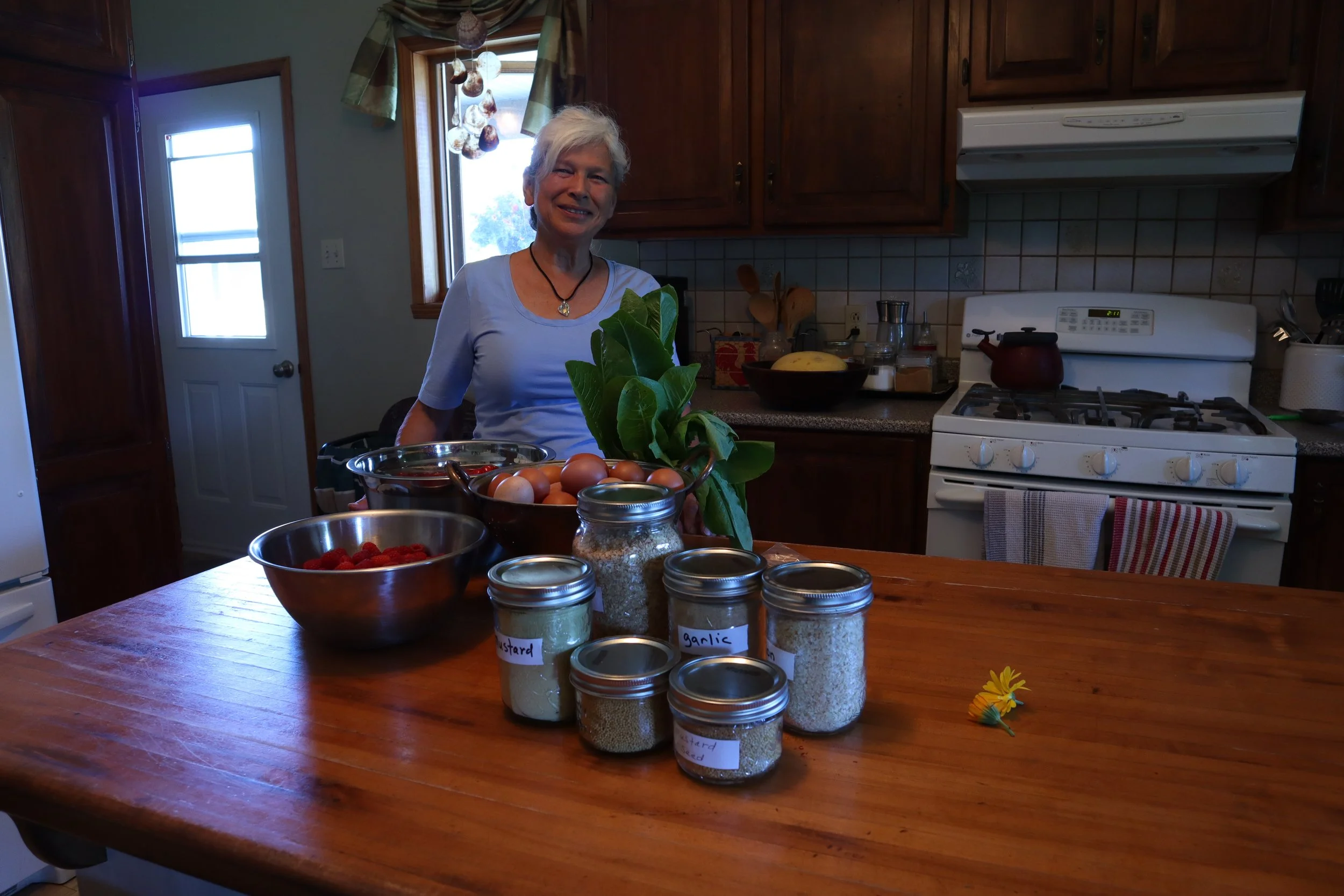
Elaine proudly shares a glimpse of her fresh produce, all farm and garden-grown. (Photo credit: Simona Rosenfield)
Story told by Elaine Delaronde
When I lived with my grandparents, I saw how they were storing their garden seeds, and their food - their corn, their beans, garlic, onions, potatoes, canned goods - through the winter, so that they always had an excess of supply.
They had a dirt box of potato storage in the dirt cellar. The dirt was a preserver, it cools, and keeps oxygen and light from getting in, keeping the potatoes from eyeing. My grandfather would take the excess potatoes and plant them in the spring.
I saw how they had excessive grains for the chickens. Both grandparents had storage for their food in the basement. When I got older and learned about our ancestral ways, that’s what they did too, on a larger scale. They always stored food underground in case there was ever a shortage. Whenever they had an abundance of food, they stored it to feed the people when they needed it.
Today, we have modern things we can use - mylar bags with an oxygen absorber stored in large covered pails, or a container to protect any dry food products like grains and beans from oxygen and light. It keeps the majority of the nutritional value of the foods, and the containers keep the pests out. Or, you can store dry goods in food saver bags, or the large mouth mason jars with a manual brake bleeder pump to remove the oxygen.
KANIEN’KÉHA VERSION
↓
KANIEN’KÉHA VERSION ↓
Ieia'takwe'ní:io ne akókhwa
(Photo credit: Simona Rosenfield)
Elaine Delaronde IAKOKÁ:RATON
Sha'teiakwaiáhse ne khehsothokòn:'a, wa'katkáhtho tsi ní:tsi wahiateweièn:ton ne raoná:wen kahehta'kéha ká:nen, tánon raotíkhwa - raotí:nenste, raotisahè:ta, iokháhon, o'niónkseri, ohnennà:ta, tsi nahò:ten katshè:takon watárion - ne tsi nikóhseres, ne ki' ne tho naióhton ne tiótkon iaohetstáhkwen tsi ní:kon enhotiién:take.
Wa'kèn:ri iehnenna'taientáhkhwa ronate'nerohkwaién:tahkwe onhontsó:kon. Kanónstats ioterihón:tahkwe ne o'kèn:ra, kawistóhtha, tánon kaió'tats thé:nen ówera tánon kaswathéhtshera aontontáweia'te, tiokontáhkwen tóhsa aiohniohkón:ta'ne ohnenna'tà:ke. Rakhsótha ienháhawe thí:ken iaohetstáhkwen tsi ní:kon kahnennà:taien tánon enhaienthóhseron ne kakwitè:ne.
Wa'katkáhtho tsi niió:re tsi iaohetstáhkwen tsi ní:kon rotinénhaien néne kítkit aoná:wen. Tehnitsá:ron ne khehsothokòn:'a rotiién:tahkwe tsi ionteweien'tónhkhwa ne ki' ne raotíkhwa aoná:wen ne onhontsó:kon. Sénha shontontién:ta'ne tánon sha'keweientéhta'ne ne tsi nihotiriho'tèn:ne ne onkwahsótshera, tho nihatiiéhrhahkwe ó:ni, sénha karihowá:nen tsi ní:ioht. Tiótkon o'kenhró:kon wahontekhwateweièn:ton á:re shí:ken tóka' nonwén:ton enkakhwanó:ron. Kátkek shahotikhwakà:ten'ne, wahonteweièn:ton ne ki' nahshakotí:nonte nón:kwe nó:nen wa'thonatonhóntso'se.
Òn:wa wenhniserá:te, orihwase'kéha iontstha'shòn:'a ionkwá:ien néne enwá:ton éntewatste - iona'karahkarí:io ká:iare skátne kawero'tsí:reks néne kowá:nens kanontékhon kana'tsakónhson watárion tóka'ni waterahkhwà:ke ne ki' naón:ton akanónstate thé:nen kakhwathà:ton tsi ní:ioht ne onatsa'shòn:'a tánon osahe'ta'shòn:'a ne ki' ne tóhsa aiotiwerá:ra'ne tóka'ni aiotiswathehtsherá:ra'ne. Ne ki' ne kanónstats thóha akwé:kon tsi niiotiia'tahní:ron ne kákhwa tánon ne waterahkhwa'shòn:'a konwanate'kwáhtha ne otsi'nonwa'shòn:'a. Tóka'ni, enwá:ton enhsateweièn:ton kakhwathà:ton ne kakhwanónstats kaiarakónhson, tóka'ni ne tekari'tsakà:ron ionteweien'tónhkhwa katshe'takónhson skátne ieweratahkwáhtha ne ki' naón:ton aonteweratáhko.
Edited by: Simona Rosenfield, Local Journalism Initiative Reporter
Translated by: Karonhí:io Delaronde