
Born in Ganienkeh
↓ listen to the story in KANIEN’KÉHA ↓
🔈
↓ listen to the story in KANIEN’KÉHA ↓ 🔈
(Courtesy: Kanien’keháka Onkwawén:na Raotitióhkwa Language and Cultural Center)
Story told by Mitch Deer
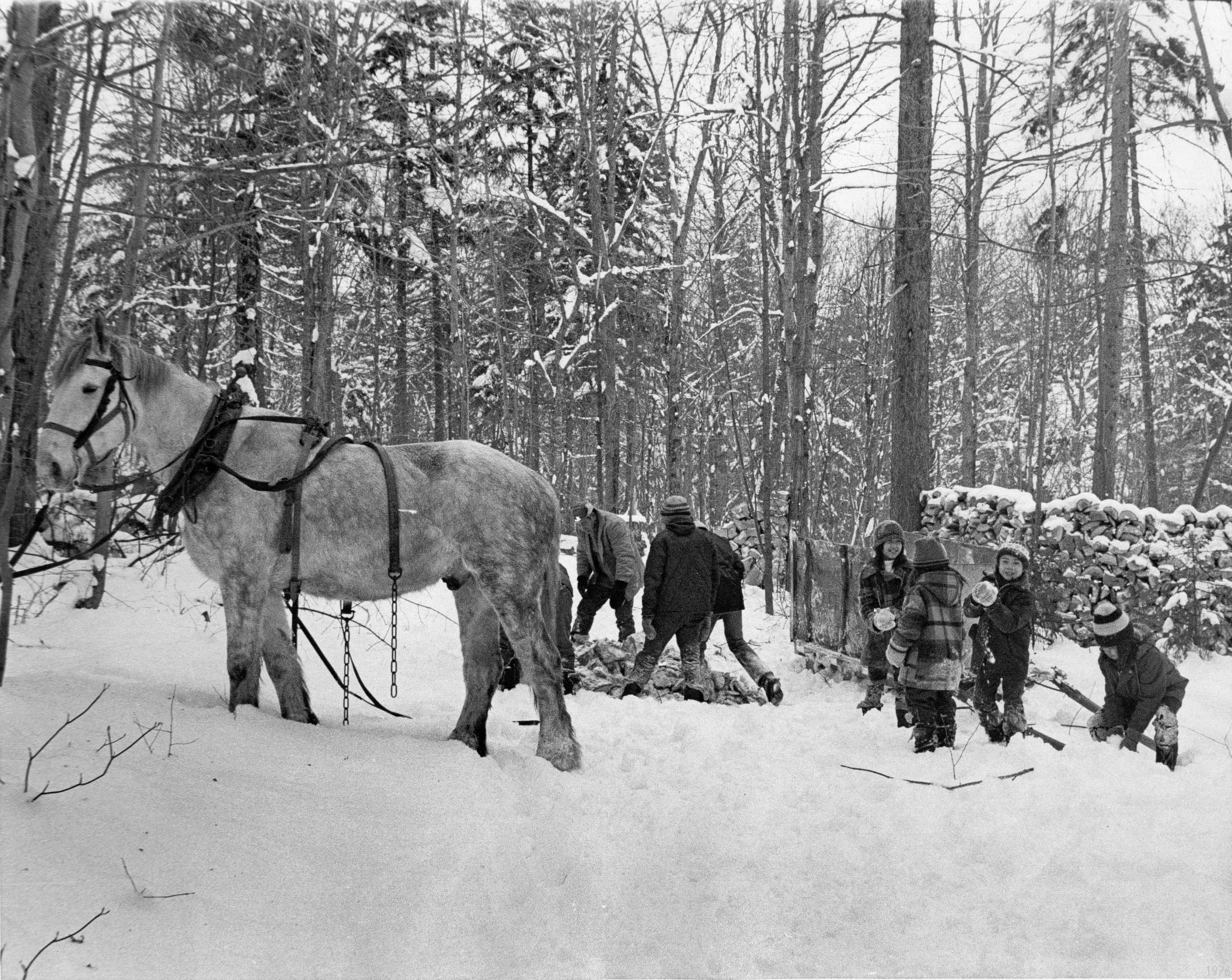
We had about 10 cows and four horses in Ganienkeh. People used to give us horse-drawn equipment along with donations of food and clothes. We used horses to deliver wood and water to the houses.
The water came from the lake. They cut a hole in the ice, put the water in barrels, and delivered it.
All the stoves had to be full because there was no electricity. We used to work on the side of the mountain, cutting down trees. We’d chop them up, put them in the wagon, and deliver the wood.
You’re supposed to let the wood dry, but we couldn’t afford to do that because it was so cold up there. That’s why we had to cut the wood small.
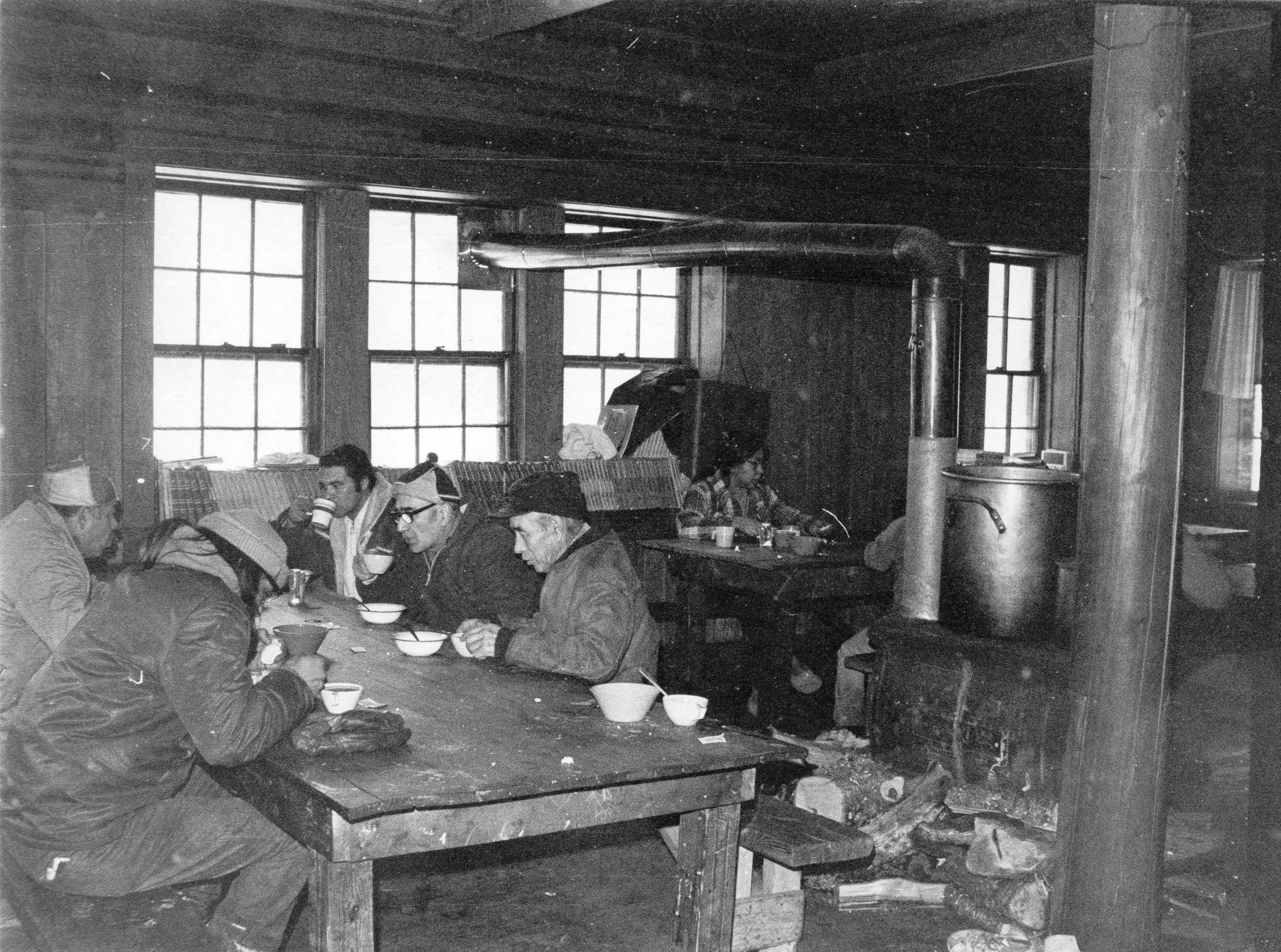
We all ate in the cookhouse. The women used to get together and cook for everybody. I used to bring wood to the cookhouse to keep the fires going.
The girls’ summer camp had a ballet house that we turned into our longhouse. There was a big fireplace and lanterns to light the place, so it was really dramatic when they’d burn tobacco.
Julian Delaronde would burn tobacco and everybody else would just sit there, listening.
I got to live there and be part of that. In the beginning it was intimidating because I didn’t know anything. I had to learn everything from the ground up. That’s why I say I was born in Ganienkeh. That’s what moulded me into who I am today.
KANIEN’KÉHA VERSION
↓
KANIEN’KÉHA VERSION ↓
Kanièn:ke tewakennakerá:ton
(Courtesy: Kanien’keháka Onkwawén:na Raotitióhkwa Language and Cultural Center)
Mitch Deer Roká:raton
Oié:ri nikón:ti tiohnhónskwaron tánon kaié:ri nikón:ti akohsá:tens ki' ónhte ionkwanaskwaién:tahkwe ne Kanièn:ke nonkwá:ti. Ón:kwe shos ionkhiiá:wis ne akohsá:tens iotiio'tenstha'shòn:'a skátne ne tewatkà:wen kákhwa tánon atahkwénnia. Wa'akhí:iatste nakohsá:tens tsi wa'akwakaré:ni nó:iente tánon ohné:kanos tsi ia'akwá:ien tsi tkanonhsó:ton.
Tsi kaniataráhere nitiawé:non nohné:kanos. Wahatiwiskahrón:ten, ka'nahkwakónhson wahatihnekarónnion, tánon wahatikaré:ni.
Ó:nenk tsi tiótkon wahatiientóntho ne karístakon áse' kenh iah thé:nen tekaronwarà:rahkwe. Onontákta shos ionkwaió'te, iakwakwirià:khons. Eniakwaro'ókhon, wenníseres ka'seréhtakon eniakwatárion, sok eniakwaientakaré:ni.
Teiotonhontsóhon wáhi akaientáthen nek tsi iah thé:nen teionkwanaktó:tahkwe eh naiakwá:iere áse' kenh é:so tsi tiothó:rehkwe eh nón:we. Nè:'e tiorì:wa tsi entà:'on kenk niwatién:tas wa'akwáro'ke.
Akwé:kon tsi iekhonnià:tha nonkwá:ti ia'tiakwatskà:hon. Kontenenhrarò:roks shos ne tsonathonwí:sen tánon kanenhrakwé:kon enhonwatikhónnien. Tsi iekhonnià:tha shos iékhas nó:iente ne ki' ne tóhsa aon'swáhseron.
Néne tsonathonwí:sen akenhnha'kéhkha tsi kontenenhrarohrókstha ioién:tahkwe ne tsi teionta'ehtaieronniónhkhwa néne kanónhses wa'akwatatonnià:ten. Katsenhowá:nen kaién:tahkwe ne ó:ni iehahserénhas ne ki' aowen'èn:ne akahahseró:ten kanónhskon tánon é:so tsi wa'tewaterihwanòn:ianihte kátkek wahatiien'kóntho.
Julian Delaronde enhaien'kóntho tánon akwé:kon ne ronátia'ke kheh thatítskote, ronatahónhsate.
Onkwate'shennaién:ta'ne eh nón:we iakátien tánon akatià:taren thí:ken. Shontontáhsawen é:so tsi iothteronhkwèn:ne áse' kenh iah thé:nen tewakaterièn:tarahkwe. Ó:nenk tsi wa'keweientéhta'ne nakwé:kon kwah ehtà:ke nitioienhtáhkwen. Nè:'e tiorì:wa tsi ká:ton Kanièn:ke tewakennakerá:ton. Kwah ne iaón:ni ónhka nì:'i ne òn:wa wenhniserá:te.
Edited by: Melissa Stacey, Local Journalism Initiative Reporter
Translation by: Karonhí:io Delaronde