
↓ listen to the story in KANIEN’KÉHA ↓
🔈
↓ listen to the story in KANIEN’KÉHA ↓ 🔈
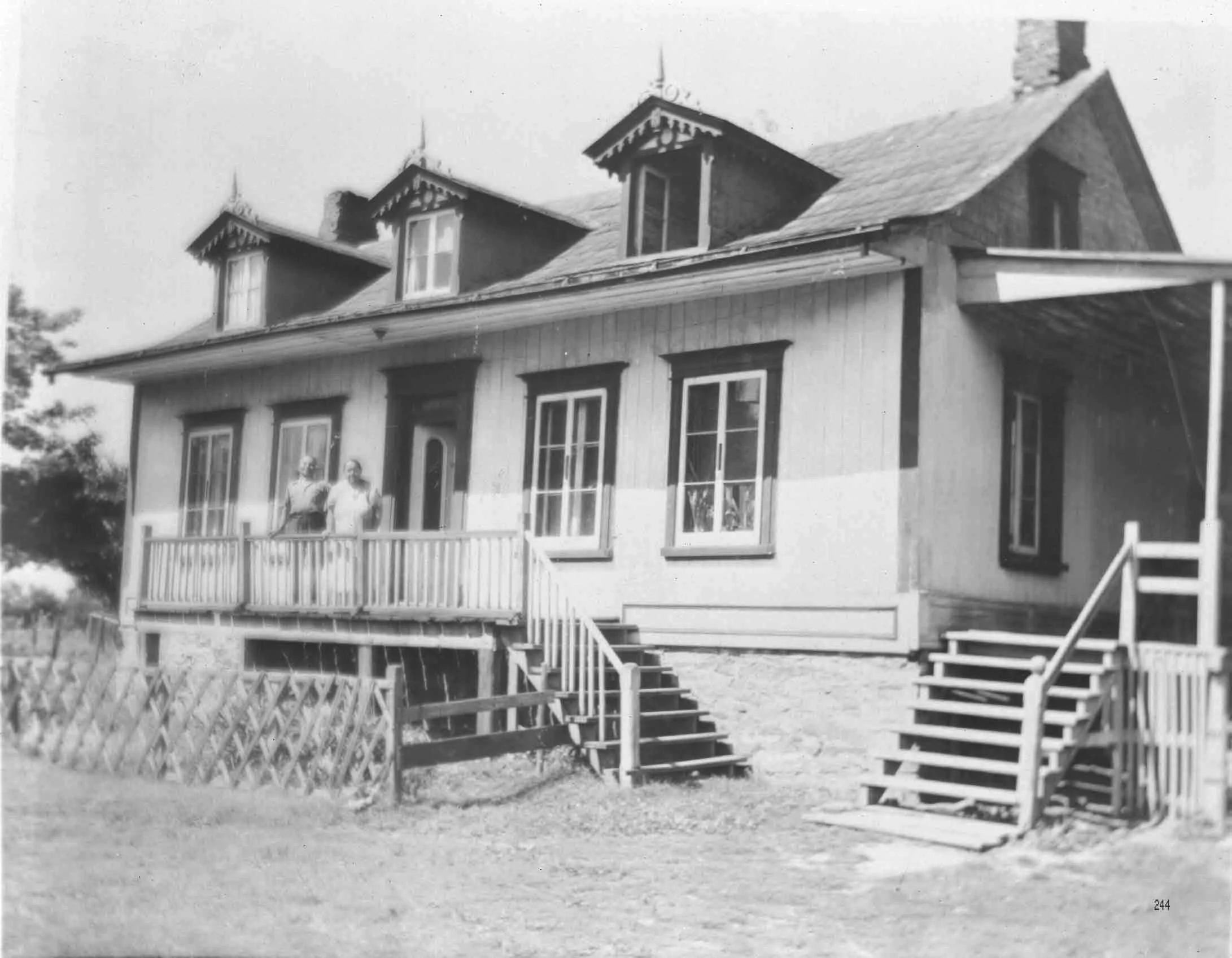
George Cross’ eye-catching home would become yet another casualty of the seaway construction project. Prior to 1955-1959, George’s parents Peter Cross and Kaienta’a greeted onlookers atop their porch. (Courtesy: Kanien’keháka Onkwawén:na Raotitióhkwa Language and Cultural Center)
Story told by Leonard Atonnion Bordeau
In about 1955 or 1956, when I was 10 years old, we left our land. Not willingly, but because the St. Lawrence Seaway passed through, and they expropriated our property. So, we had to move.
At the time, a lot of people from Kahnawake were defiant about it, but this was a mega project. It was going to go through whether we liked it or not. The St. Lawrence Seaway authority, which was a joint effort of Canada and US, had it in their mind that they were going through with it no matter what.
I can remember even to this day, my mother saying one morning, “Today after school, you don’t come home, you don’t take the school bus. You go to the house in the village.”
Our 151-acre farm was expropriated but it wasn’t used. I often questioned about that. The seaway is way over there, and our farm is over here. Why did we have to move? At the time, I was just a little kid, I didn’t know anything about politics.
But from what I know, the Canadian government gave the property back to Kahnawake, maybe somewhere around the mid-70s.
I don’t think anybody from the family wanted to go back there because they installed a recycling plant right across the road. Depending on which way the wind would blow, there would be toxic fumes and blue smoke that would go right to the site.
Anyways, it became common land.
KANIEN’KÉHA VERSION
↓
KANIEN’KÉHA VERSION ↓
Tóhsa satsi’terón:tak
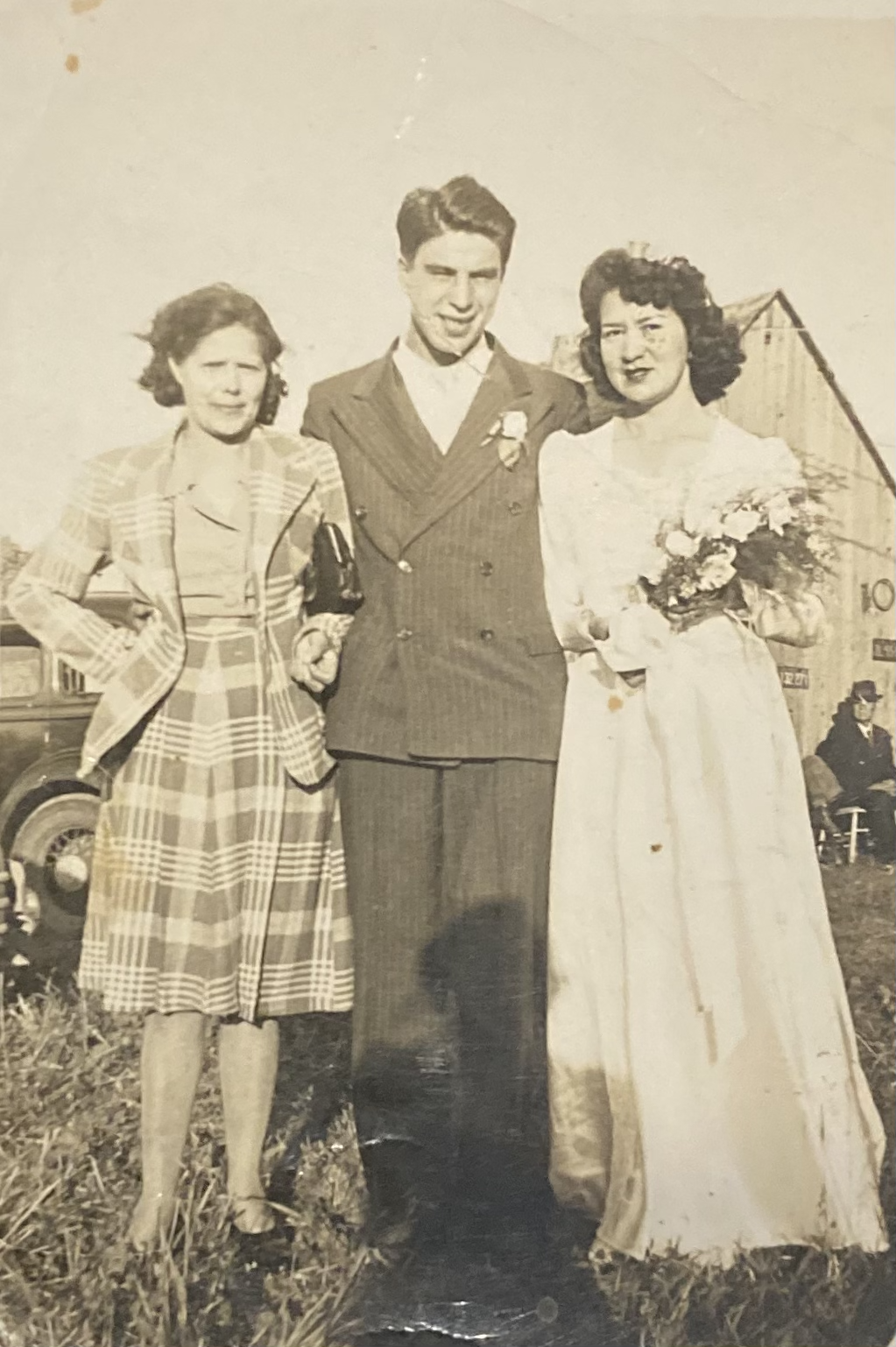
Leonard’s Auntie Mary and her husband along with her mother-in-law. (Courtesy: Leonard Atonnion Bordeau)
Leonard Atonnion Bordeau ROKÁ:RATON
Skáhere ta’ 1955 tóka’ ni 1956 shiiohserò:ten, 10 sha’tewakohseriià:kon, kheh tha’akwátka’we’ nonkwenhwéntsa’. Iah tha’teionkwatonhontsoníhne, nek tsi wa’kahronión:ni ne St. Lawrence tsi Kana’tsheratátie’, tánon’ wa’onkhiionhontsáhkhwa’. Ó:nen’k tsi wa’tiakwaná:tahkwe.
Tho shontakahá:wi, é:so iá:kon Kahnawa’kehró:non teiakoráhsare ne eh naiá:wen’, nek tsi kaio’tenhserowá:nen ne kí:ken. Watohetstà:ne’ arenhátien tsi iah teionkwathontá:ton. The St. Lawrence Seaway authority, tsi nè:’e skátne rotiio’tátiene ne Kó:ra tánon’ Wastonhronòn:ke, eh niiohtòn:ne ne raoti’nikòn:ra’ tsi ahatirihóhetste’ iah ónhka thé:nen thiaié:iere’.
Kè:iahre’ ó:nen, énska shiiohrhon’kehtsherá:te tsi nahò:ten istèn:’a iaká:wen, “nó:nen enhsaterihwaienhstá:ko’, tóhsa satsi’terón:tak, tóhsa iakoia’takarénie’s satíta. Kaná:takon tsi tionkwanónhsote iahà:se’.”
Akwé:kon wa’onkhíhkhwa’ ne 151 acre niiontionhóntsa nek tsi iah tehonátston. Iotkà:te aonkerihwaiohà:’on’ ne thí:ken. A’é:ren nón:we tká:ien ne kana’tsheratátie’ tánon’ a’é:ren tká:ien nontionhóntsa’. Oh nontié:ren wa’tiakwaná:tahkwe’. Tho shikahá:wi, kenk shí:kahkwe, iah thé:nen tekerihwaienteríhne ne kaianerenhsera’shòn:’a.
Nek tsi tsi niió:re nì:’i wakaterièn:tare, Kó:ra’ tontahontonhontsátka’we’ ne Kahnawà:ke, tóka’ kátkek ahsennénhshon 70 shiiohserahsé:tas.
Iah ónhte ónhkak ne akhwá:tsire teiakohskanékon ne eh tho iaonsá:ien’ nè:’e tsi kwah ísi’ na’oháhati wahatinonhsó:ten’ ne tsi ieiakotie’táhkhwa’. Tkaia’takwe’ní:io ka’ nón:we iewéhtha’ ne ówera, eh tho nón:we’ aontakaiá:ken’ne’ ne iakorióhtha’ tánon’ oròn:ia’ akaien’kwaró:ten’ eh nòn:wa ién:wehte’.
Sénhak ki’ wáhi, ronónha wahontonhontsará:ko’.
Edited by: Emma McLaughlin, Local Journalism Initiative Reporter
Translation by: Katsenhaién:ton Lazare