
↓ listen to the story in KANIEN’KÉHA ↓
🔈
↓ listen to the story in KANIEN’KÉHA ↓ 🔈
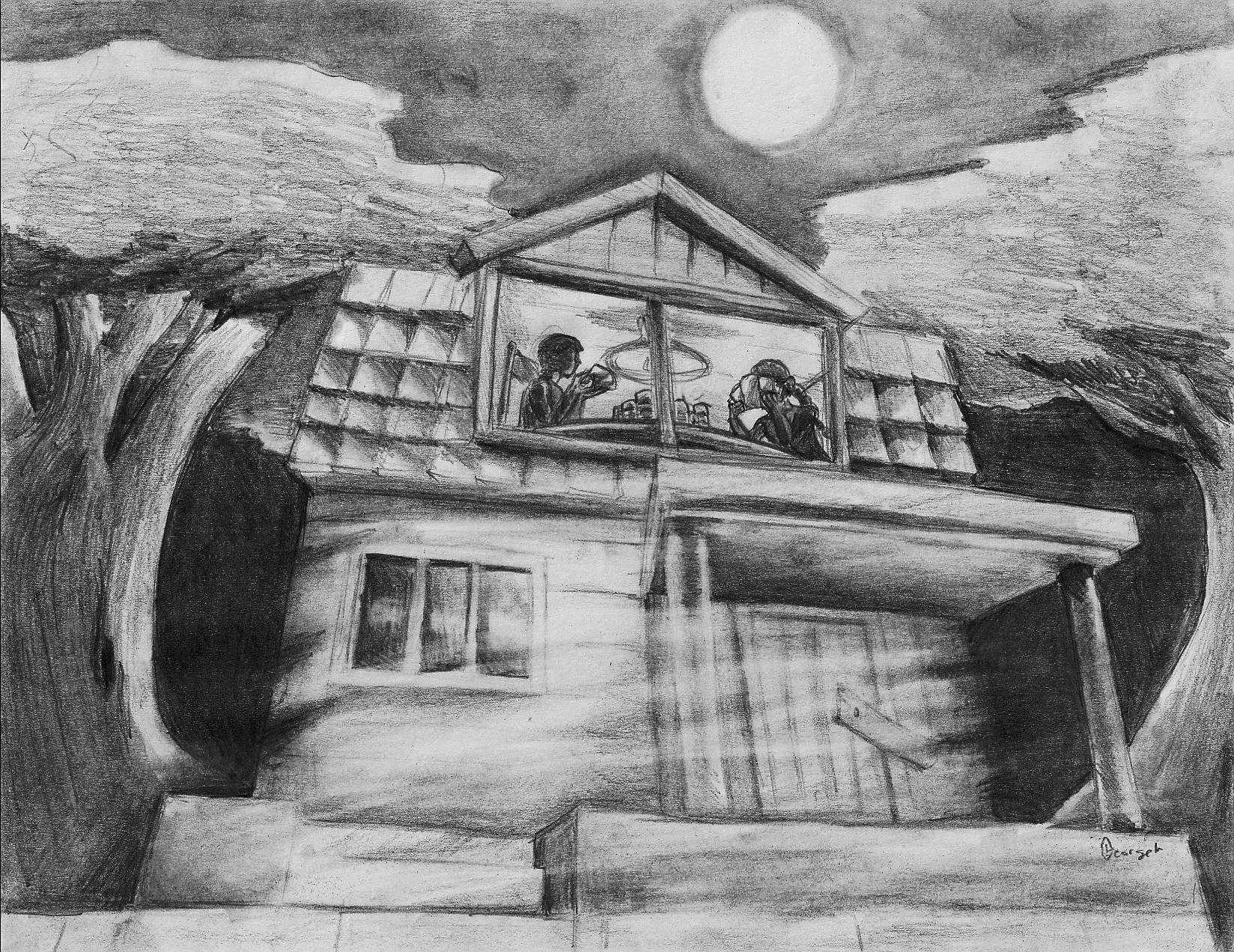
(Credit: George Rahrhaienté:ri Ross)
Story told by Niioié:ren Patton
Spending summertime here in the village with my grandparents, we never watched TV. Our entertainment was mostly the river. At night, people would sit on their porch and visit with friends and family who would be walking their babies on the road after supper. It was a different life than it is now.
Very different.
My grandmother was close friends with Sisí:r Ouimet. They would tell us stories, really scary stories to make sure we stayed close to home because they didn’t want us playing hide and seek or anything outside at night.
They wanted us at home, in the yard. Otherwise, we’d be playing on the road and all over the place like mosquitos and they didn’t want that at night.
Some of their stories were really scary because they would personalize them. They were really good at that.
I remember my grandmother telling us about this one house in the village. I’m pretty sure that house is still there. Her and Sisí:r would sit together outside, and she would raise her hand and point, “That house over there. If you’re out on the street walking at night and it’s late and you get close to that house, you will see that the house will disappear. But on the second floor, you will see people up there sitting at a table and they’re playing cards and they’re gambling.”
Their stories were to teach us about vices. You’d never want to gamble cause you’re gonna get trapped in that house up there. To this day I don’t gamble.
When they would tell us these stories, we would go up the stairs, all stuck together, to get to our beds.
KANIEN’KÉHA VERSION
↓
KANIEN’KÉHA VERSION ↓
Enwatenonhsanonwí:rehte
Niioié:ren Patton IAKOKÁ:RATON
Tsi kén:tho kaná:takon shos tekkenhnhí:ia'ks skátne ne khehsothokòn:'a, iah nonwén:ton teionkwaterò:ron ne tkarástha. Thóha nek ne tsi kaniataratátie wa'onkwa'nikonhró:ri. Nahsonthèn:ne, raonaskwen'nà:ke enhonnitskó:ten nonkwe'shòn:'a tánon tenhontatenatahré:na'se ronatenro'shòn:'a tánon raotihwá:tsire néne ehta'kéhson rón:nes skátne shakotiien'okòn:'a nohahà:ke ohnà:ken tsi na'teiontskà:hons. Ó:ia niiohtòn:ne tsi iakónhnhehkwe ne niá:we nòn:wa wenhniserá:te.
Kwah í:ken tsi ó:ia niiohtòn:ne.
Akhsótha kwah tokèn:'en tsi ionatén:rohkwe ne Sisí:r Ouimet. Enionkhikaratón:ha'se, kwah ióthteron tsi nikakarò:tens ne ki' ne orihwí:io akenón:ni ne ákta aiakwéhseke tsi tionkwanónhsote nè:'e tsi iah tekenéhrhahkwe iontahséhtha tóka'ni thé:nen aiakwátswa'te ne átste nonkwá:ti ne tsi niio'karáhtsheres.
Kenéhrhahkwe ki' ne aiakwen'terón:take, atennoserá:kon. Ó:iak ki', ohahà:ke tánon é:renk nón:we entsakwatswa'tánion tsi ní:ioht ne okariahtà:ne tánon iah nè:'e tekenéhrhahkwe thí:ken ne tsi niio'karáhtsheres.
Kwah iothteronhkwèn:ne kenk ní:kon ne aotikara'shòn:'a nè:'e tsi tsi niiotiia'taweiénston tsi ní:tsi enkenonniánion. Kwah tokèn:'en tsi keniweientehtòn:ne thí:ken.
Kè:iahre akhsótha ionkhikaratón:ni ne kí:ken skanónhsa ne kaná:takon. Kwah í:kehre tsi shé:kon kanónhsote thí:ken. Akaónha tánon Sisí:r tentianitskwané:ken nátste tánon enionnentshaká:ratate ienionhtsá:ton, "Ne tho kanónhsote. Tóka' ohahà:ke íhse tsi niio'karáhtsheres tánon í:non tio'karà:wen tánon ákta énhsehte ne tho kanónhsote, enhsatkáhtho tsi enwatenonhsanonwí:rehte. Ok ne tekeníhaton teionáktane nonkwá:ti, ón:kwe ienhshé:ken atekwahrahtsherákta thatítskote tehatihiatonhserá:iens tánon ratihwistahéhrha."
Aotikara'shòn:'a ne ki' ionaterihón:tahkwe naionkwarihónnien ne nahò:ten ne iah tekaweienní:io. Iah nonwén:ton tháhsehre ne táhsien nè:'e tsi entisaterístaien ne tho kanónhskon. Tsi niió:re òn:wa iekaníhare kwah iah tha'tétiens.
Nó:nen enionkhikaratón:ha'se ne ken' nikakarò:tens, ieniakwaráthen kanekotà:ke, akwé:kon teionkwatatienawa'konhátie, tsi tsi iakwanonhwétstha wa'ákwe.
Edited by: Emma McLaughlin, Local Journalism Initiative Reporter
Translated by: Karonhí:io Delaronde