
Something missing
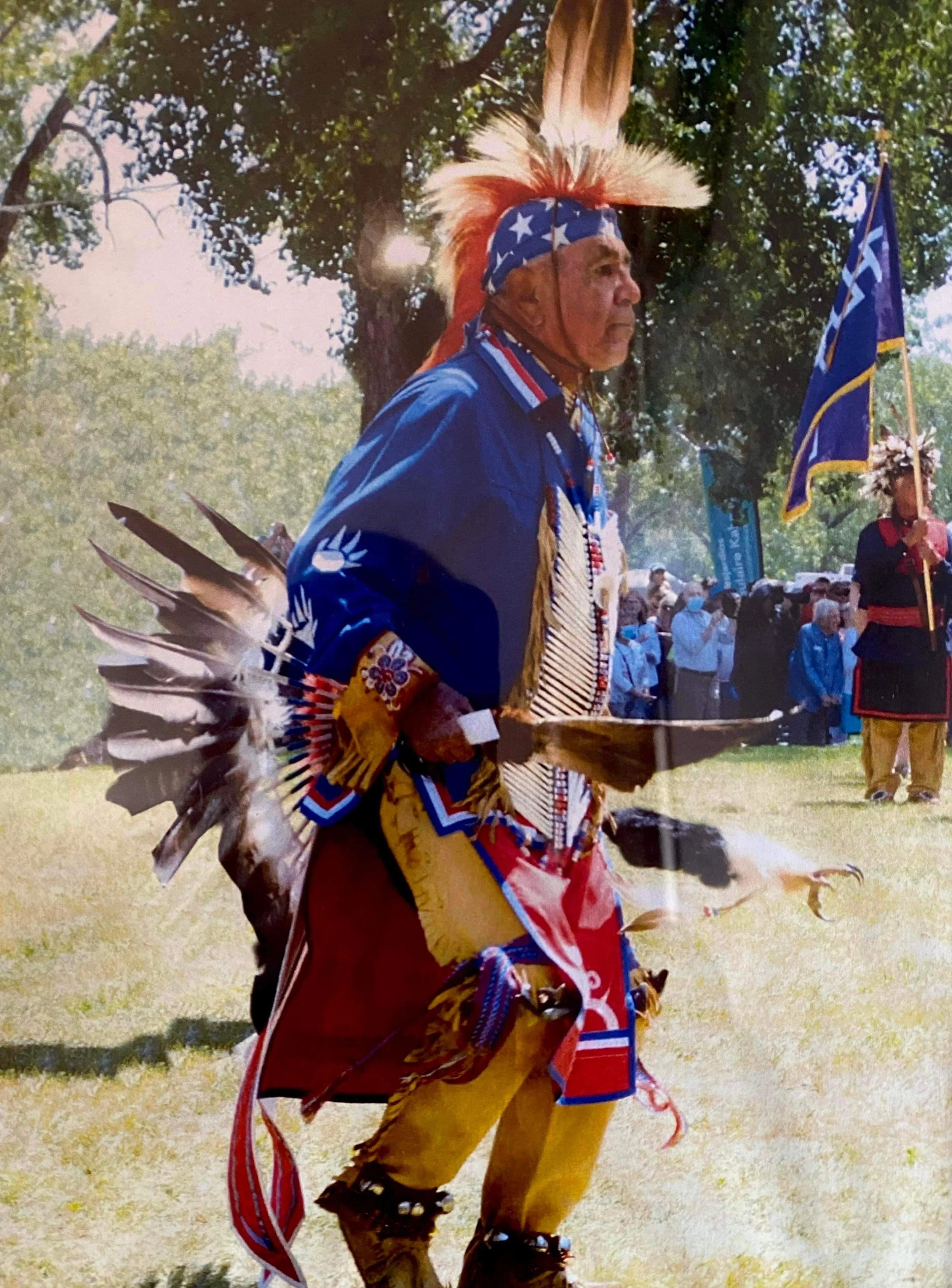
Leonard is donned with one of his outfits for a powwow dance. (Courtesy: Leonard Bordeau)
Story told by Leonard Bordeau
In 1994 or 1995, through the Brighter Futures program a couple of dancers got some funding and put out a notice that they were looking for people that are interested in learning to powwow dance. Something inside of me told me that something was missing in my life. I wanted to be more involved with my culture.
I put my name in and they accepted me. There weren’t all that many that wanted to learn. I would go to the Youth Center in the evening for our lessons. They’d show us the moves and different dance styles.
At a certain beat, you’re supposed to raise your arm and at the last beat, you have to stop right away. I didn’t catch on right away but in time, you can anticipate it.
John and Stephen McComber were the teachers for the guys. There was also Barbara Littlebear who taught us some beadwork and how to make our own moccasins. She did powwow dancing too.
The program ran for about three months, then you had to decide what dance style you wanted to get into and adopt your colours. I decided to be a traditional dancer, and my colours were red, white, and blue.
It’s not that I’m patriotic; I chose red because we’re Mohawk, or Indigenous, and are referred to as the red people. Then I chose white for the peace dove. Peace is what everyone should be striving for at all times. Then I chose blue for the colour of the sky.
My first true test was at the big midwinter powwow, which they used to have in the gym at the old Survival School. There was this big huge gym. A bunch of us went and got dressed. We always enter by the eastern door and when it came time, we stood there by the entrance.
You don’t go out right away. They sing maybe one verse first and then we go out a little at a time.
There were a few dancers ahead of us. You had to have an Honor Guard, people that were in the military, and you also needed a head male and a head woman dancer. Then the rest follow.
I’m shaking thinking, “Oh my god, what am I gonna do?” Then I said to myself, “Leonard you wanted to get involved, you can’t chicken out now.” And then that drumming started.
I’m telling you when I went out, I could almost say that I was high. I had an emotional high and I got out there and I danced my heart out. I was so happy. I was dancing around with a big smile and I enjoyed it.
KANIEN’KÉHA VERSION
↓
KANIEN’KÉHA VERSION ↓
Iah Ontionhà:'ak Té:ken
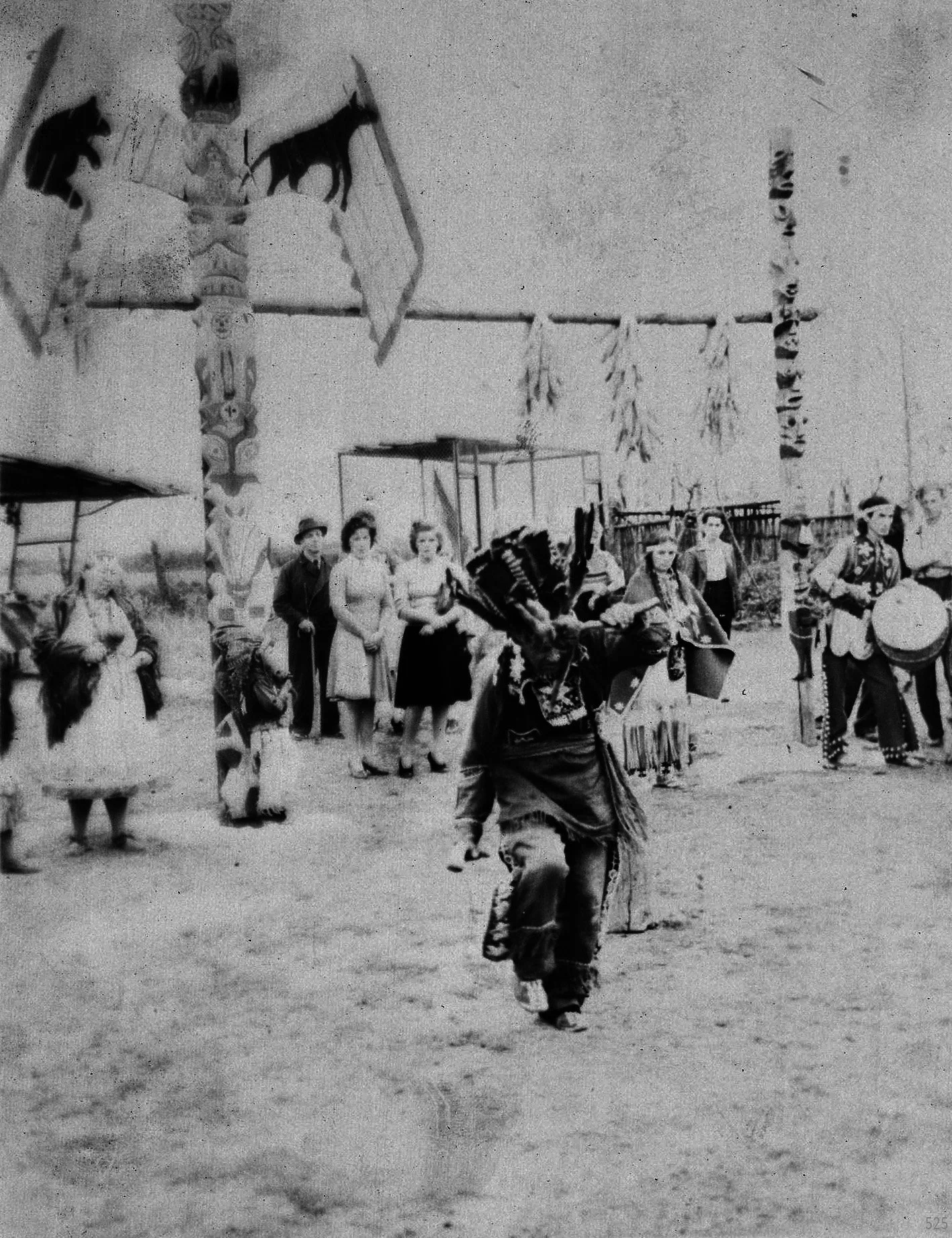
People gather around to watch the the performance of a native dancer. Identified names in this shot include Josephine Montour to the left of the totem pole, Louise McComber to the behind the dancer to the right, and John Mayo shaking the earth with his drum. (Courtesy: Kanien'keháka Onkwawén:na Raotitióhkwa Language and Cultural Center)
Leonard Bordeau ROKÁ:RATON
Ne 1994 tóka'ni 1995 nitiohserò:ten, Brighter Futures kentiohkón:ni nitiawé:non, tehniiáhse tehninonniáhkhwa kenk ní:kon wahnihwistaié:na' tánon wa'thiaterihókwahte' tsi ronatesá:kon' ónhka tiako'nikonhratihénthos aiontéweienste' ne iontha'towanahtahkhwa'kéha taienónniahkwe'. Nahò:tenk tià:takon ítewa onkhró:ri' tsi nahò:tenk tió:to'kte tsi kónhnhe'. Kéhrhahkwe' sénha akatsté:riste' tsi nikeweiennò:ten'.
Ia'katathsennínion'te tánon wa'onkhsennaié:na'. Iah é:so teiakòn:ne néne í:ienhre aiontéweienste'. Ken' Nithotiién:sa Raotitióhkwa shos ién:ke no'karahsnéha ne ki' ne aionkhirihónnien'. Enionkhina'tón:ha'se' tsi neniakwatieránion' tánon tha'tekanonniaténion. Nó:nen wató:ken tsi ní:ioht tsi io'nahkwà:'e, teiotonhontsóhon' ahsanentshakará:tate' tánon ne ohna'kénhkha ié:kate io'nahkwà:'e, entà:'on tha'tenhstáhstsi. Iah óksak tewakeweientehtà:'on nek tsi katke'shòn:'a, enwá:ton aiesahrhá:reke'.
John tánon Stephen McComber shakotirihonnienníhahkwe' ne rotisken'rhakéhte'. Ne ó:ni Barbara Littlebear wa'onkhirihónnien' taiakwatsi'nehtará:ron' tánon tsi ní:tsi aiakwarahtahkón:ni'. Iontha'towanahtahkhwa'kéha ó:ni teienonniáhkhwahkwe'.
Ákta áhsen niwenhnì:take onterihwahtén:ti' ne kentiohkón:ni sok entà:'on ia'taiesarihwaién:ta'se oh na'kanonniò:ten íhsehre' ahsatéweienste' tánon nahsaterá:ko sahsohkwa'shòn:'a. Ia'tewakerihwaién:ta'se ne orihwakaionhnéha takenónniahkwe' tánon onekwénhtara, karà:ken, tánon oròn:ia ne akwahsohkwa'shòn:'a.
Iah nè:'e té:ken tsi wakonhontsánien; wa'kerá:ko onekwénhtara áse' kenh Kanien'kehá:ka netewaia'tò:ten, tóka'ni Tionkwehón:we, tánon onekwénhtara nihatiia'tò:ten rontena'tónhkhwa. Sok karà:ken wa'kerá:ko ne ki' ne skén:nen orí:te aorihwà:ke. Skén:nen nen' nè:'e ne teiotonhontsóhon tiokontáhkwen aiakoskehnhénhake. Sok oròn:ia wa'kerá:ko tsi tho niwahsohkò:ten ne tsi karonhiá:te.
Nè:'e tontié:renhte otokèn:'en watkèn:se onkwá:ton'se ne ki' tsi nonkwá:ti thí:ken kowá:nen sha'teiohserí:hen tsi iontha'towanahtáhkhwa néne tsi iontia'tahkariiostáhkhwa shos enhonterihwahténtia'te ne tioká:ion Survival School nonkwá:ti. Tó:k niken'tanónhsa tsi iontia'tahkariiostáhkhwa kanonhsó:tahkwe'. É:so iátion ia'ákwe' tánon wa'akwatia'tahserón:ni'. Tió:konte tsi tkarahkwíneken's nonkwá:ti ieniakwatáweia'te tánon nó:nen ienkáhewe', tho tiákwate tsi iontaweia'táhkhwa. Iah óksak thahsatáweia'te. Enhonterennó:ten tóka' nòn:wa énska teiostón:tere' sok ken' niiationhatié:ha eniakwatáweia'te. Tohkára nihá:ti tehatinonniáhkhwa' onkwahén:ton rón:ne. Entà:'on wahonterihwahténtia'te thí:ken Honor Guard, tsi niká:ien ronateriiohseròn:ne, tánon teiotonhontsóhon' shaià:ta rón:kwe ohén:ton tenhá:ta'ne tánon tseià:ta iakón:kwe' ohén:ton tenienónniahkwe. Sok enhshakotihnhonterátiehte' ne ronátia'ke.
Kwah watia'tihsónhkwen tsi kanonhtónnion', "Ótkon, oh kwah nikatierà:ne?" Sok wa'kì:ron ake'nikòn:rakon, "Leonard, wahsaská:neke ahsatsté:riste' kí:ken, iah thaón:ton ahsaterihwatè:ko'." Sok tontáhsawen tsi roti'nahkwáien'. Kwah ká:ton tsi ia'katáweia'te, kwah tsi ní:ioht tóka' tewakhseronniennihátie. Kwah watiehsòn:ne tsi tewakenonniahkwenhátie tánon onkon'wéskwen.
Written by: Melissa Stacey
Translation by: Karonhí:io Delaronde