
Same hurts and issues
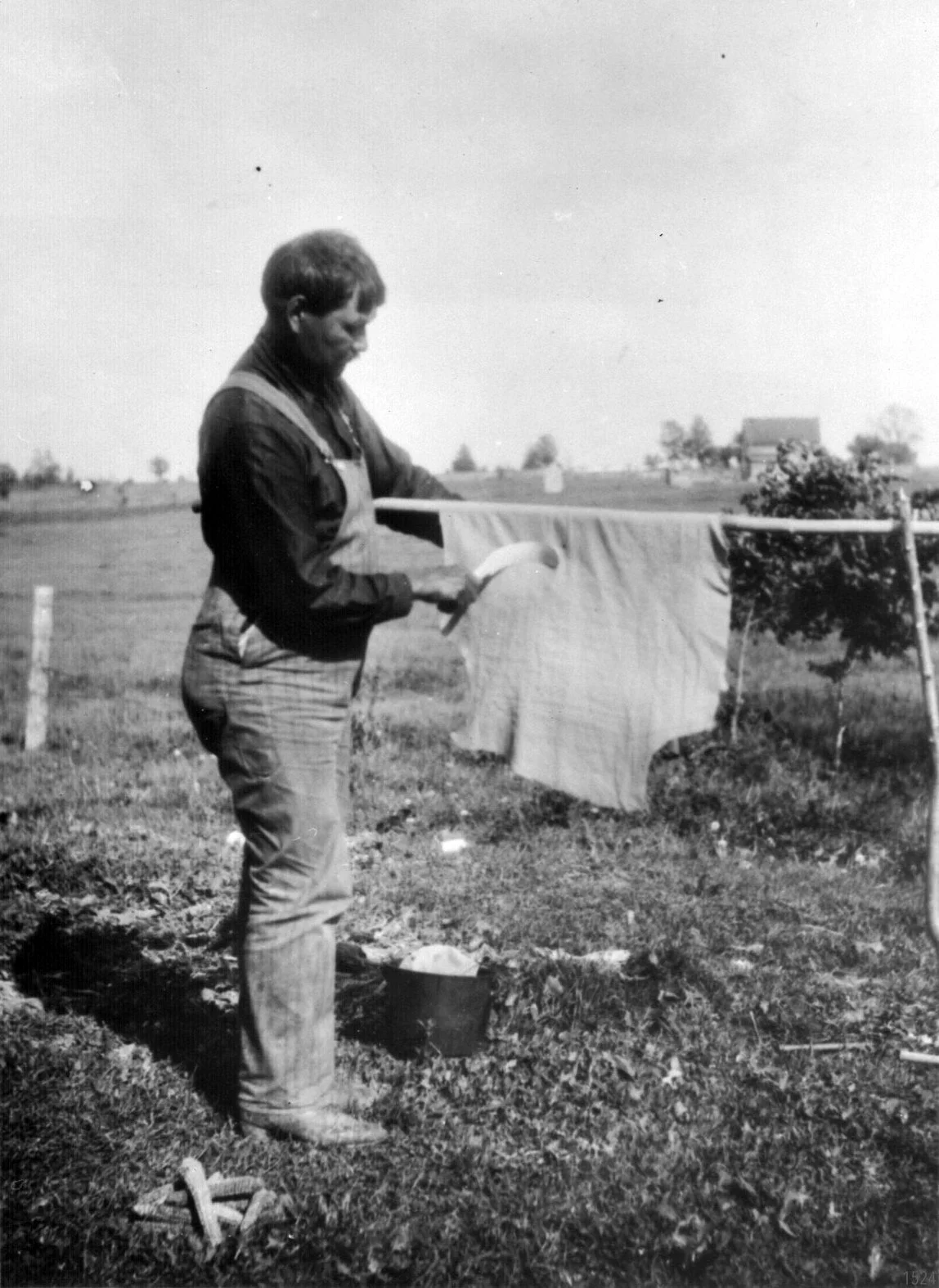
(Courtesy: Kanien'keháka Onkwawén:na Raotitióhkwa Language and Cultural Center)
Story told by Geraldine Standup
I got tired, when I was doing healing work for all those years in Toronto, I commuted on the Via Rail every Friday and Sunday for 21 years. I wasn’t just working in Toronto, I was working in Hamilton, Brantford, and London.
London was with the Oneida people and the Delaware. Hamilton and Brantford were with Six Nations and the Ojibwe people living in that particular area. Toronto was everybody across the country from the Mi’kmaq all the way down to the other end.
At first, it was intimidating to go out there because all I know is Mohawk people, but people are just people, it doesn’t matter. We all carry the same hurts and issues.
I was on that train back and forth and when I’m there, they want me to see one person every hour. That’s 30 people a week. I used to pray that somebody would cancel because that would mean a break for me. By the time I get done, I’m exhausted, and when I get back home, I’m the lady of the house. That means laundry, cooking, banking, grocery shopping, and all of that. I had a very busy, hectic life.
KANIEN’KÉHA VERSION
↓
KANIEN’KÉHA VERSION ↓
Ne shà:ka kakarewahtáhtshera tánon ka'nikonhrharáhtshera
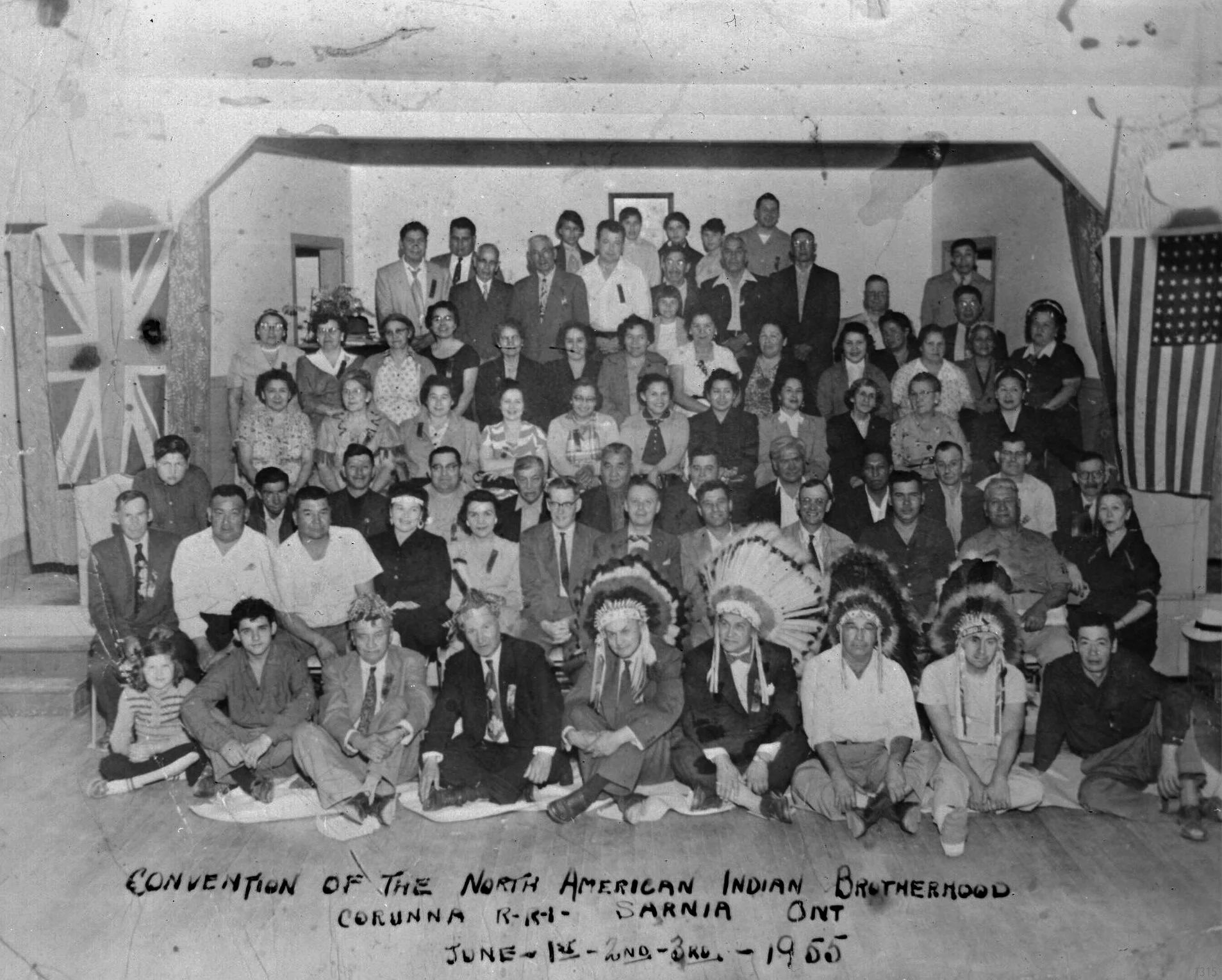
A group photo from 1955’s North American Indian Brotherhood convention, held from June 1 to 3 of that year, in Corunna & Sarnia, Ontario. (Courtesy: Kanien'keháka Onkwawén:na Raotitióhkwa Language and Cultural Center)
Geraldine Standup IAKOKÁ:RATON
Wa'tekhwihsénheie', áktek nón:we shiskatétsen'ts thí:ken é:so iohserá:ke ne Tkarón:to nonkwá:ti, tiótkon ne Wískhaton tánon Tsatáhkhaton niwenhniserò:tens Via Rail wa'katíta' kwah 21 niiohserá:ke nikarì:wes. Iah nek Tkarón:to tetewatió'tehkwe, Ohrón:wakon, Tsi Kanatáhere, tánon Tekahiónhake ó:ni.
Skátne Oneniotehá:ka tánon Atewa'káhnha ratiia'tarátie ne Tekahiónhake nonkwá:ti. Ohswekenhá:ka tánon Ojibwe nahatiia'tò:ten ne tho thatinákere ratiia'tarátie ne Ohrón:wakon tánon Tsi Kanatáhere nonkwatíhson. Ok ne Tkarón:to kwah eh thatinakerénion ne Onkwehón:we ne tsi niionhóntses nithonenónhseron ne ki' ne Atsa'ktahronòn:ke tsi niió:re ákte' na'onhóntsati.
Shontakatáhsawen', é:so tsi onkwateronhiénhten' ne eh tho iá:ke' áse' kenh nek Kanien'kehá:ka kheienterì:ne. Nek tsi nek ón:kwe tsi nihatiia'tò:ten wáhi ne ón:kwe, iah the teiotié:ren. Akwé:kon ne shà:ka tewahá:wi ne kakarewahtáhtshera tánon ka'nikonhrharáhtshera.
Kwah wa'tkaterahtánion' tiio'kehà:ke tánon nó:nen eh ié:kes, ronská:neks tseia'tátshon akheiátken'se' tiótkon tsi nenkahwista'ékhon'. 30 nihá:ti nen' nè:'e ne tsahià:ksera. Katerén:naiens shos ne ónhkak aontaierihwaríhsi' áse' kenh ne kén:ton tsi enwá:ton enkatoríhsen', sok tsi nénkhsa', kwah tokèn:'en tewakhwihsenhé:ion, sok nó:nen iénskewe', ì:'i wáhi ne ienonhsakwe'ní:io. Ne wáhi kén:ton tsi kenoharénions nathserónnia, kekhón:nis, kathwistatsterístha, katenna'tsherahninòn:res, tánon orihwakwé:kon thí:ken. É:so tsi tewakeweienhnhara'òn:ne, iorahsténion tsi ní:tsi kónhnhehkwe.
Edited by: Melissa Stacey, Local Journalism Initiative Reporter
Translation by: Karonhí:io Delaronde