
↓ listen to the story in KANIEN’KÉHA ↓
🔈
↓ listen to the story in KANIEN’KÉHA ↓ 🔈
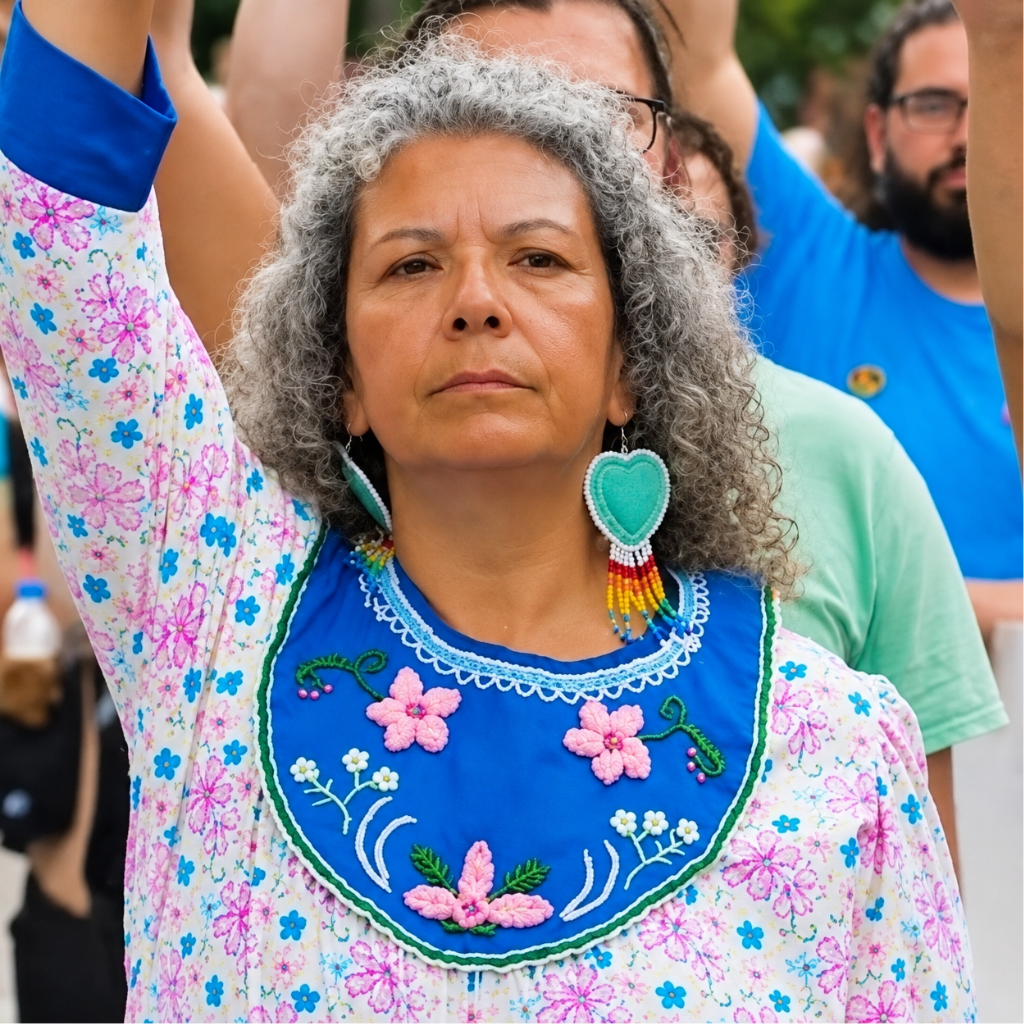
Her name is Tealey Kahsenní:saks, and she stands tall and proud. Here, during 2023’s Montreal Pride Festival, Tealey stands respectfully during the event’s moment of silence. (Courtesy: Tealey Kahsenní:saks Normandin)
Story told by Tealey Kahsenní:saks Normandin
It was September 9, 2006, when I first started working in the Tiohtià:ke community, at the Native Women’s Shelter. “Wow, I’m Indigenous,” I thought to myself, “and I have the right to work at this place. With Indigenous women!”
Even so, I still felt that little white girl inside myself, so when I was sitting in meetings, I would say my name is Tealey.
Actually, I went through a name change.
Some time ago, I would say, “My name was Terri, and I'm a French-Canadian Mohawk Quebecer who can speak English.” I went for quite a long time identifying myself like that. If you Google my name, you’re gonna see articles where I actually say that.
Then, I can remember that we would do retreats up to Mille-Iles, to a place called L’autre versant, where Sedalia (Fazio) was the elder. We’d take the women out of Montreal and would go up there.
I would be sitting in circles that she introduced me to, such as healing circles, and drumming circles. While sitting in these circles, I’d see all these Indigenous women, and next to them, I still felt like a little white girl, like an imposter. But then I would go in these big meetings that were being held with La Ville de Montreal, here, there, with the feds and I would be like, “Okay, look at all those white people.”
Then I was like, now I’m the Indigenous person here, right? There was always that mix within me, that pull of, “Who am I?”
Some would question, “Well why do you identify yourself like that?” and I’d respond, “Because I can’t erase the 45 years of my life growing up a non-Native. That’s always going to be a part of me.”
I think it was when I did the naming ceremony, when I went to Sedalia, and I was like, “Why does everybody have a name? I want a name. I need a name.” I had done sweat lodge, I was now feeling Mother Earth, and I reached the beginning of my connection.
So, in the spring of 2010, when I had gone up to our retreat for the second time with the ladies, she did a naming ceremony for me and gave me the name Kahsenní:saks. It means “She searches for a name,” or “She's looking for a name.”
It was after I got my name that I was finally like, “That’s it!”
Being an adoptee, I had my legal name, but it became Theresa in high school. It went through all sorts of changes through my life: Terri, Trese, Tetley, anything starting with T, you name it.
I had all of these different names, and I was different people with each new one. I was a different person to the different groups of people that called me by different names. I think it was probably about two years after working in community, that I said, “that’s it. I'm going back to my original name when I was adopted, and it’s Tealey.”
Then I became Tealey Kahsenní:saks.
Now I was standing up at meetings, I sat in circles, and I was saying, “I’m Mohawk from Kahnawake, bear clan, and I was adopted during the Sixties Scoop.”
KANIEN’KÉHA VERSION
↓
KANIEN’KÉHA VERSION ↓
Tealey Kahsenní:saks ióntiats
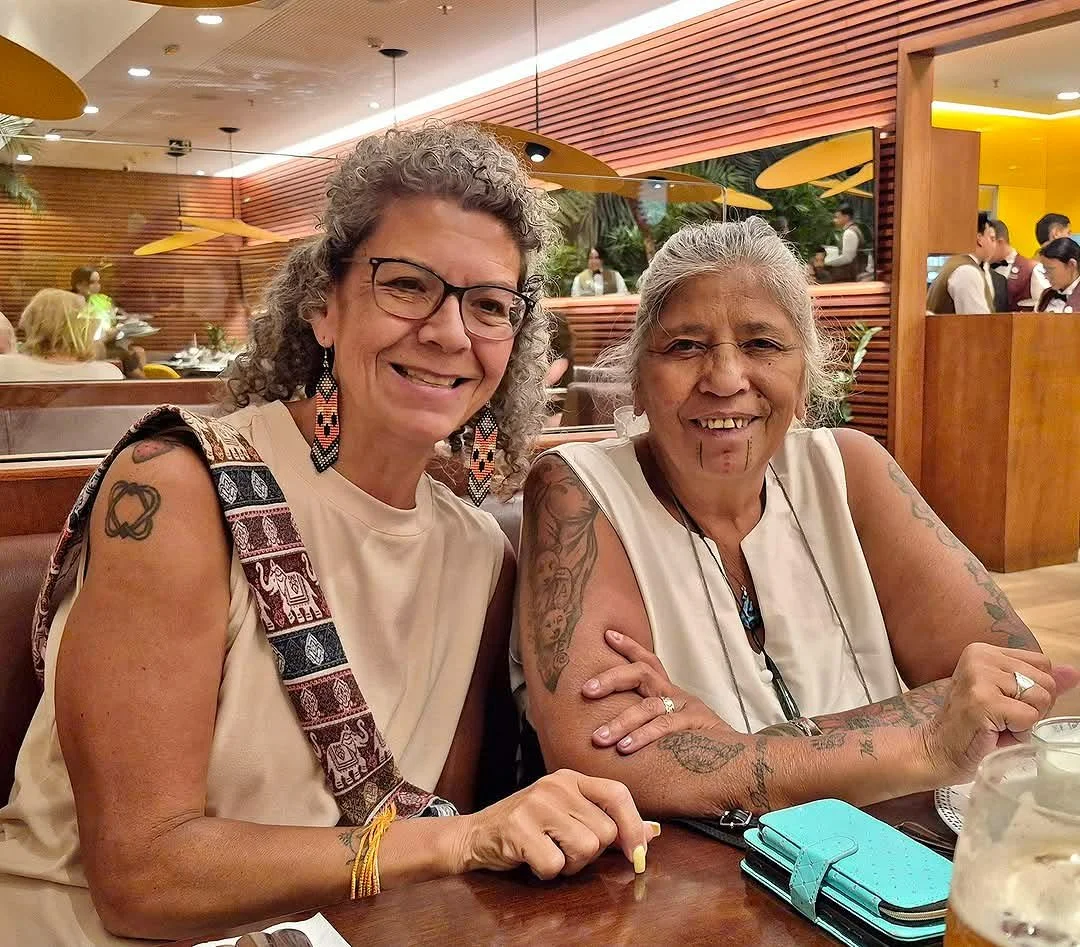
(Courtesy: Tealey Kahsenní:saks Normandin)
Tealey Kahsenní:saks Normandin IAKOKÁ:RATON
Seskéha tióhton shískare, 2006 niiohserahsé:tas kèn:ne, shontakatáhsawen tsi watió'te ne Tiohtià:ke kanakerahserá:kon, tsi nón:we ne Native Women's Shelter. "Wa, konkwehón:we," wa'kì:ron ake'nikòn:rakon, "tánon watianerenhserá:ien aontió'ten ne kén:tho nón:we. Skátne Konnonkwehón:we!"
Sénhak ki', shé:kon wa'káttoke thí:ken ken' niiakà:'a iehnakén:ra ieksà:'a ieià:ti akonhahtsherá:kon, sok nó:nen enkátien tsi tkatsénhaien, enkì:ron tsi Tealey ióntiats.
Ne norihwiiiohón:we, wa'tewakatténien tsi niwakhsennò:ten.
Ken' nikarì:wes tsi náhe, enkì:ron, "Terri ióntiats, tánon O'serón:ni-Korahró:non Kanien'kehá:ka Quebechró:non nitia'tò:ten néne Tiohrhèn:sha katá:ti." Kwah ken' nikarì:wes tho ní:tsi wa'katatenà:ton. Tóka' enhsé:sake Googlehne tsi niwakhsennò:ten, enhsatkáhtho tóhka niwaterihwathroriahtsherá:ke tsi nón:we tó:kenske nè:'e wá:ken.
Sok, kè:iahre tsi eniakwate'nikonhratonrihsénhna Mille-Ile nonkwá:ti, tsi nón:we L'autre versant tkonwá:iats, tsi nón:we ne Sedalia onkwakstèn:sera tkèn:ne. A'é:ren eniakhiia'tenhá:wihte ne konnón:kwe ne Tiohtià:ke, tánon tho ieniákwe.
Tho enkátien tsi tetkanenhronniánion néne ionkerihorenhtén:ni tsi ní:ioht ne atétsen'ts tekanenhrón:ni, tánon ie'nahkwà:'eks tekanenhrón:ni. Tsi nikarì:wes tho kítskote tsi tetkanenhronniánion enkhé:ken akwé:kon ki:ken konnonkwehón:we, tánon kontiia'tákta, shé:kon kattó:kas thí:ken ken' niiakà:'a iehnakén:ra ieksà:'a ieià:ti akonhahtsherá:kon, tsi ní:ioht ne teiekonhsontáhkwen akénhake. Nek tsi thò:ne ienkatáweia'te kí:ken katsenhowá:nens ne La Ville de Montreal nonkwá:ti thotitsénhaien, kèn:'en, tho, skátne ne kakoráhsera shakotiio'tèn:se tánon enkì:ron, "Hao', he akwé:kon thí:ken ratihnakén:ra."
Sok thò:ne wà:kehre, ó:nen nòn:wa ì:'i nà:'a ne onkwehón:we ne kén:tho, wáhi? Tiótkon tho ní:tsi wa'tewakatiésten nakonhahtsherá:kon, néne karihwanón:tha, "Ónhka nì:'i?"
Ótia'ke enierihwanón:ton, "Oh káti' nontié:ren tho ní:tsi satatienteréstha?" tánon tenskerihwa'será:ko, "Áse' kenh iah thakkwé:ni akerá:kewe kí:ken 45 niiohserá:ke shikónhnhe ne iah onkwehón:we tsi ní:tsi tewakatehiahróntie. Tiótkon akonhahtsherá:kon enkarátie thí:ken."
Kwah í:kehre sha'tkatóhetste ne tsi niiakohsennake'tóhtha, tsi ó:nen wa'kheià:tara'ne Sedalia, tánon wa'kì:ron, "Oh nontié:ren akwé:kon iakohsén:naien? Kaská:neks aonkhsennaién:ta'ne. Kaská:neks aonkhsennaién:ta'ne. Tewakatonhontsó:ni aonkhsennaién:ta'ne." Tsi ion'tarihenhserinekénhstha tewakatohétston, ó:nen nòn:wa skattó:kas ne Istá Onhóntsa ieià:ti akonhahtsherá:kon, tánon tho iahà:kewe tsi nitiotahsá:ronte tsi tékhneren.
Thò:ne ki', shikakwí:te ne 2010 niiohserahsé:tas, eh shionsá:ke ne tsi iakwate'nikonhratonrihsentáhkhwa tekeníhaton ia'tká:ienhte skátne ne konnón:kwe, wa'onterihwahténtia'te ne tsi niiakohsennake'tóhtha ne akerihwà:ke tánon Kahsenní:saks wa'onkhsén:non. Ne kén:ton ne "Iaké:saks ne kahsén:na."
Ohnà:ken shonkhsennaién:ta'ne ó:nen ki' sakì:ron, "Kwah tho!"
Tsi kia'tenháwen, karihwahnirá:ton wakhsennaién:tahkwe, nek tsi Theresa ón:ton ne tiotenónhsate tsi tionterihwaienstáhkhwa. Áktek nón:we tonsonttenión:ko tsi náhe shikónhnhe : Terri, Theresa, Tealey, kwah thé:nen ne "T" tiotahsawáhkwen, thikawenní:io nahò:ten énhsehre. Wakhsennaién:tahkwe akwé:kon kí:ken ó:ia nikahsennò:tens, tánon ó:ia nikonkwe'to'tèn:ne skátne akwé:kon tsi ní:kon kahsén:nases. Ó:ia nikonkwe'to'tèn:ne tsi nonkwá:ti ne thikanenhraténion néne ó:ia nikahsennò:tens wa'onkenà:tonhkwe. Í:kehre tóka' nòn:wa teiohserá:ke ohnà:ken shà:khsa tsi kanakerahserá:kon watió'te, tsi ó:nen wa'kì:ron, "Wa'kakwé:ni. Énskatste ne akwá:wen tiothsennatierénhton sha'ontia'tenháwa, tánon Tealey nen' nè:'e."
Thò:ne ki' Tealey Kahsenní:saks saká:ton.
Ó:nen nòn:wa ón:ton wa'tékta'ne tsi tkatsenhaién:ton, wa'kátien tsi tetkanenhronniánion, tánon tiótkon wa'kì:ron, "Kanien'kehá:ka nitia'tò:ten ne Kahnawà:ke nitewaké:non, Wakskaré:wake, tánon wa'ontia'tenháwa tsi nikaianesòn:ne ne 60 niiohserò:tens kawirotsénhton."
Edited by: George Rahrhaienté:ri Ross, Local Journalism Initiative Reporter
Translated by: Karonhí:io Delaronde