
Being with your people
↓ listen to the story in KANIEN’KÉHA ↓
🔈
↓ listen to the story in KANIEN’KÉHA ↓ 🔈
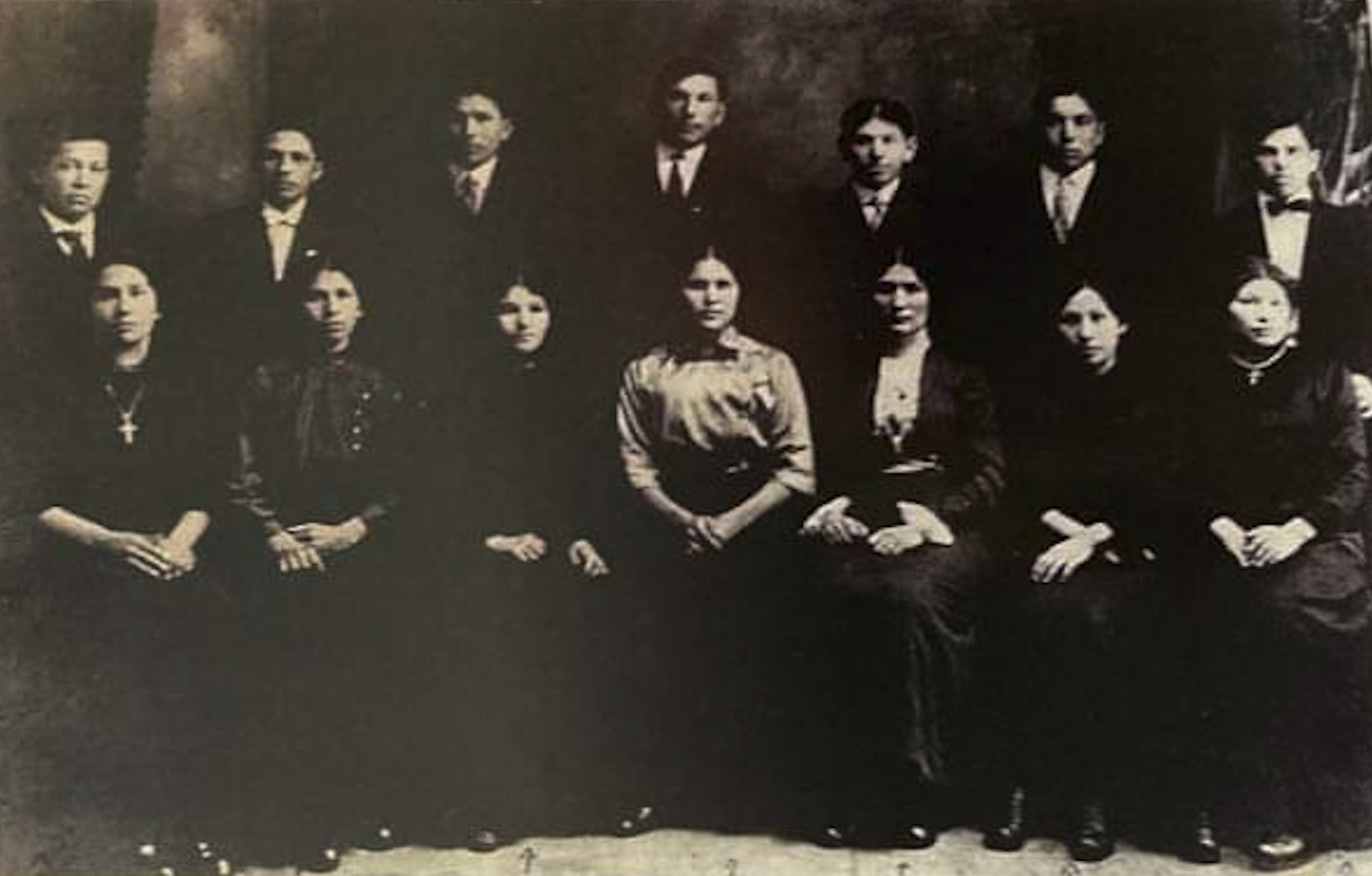
A Diabo family photo. (Courtesy: Robert Diabo)
Story told by Robert Diabo
Kahnawake was a nice place. It’s still a nice place.
There were a few times I thought about settling down somewhere else.
I’ve been on the road for years, working. Once, I had an iron job in San Francisco; it was a big job so I was there for three years.
I brought my wife and kids out there, my girls were small. It was a nice city. Beautiful working weather all year around, we all enjoyed it there.
We would come back to Kahnawake in the summer. It was a long way, but we enjoyed traveling.
I was thinking about joining the union in San Francisco. I even started looking for a trailer instead of renting all the time.
But then I started thinking, “These girls are growing up. If we stay here, they’re going to lose a lot. They’re not going to grow up amongst their people and will start leaning towards another way of life. Next thing you know, they would have gotten married over here, had families over here, and I don’t want them to lose their identity.” So, I made up my mind.
I told my wife, “We’re going to go home now. It’s time the girls got home and grew up knowing who they are.”
There’s something about being a Native and being with your people. Even if you don’t agree with your neighbors, still, it’s home. Now the whole family is together, settled, and I’m not sorry we came back...
KANIEN’KÉHA VERSION
↓
KANIEN’KÉHA VERSION ↓
Ne aiesewéhseke ne sonkwe'ta'shòn:'a
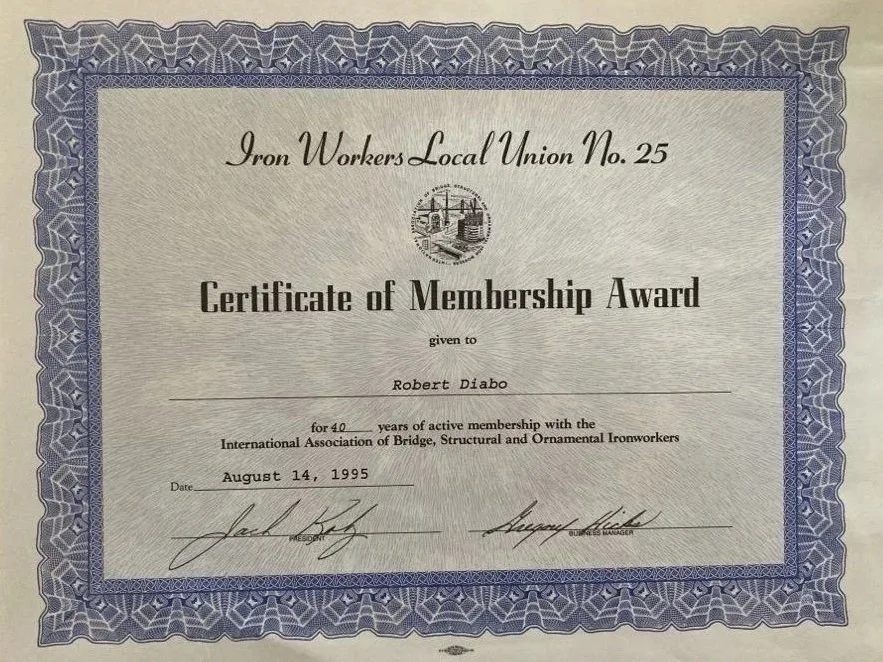
A certificate presented to Robert Diabo signifying 40 years of being a member of union Local 25, awarded to Robert on August 14, 1995. (Courtesy: Robert Diabo)
Robert Diabo ROKÁ:RATON
Kanatiiò:ne ne Kahnawà:ke. Shé:kon nòn:wa kanatí:io.
Tohkára nà:kehre ne ákte' nón:we iaonsakátien.
É:so iohserá:ke shiwakathahitáhkhe, watio'ten'enhátie. Énska tsi náhe, karistà:ke watió'tehkwe ne San Francisco nonkwá:ti, é:so tsi kaio'tenhserowanèn:ne ne ki' wa'karihón:ni tsi áhsen niiohserá:ke eh nón:we tewatió'tehkwe.
Khekstén:ha tánon kheien'okòn:'a iekheia'ténha eh nón:we, kenk shikón:nas ne kheien'okòn:'a. Kanatiiò:ne. Ohserakwé:kon wenhniseriiò:ne naiakoio'ténhseke, akwé:kon wa'ontion'wéskwen eh nón:we.
Kahnawà:ke shos tentiákwe tsi niwakenhnhé:sons. Í:non niió:rehkwe nek tsi wa'ontion'wéskwen wáhi taiakwatstikáhwha. Kanonhtónnionhkwe tóka' akatià:taren ne San Francisco rotiió'te raotitióhkwa. Takatáhsawen ó:ni wa'ké:sake tewate'serehtahnhontéhrha iontientáhkhwa niá:we tiokontáhkwen aionkenonhsaniháhseke.
Nek tsi takatáhsawen wa'kanonhtónnionhwe, "Taionatehiahróntie kí:ken kontiksa'okòn:'a. Tóka' kén:tho entewéhseke, nia'té:kon enionáhton'se. Iah thakontehià:ron skátne aononkwe'ta'shòn:'a tánon entkontáhsawen ákte' nenkonterihò:tenste. Ok thentiawénhstsi, aiotiniá:kon eh nón:we, aionathwatsirón:nike eh nón:we, tánon iah té:kehre aionáhton'se tsi niiotirihò:ten." Thò:ne ki' wa'katate'nikonhrísa.
Wa'khehró:ri khekstén:ha, "Tsitewáhket ó:nen. Ó:nen ki' ia'káhewe aonsakonhtén:ti ne iethiien'okòn:'a tánon ioiánere akontiientéhrha'ne ónhka ne onónha tsi ionatehiahróntie."
Ok nahò:ten kanó:ron karátie ne aiakonkwehonwéhake tánon ne aiesewéhseke ne sonkwe'ta'shòn:'a aiesewéhseke. Iaweronhátien wáhi tóka' tesewaterihwatihánions ne tesewanonhsanekhánion, shé:kon ki' wáhi, tho nitisé:non. Ó:nen nòn:wa skátne shón:nes ne kahwá:tsire, skátne ronátien, tánon iah teskatathrewahtánions tsi tsónkwen...
Edited by: Aaron McComber, Local Journalism Initiative Reporter
Translated by: Karonhí:io Delaronde