
↓ listen to the story in KANIEN’KÉHA ↓
🔈
↓ listen to the story in KANIEN’KÉHA ↓ 🔈
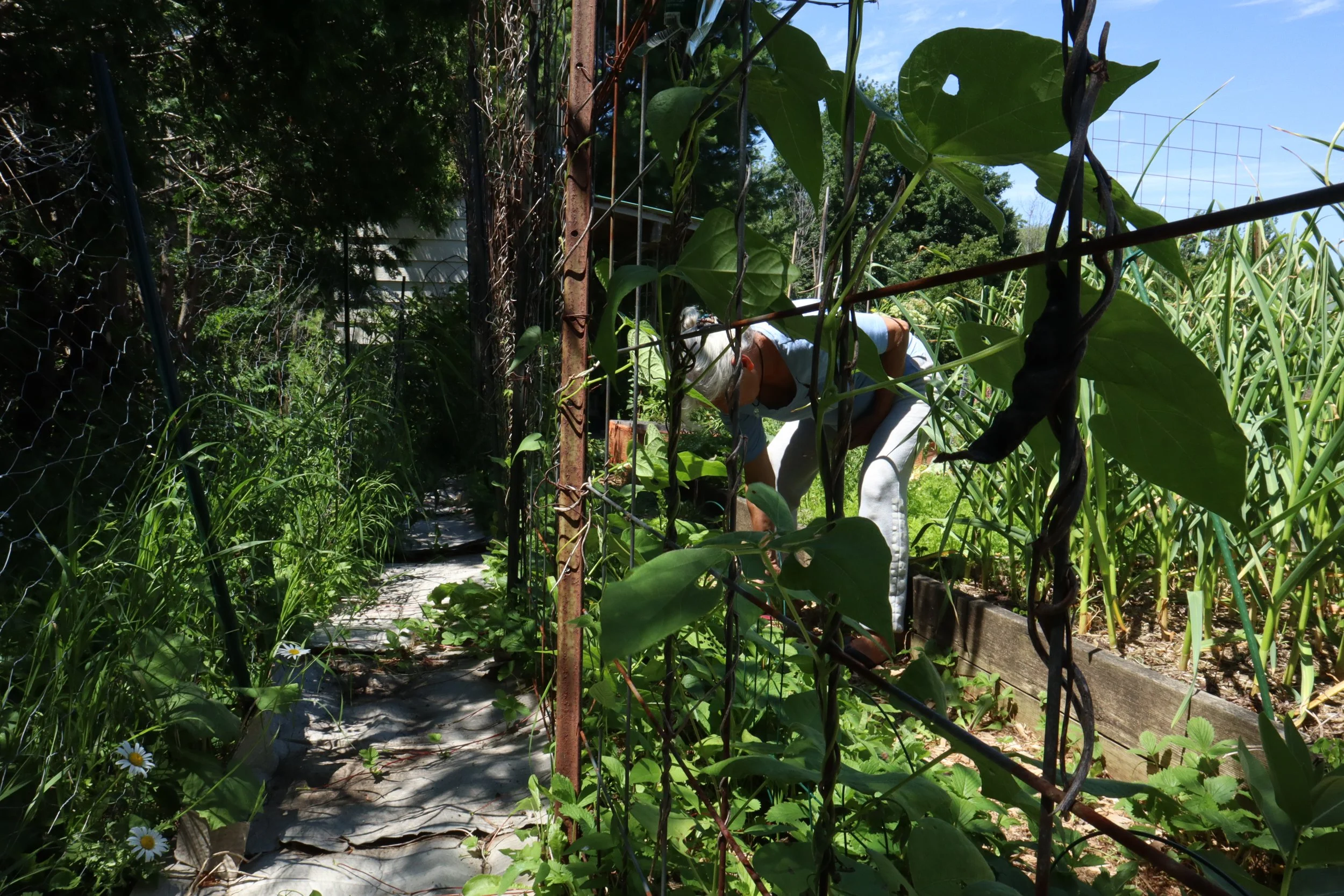
Elaine is in her element when it comes to tending to her garden. (Credit: Simona Rosenfield)
Story told by Elaine Delaronde
Because of the way our ancestors lived in clans and multi-family longhouses, the people would work together to store away the food and help one another so no one went without. I learned that our ancestors always had an abundance of food storage and garden seeds buried in the ground, so if there’s ever a time they needed it, they had it.
It would be ideal to try to get that back. So, everyone eats the same, together, if you want to call it one dish one spoon law. So, if there’s anyone who is struggling to eat, the community helps. They shouldn’t have to fend for themselves. The community works together to make sure everyone’s fed. Family and friends can work together. It’s a good way to get things done and socialize.
t’s different in individual houses, because some have and some don’t. If we can get our old collective system back, it would benefit everyone. One way to do it is to check to see how your family and your neighbours are doing, especially now with the cost of food and energy so high.
KANIEN’KÉHA VERSION
↓
KANIEN’KÉHA VERSION ↓
Orihwaká:ion tsi niió:re òn:wa wenhniserá:te tsi niiakorihò:ten tsi iakónhnhe
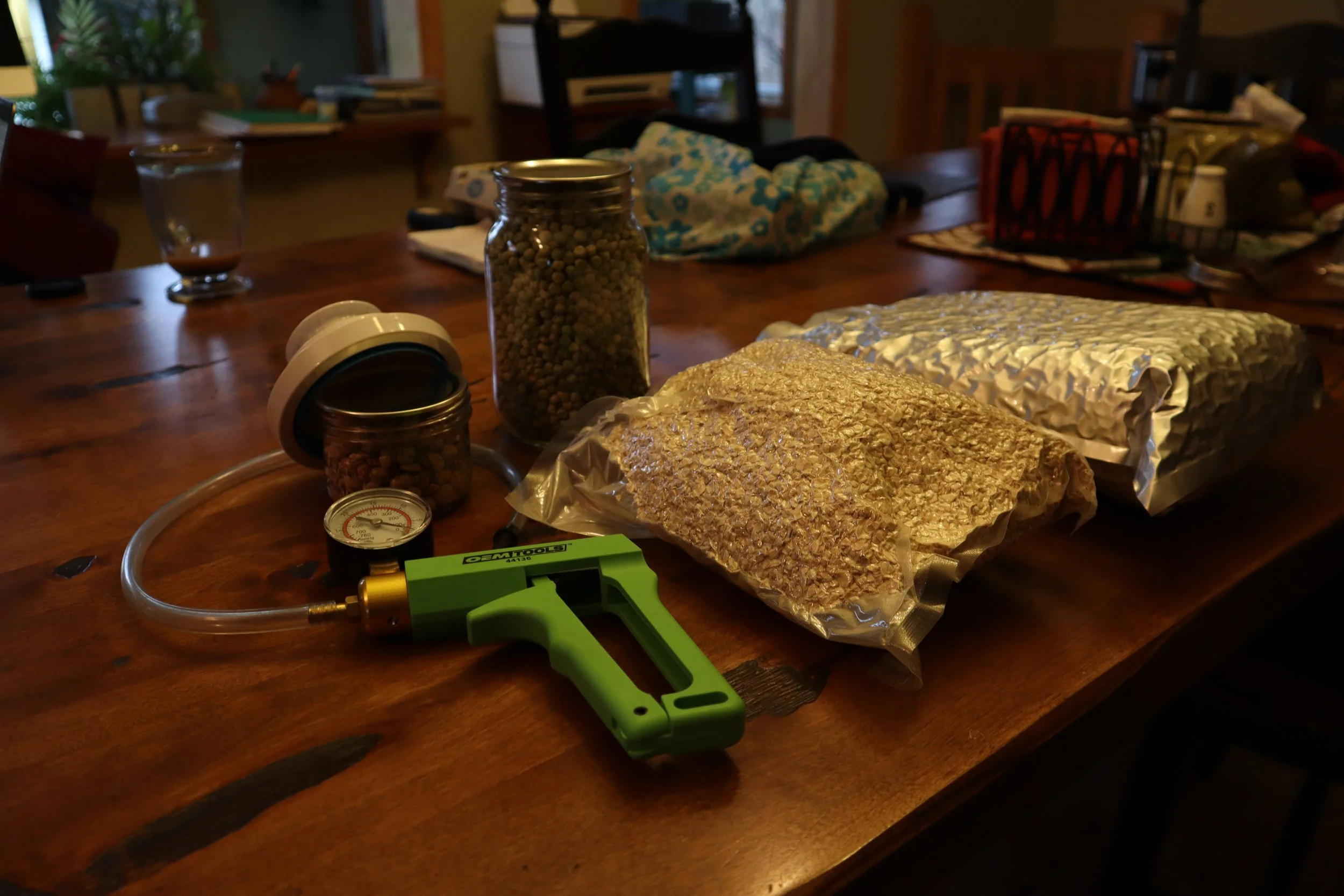
Jars and vacuum-sealed packaging are used to preserve freshness of seeds, dried corn, and other provisions. (Credit: Simona Rosenfield)
Elaine Delaronde IAKOKÁ:RATON
Tsi tho nihotiriho'tèn:ne ne onkwahsótshera tsi sken'tarátshon tánon é:so kahwatsí:rake skátne rati'terón:tahkwe kanonhsesónsne, tenhatiié:na shos ne onkwe'shòn:'a tsi enhonteweien'tónnion kákhwa tánon tsi tenhontaterihwásnie'se ne ki' ne tóhsa ónhka aiontonhkária'ke. Onktó:ken'se tsi onkwahsótshera tió:konte iawe'towá:nen rotiién:tahkwe ne watekhwateweièn:ton tánon kahehta'kéha kanen'shòn:'a ronatshatónhon, ne ki' tóka' nonwén:ton tenhonatonhóntso'se thí:ken, rotiién:tahkwe.
Ne ki' tioiánere wáhi ne tho naonsetewá:iere. Akwé:kon nek shà:ka tsi ní:tsi tetewatskà:hons, ohserón:ni, tóka' íhsehre sewatokwà:tshera kaianerénhsera ahsenà:tonhkwe. Tóka' ká:ien nónhka néne teiakotekhwakárien, kanakeráhsera enhshakotiié:nawa'se. Iah tha'teiotonhontsóhon tahontátienhte. Tehatiié:nas ne kanakeráhsera ne ki' ne orihwí:io ahonnón:ni tsi akwé:kon rotikhwahsón:rion. Wá:tons ki' wáhi tahatiié:na ne kahwá:tsire tánon atenrò:sera. Ne ki' wáhi ioiánere nothé:nen aierihontá:ko tánon taiehthá:ren.
Ó:ia ní:ioht ne skanonhsatshòn:ke, nè:'e tsi tohkára nihá:ti rotíkhwaien tánon tohkára nihá:ti iah. Tóka' entsitewaterá:ko tsi ní:tsi tetewatatia'takéhnhaskwe norihwakaionhnéha, akwé:kon wáhi enhotiiáneren'se. Énska ne tsi nenkaié:ren ne ki' nà:'a ne aióntken'se tsi ní:tsi sahwá:tsire tánon tesewanonhsanekhánion ronatonhnhahtentionhátie, sénha nòn:wa wenhniseraténion áse' kenh tsi nikanó:ron ne kákhwa tánon ka'shatsténhsera.
Edited by: Simona Rosenfield, , Local Journalism Initiative Reporter
Translated by: Karonhí:io Delaronde